Blog

Breeding Pigs for Sale: How to Choose, Price Ranges, and Reputable Sellers

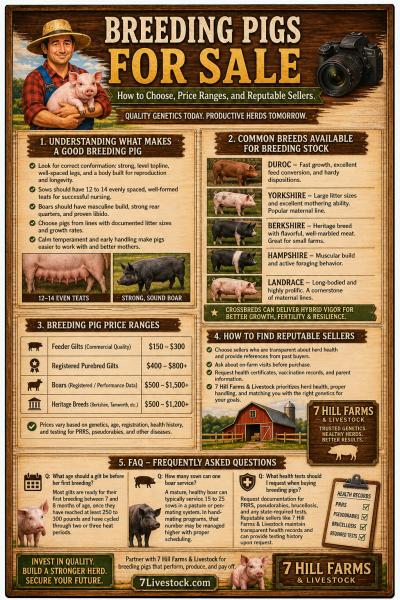
breeding pigs for sale comparison graphicWhether you are building a small homestead operation or expanding an established farm, finding quality breeding pigs for sale is one of the most important decisions you will make. The genetics you select today will shape your herd’s productivity, temperament, and profitability for years to come. This guide walks you through how to buy breeding pigs wisely, what to expect in terms of pricing, and how to identify reputable sellers like 7 Hill Farms & Livestock.

Choosing Breeding Pigs for Sale

Understanding What Makes a Good Breeding Pig

Not every pig is suited for breeding. Before you start searching for where to buy breeding pigs, you need to understand the traits that separate productive breeders from average stock. A quality breeding pig should display correct conformation, meaning a strong, level topline, well-spaced legs, and a body structure that supports healthy reproduction and longevity.

For sows, look for at least 12 to 14 evenly spaced, well-formed teats. This trait directly impacts her ability to nurse large litters successfully. Boars should demonstrate masculine build, strong rear quarters, and proven libido. Both sexes should come from lines with documented litter sizes and growth rates.

Temperament also matters more than many first-time buyers realize. Pigs that are calm and accustomed to human handling are safer to work with, easier to breed, and better mothers. Ask sellers whether animals have been handled regularly from a young age.

Common Breeds for Breeding Stock

The breed you choose depends on your goals, whether that is lean commercial pork production, lard-type heritage pigs, or pasture-based systems. Some of the most popular breeding pig breeds include:

Duroc – Known for fast growth, excellent feed conversion, and hardy dispositions. A top choice for commercial crossbreeding programs.

Yorkshire – Highly valued for large litter sizes and excellent mothering ability. Often used as a maternal line in crossbreeding.

Berkshire – A heritage breed prized for flavorful, well-marbled meat. In high demand among small farms and direct-market producers.

Hampshire – Recognized by the black body and white belt, this breed offers muscular build and active foraging behavior.

Landrace – Long-bodied and highly prolific, Landrace sows are a cornerstone of commercial maternal lines worldwide.

Many buyers opt for crossbred gilts or boars to capture hybrid vigor, which can improve growth rate, reproductive efficiency, and overall resilience.

Find a Breeding Pig
Near You

Browse Listings

Breeding Pig Price Ranges

Pricing for breeding pigs for sale varies based on breed, age, registration status, and individual genetics. Here is a general breakdown to help you budget:

Feeder pigs raised to breeding age typically start around $150 to $300 for commercial-quality gilts. Registered purebred gilts from proven bloodlines commonly range from $400 to $800 or more. Boars, especially registered animals with performance data or show records, often start at $500 and can exceed $1,500 for elite genetics.

Heritage breed animals such as Berkshire or Tamworth may carry premium pricing due to niche market demand. Expect to pay $500 to $1,200 or more for quality heritage breeding stock.

Prices also reflect health history, vaccination records, and whether the animal has been tested for diseases such as Porcine Reproductive and Respiratory Syndrome (PRRS) or pseudorabies.

Need a Special Pig?

  • Give us your wish list
  • We’ll match you to sellers
  • No obligation to buy

Order a Pig

Finding Reputable Sellers

Knowing where to buy breeding pigs from trustworthy sources protects your investment and your existing herd from disease introduction. Look for sellers who are transparent about herd health status, willingly provide references from past buyers, and allow on-farm visits before purchase.

7 Hill Farms & Livestock is a trusted provider of quality breeding pigs. Their operation prioritizes herd health, proper handling practices, and matching buyers with animals suited to their specific production goals. Whether you are a beginner setting up your first breeding pair or an experienced producer adding new genetics, working with an established farm like 7 Hill Farms & Livestock gives you confidence in the animals you bring home.

When evaluating any seller, ask for health certificates, vaccination records, and information about the parents. A reputable farm will have straightforward answers and documentation ready.

FAQ

What age should a gilt be before her first breeding?
Most gilts are ready for their first breeding between 7 and 8 months of age, once they have reached at least 250 to 300 pounds and have cycled through two or three heat periods.

How many sows can one boar service?
A mature, healthy boar can typically service 15 to 25 sows in a pasture or pen-mating system. In hand-mating programs, that number may be managed higher with proper scheduling.

What health tests should I request when buying breeding pigs?
Request documentation for PRRS, pseudorabies, brucellosis, and any state-required tests. Reputable sellers like 7 Hill Farms & Livestock maintain transparent health records and can provide testing history upon request.
Posted on April 30, 2026 in ,

Mini/Pet Pigs for Sale: How to Choose, Price Ranges, and Reputable Sellers

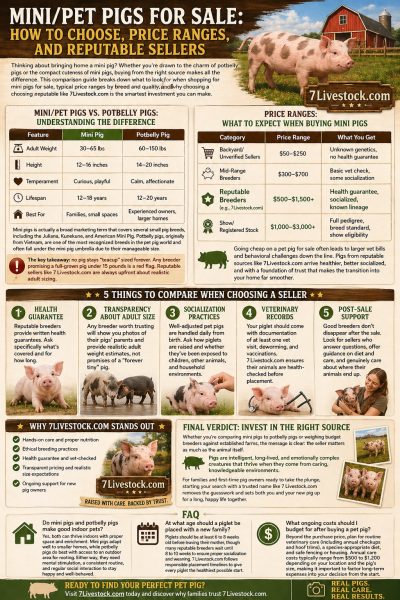
mini/pet pigs for sale Thinking about bringing home a mini/pet pig? Whether you’re drawn to the charm of potbelly pigs or the compact cuteness of mini pigs, buying from the right source makes all the difference. This comparison guide breaks down what to look for when shopping for mini/pet pigs for sale, typical price ranges by breed and quality, and why choosing a reputable breeder like 7 Hill Farms & Livestock is the smartest investment you can make.
Mini/Pet Pigs vs. Potbelly Pigs: Understanding the Difference

Before you search for pet pigs for sale, it helps to know what you’re actually buying.

Feature Mini Pig Potbelly Pig
Adult Weight 30–65 lbs 60–150 lbs
Height 12–16 inches 14–20 inches
Temperament Curious, playful Calm, affectionate
Lifespan 12–18 years 12–20 years
Best For Families, small spaces Experienced owners, larger homes

Mini pigs is actually a broad marketing term that covers several small pig breeds, including the Juliana, Kunekune, and American Mini Pig. Potbelly pigs, originally from Vietnam, are one of the most recognized breeds in the pet pig world and often fall under the mini pig umbrella due to their manageable size.

The key takeaway: no pig stays “teacup” sized forever. Any breeder promising a full-grown pig under 15 pounds is a red flag. Reputable sellers like 7 Hill Farms & Livestock are always upfront about realistic adult sizing.

Price Ranges: What to Expect When Buying Mini Pigs

Cost varies widely depending on breed, lineage, training level, and breeder reputation. Here’s a realistic breakdown:

Category Price Range What You Get
Backyard/Unverified Sellers $50–$250 Unknown genetics, no health guarantee
Mid-Range Breeders $300–$700 Basic vet check, some socialization
Reputable Breeders (e.g., 7 Hill Farms) $500–$1,500+ Health guarantee, socialized, known lineage
Show/Registered Stock $1,000–$3,000+ Full pedigree, breed standard, show eligibility

Going cheap on a pet pig for sale often leads to larger vet bills and behavioral challenges down the line. Pigs from reputable sources like 7 Hill Farms & Livestock arrive healthier, better socialized, and with a foundation of trust that makes the transition into your home far smoother.

5 Things to Compare When Choosing a Seller

Not all breeders are created equal. Use this checklist to evaluate any source offering mini pigs for sale or potbelly pigs for sale:

  1. Health Guarantee Reputable breeders provide written health guarantees. Ask specifically what’s covered and for how long.
  2. Transparency About Adult Size Any breeder worth trusting will show you photos of their pigs’ parents and provide realistic adult weight estimates, not promises of a “forever tiny” pig.
  3. Socialization Practices Well-adjusted pet pigs are handled daily from birth. Ask how piglets are raised and whether they’ve been exposed to children, other animals, and household environments.
  4. Veterinary Records Your piglet should come with documentation of at least one vet visit, deworming, and vaccinations. 7 Hill Farms & Livestock ensures their animals are health-checked before placement.
  5. Post-Sale Support Good breeders don’t disappear after the sale. Look for sellers who answer questions, offer guidance on diet and care, and genuinely care about where their animals end up.

Find a Mini/Pet Pig
Near You

Browse Listings

Why 7 Hill Farms & Livestock Stands Out

When comparing sources for mini pigs for sale, 7 Hill Farms & Livestock consistently checks every box. Their pigs are raised with hands-on care, proper nutrition, and a commitment to ethical breeding practices. Unlike large-scale commercial operations, 7 Hill Farms prioritizes the health and temperament of every animal, which means you’re not just buying a pig; you’re welcoming a well-loved, properly prepared companion into your home.

They offer transparent pricing, realistic size expectations, and ongoing support for new pig owners navigating everything from diet to housing setup.

Final Verdict: Invest in the Right Source

Whether you’re comparing mini pigs to potbelly pigs or weighing budget breeders against established farms, the message is clear: the seller matters as much as the animal itself. Pigs are intelligent, long-lived, and emotionally complex creatures that thrive when they come from caring, knowledgeable environments.

For families and first-time pig owners ready to take the plunge, starting your search with a trusted name like 7 Hill Farms & Livestock removes the guesswork and sets both you and your new pig up for a long, happy life together.

FAQ

Do mini pigs and potbelly pigs make good indoor pets?
Yes, both can thrive indoors with proper space and enrichment. Mini pigs adapt well to smaller homes, while potbelly pigs do best with access to an outdoor area for rooting. Either way, they need mental stimulation, a consistent routine, and regular social interaction to stay happy and well-behaved.

At what age should a piglet be placed with a new family?
Piglets should be at least 6 to 8 weeks old before leaving their mother, though many reputable breeders wait until 8 to 10 weeks to ensure proper socialization and weaning. 7 Hill Farms & Livestock follows responsible placement timelines to give every piglet the healthiest possible start.

What ongoing costs should I budget for after buying a pet pig?
Beyond the purchase price, plan for routine veterinary care (including annual checkups and hoof trims), a species-appropriate diet, and safe fencing or housing. Annual care costs typically range from $500 to $1,200 depending on your location and the pig’s size, making it important to factor long-term expenses into your decision from the start.

Posted on April 28, 2026 in ,

Photos that Sell Pigs: A Practical Guide for Breeders

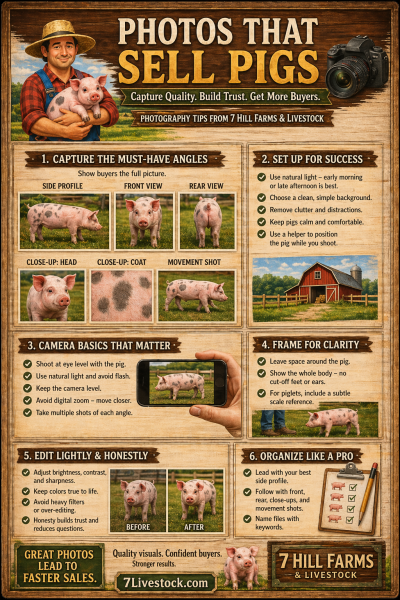
Photos that sell pigsStrong listings start with strong visuals. If you want faster inquiries and better pricing, your photos have to do the heavy lifting. This playbook walks through pig photography tips and the best way to take pig photos so your listings stand out and sell pigs effectively. Whether you are selling piglets or mature breeding stock, the right images build trust, show quality, and help buyers make quick decisions.
Sell Pigs Faster with Great Photos

Start with Clean, Simple Setups

Buyers should focus on the animal, not the background. Choose a clean pen, pasture edge, or neutral wall. Remove buckets, tools, and clutter. A simple setting helps buyers clearly see body structure, coat condition, and overall health.

Natural light is your best friend. Shoot early in the morning or late afternoon when light is softer and more even. Avoid harsh midday sun that creates deep shadows and blown highlights. Position the pig so the light falls across its body, not directly behind it.

Capture the Must Have Angles

If you want your listing to perform, include a consistent set of angles. This is the best way to take pig photos that answer buyer questions before they ask.

  • Side profile is the priority. Stand at the pig’s midline and capture a full body shot from nose to tail. Keep the camera level to avoid distortion.
  • Front view shows width and stance. Make sure the pig is standing square and not turning away.
  • Rear view helps buyers assess structure and balance.
  • Close ups matter. Include a clear shot of the face, ears, and eyes. Add a detail shot of the coat and skin condition.
  • Movement shots can help too. A short burst of photos while the pig walks shows soundness and mobility.

Keep Pigs Calm and Cooperative

Good photos require a calm animal. Take a few minutes to let pigs settle before shooting. Use a small amount of feed to position them where you want, but avoid shots where the head is buried in a bucket.

If possible, work with a second person. One person handles positioning while the other focuses on the camera. This speeds up the process and increases your chances of getting clean, usable shots.

Use the Right Camera Basics

You do not need expensive equipment to get professional results. A modern smartphone works well if you use it correctly.

  • Shoot at eye level with the pig. This creates a more natural and accurate perspective.
  • Use gridlines to keep the horizon straight and the pig centered.
  • Avoid digital zoom. Move closer instead to maintain image quality.
  • Take multiple shots of each angle. Small movements can change the entire look of the photo.

Frame for Clarity and Scale

Buyers want to understand size and proportion. Leave a little space around the pig so it does not feel cramped in the frame. Avoid cutting off feet or ears.

For piglets, include one image with a familiar object or a person at a distance for scale. Keep it subtle so the focus remains on the animal.

Have a Pig to Sell?

  • Reach ready buyers
  • Easy listing process
  • Straightforward pricing

Create Listing

Edit Lightly and Honestly

Editing should enhance clarity, not mislead. Adjust brightness, contrast, and sharpness so details are easy to see. Correct color if needed so the pig looks true to life.

Do not over edit. Avoid filters that change coat color or hide imperfections. Honest photos build trust and reduce back and forth with buyers.

Organize Your Listing Like a Pro

Lead with your best side profile image. This is your primary conversion driver.

Follow with front and rear views, then close ups and movement shots. Keep a consistent order across listings so repeat buyers know what to expect.

Name your image files with keywords when possible. This supports search visibility on some platforms and helps keep your media organized.

Common Mistakes That Hurt Sales

  • Busy backgrounds that distract from the pig
  • Blurry images caused by motion or low light
  • Extreme angles that distort body shape
  • Inconsistent lighting across photos
  • Too few images to fully represent the animal

Avoiding these mistakes can immediately improve listing performance.

Turn Photos into Faster Sales

Great photos reduce uncertainty. When buyers can clearly see structure, condition, and temperament, they are more likely to reach out and move forward. Consistency across your listings also strengthens your brand and reputation.

At 7 Hill Farms & Livestock, we have seen how quality visuals can increase inquiries and improve buyer confidence. Treat every listing like a showcase and your results will reflect it.

FAQ

How many photos should I include in a pig listing?
Aim for at least five to eight images. Include side, front, and rear views, plus close ups and one movement shot for a complete presentation.

What time of day is best for pig photography?
Early morning or late afternoon provides soft, even light that shows detail without harsh shadows or glare.

Can I use my phone for professional looking pig photos?
Yes. Modern smartphones work well when you shoot at eye level, use natural light, and avoid digital zoom.


Posted on April 24, 2026 in ,

Kunekune Pigs for Sale: How to Choose, Price Ranges, and Reputable Sellers

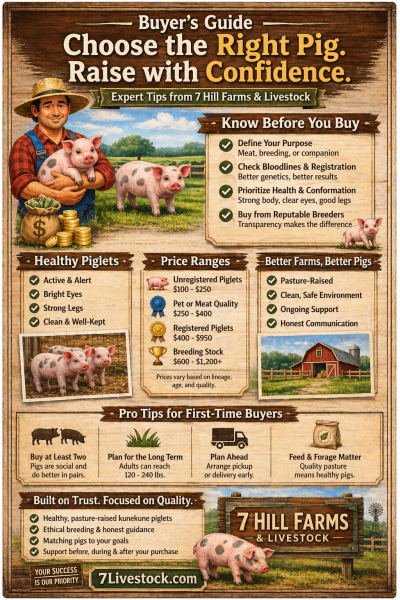
Kunekune pigs for sale graphicKunekune pigs have quietly become one of the most sought-after heritage breeds for small farms, homesteads, and even companion livestock. Known for their docile temperament, grazing ability, and manageable size, these pigs offer a unique blend of practicality and personality. If you are exploring Kunekune pigs for sale, this pillar guide breaks down how to choose the right animal, what price ranges to expect, and how to identify reputable Kunekune breeders.
Choosing Among Kunekune Pigs for Sale

Originally from New Zealand, Kunekune pigs are one of the only true grazing pig breeds. Instead of rooting aggressively like traditional swine, they thrive on pasture and are known for being friendly, intelligent, and easy to manage.

For buyers, this means:

  • Lower feed costs compared to conventional pigs
  • Less land damage
  • A more approachable temperament for beginners

They are commonly raised for three purposes: breeding, meat production, or companionship. Your intended use should guide every buying decision.

How to Choose the Right Kunekune Pig

Not all Kunekune piglets are equal. The right choice depends on your goals, land setup, and long-term plans.

Define Your Purpose First

Before contacting Kunekune breeders, ask:

  • Are you raising pigs for meat production
  • Do you want breeding stock
  • Are you looking for pets or pasture companions

For example:

  • Meat growers typically choose barrows
  • Breeders need registered gilts and boars
  • Pet owners often prefer docile, handled piglets

Your answer determines both price and quality expectations.

Look at Bloodlines and Registration

Registered Kunekune piglets often come with documented lineage. This matters most for breeding programs and resale value.

  • Registered pigs come with predictable traits
  • Unregistered pigs are more affordable and suitable for pets or meat

Registered breeding stock typically starts around $500 and can exceed $850 or more depending on lineage and performance.

Evaluate Conformation and Health

A quality Kunekune should have:

  • Strong legs and balanced structure
  • Clear eyes and a healthy coat
  • Proper teat count for breeding purposes

Reputable breeders will also provide:

  • Vaccination and deworming records
  • Feeding guidance
  • Ongoing support

Kunekune Pig Price Ranges

Pricing can vary depending on registration, age, and intended use. Here is a realistic breakdown.

Entry-Level Unregistered Piglets

  • $100 to $250 for basic piglets
  • Often sold as pets or feeder pigs
  • Limited breeding value

Mid-Range Pet or Meat Quality

  • $250 to $400 for barrows or non-breeding gilts
  • Ideal for small farms or companion animals

Registered Piglets

  • $400 to $950 depending on gender and lineage
  • Higher-quality genetics and documentation

Breeding Stock

  • $600 to $1,200 or more for registered breeding animals
  • Top-tier bloodlines can exceed $1,000 per animal

As a general rule, price increases with age, registration, and proven breeding performance.

Find a Kunekune Pig
Near You

Browse Listings

How to Identify Reputable Kunekune Breeders

The difference between a good and poor breeder directly impacts your success.

Key Signs of a Quality Breeder

  • Transparent pricing and clear policies
  • Willingness to answer detailed questions
  • Clean, pasture-based environment
  • Proof of registration when applicable
  • References from past buyers

A reputable breeder should guide you rather than simply sell to you.

Red Flags to Avoid

  • No health records or documentation
  • Extremely low pricing without explanation
  • No interest in your set-up or experience level
  • Poor animal conditions

A slightly higher upfront investment often prevents costly problems later.

Buying Tips That Most First-Time Buyers Miss

Even experienced livestock buyers overlook these details when purchasing Kunekune piglets.

Always Buy at Least Two

Kunekune pigs are social animals and thrive in pairs or small groups. Buying a single pig can lead to stress and behavioral issues.

Understanding Growth Expectations

While smaller than commercial breeds, adult Kunekunes can still reach 120 to 240 pounds, so plan space accordingly.

Consider Transportation and Timing

Piglets are typically ready at 8 to 10 weeks old. Some breeders require deposits and scheduled pickup windows.

Ask About Feeding Programs

Because Kunekunes are grazing pigs, pasture quality plays a major role. A good breeder will explain how to transition feed and maintain healthy growth.

Need a Special Pig?

  • Give us your wish list
  • We’ll match you to sellers
  • No obligation to buy

Order a Pig

Why Buyers Choose 7 Hill Farms & Livestock

When evaluating Kunekune pigs for sale, working with a knowledgeable provider makes all the difference. 7 Hill Farms & Livestock focuses on:

  • Healthy, pasture-raised Kunekune piglets
  • Clear guidance for first-time and experienced buyers
  • Ethical breeding practices
  • Matching pigs to the buyer’s specific goals

Whether you are building a breeding program or starting with your first pair of Kunekune piglets, the right guidance supports long-term success.

Final Takeaway

Kunekune pigs offer a strong combination of easy management, reliable genetics, and versatility. The key to a successful purchase is aligning your goals with the right animal and breeder.

Focus on:

  • Purpose such as pet, meat, or breeding
  • Registration and bloodlines
  • Realistic price expectations
  • Breeder transparency

With the right approach, Kunekune pigs become a long-term asset to your farm or homestead.

FAQ

What makes Kunekune piglets different from other pig breeds

Kunekune piglets are known for their grazing ability, gentle temperament, and minimal rooting behavior. This makes them easier to manage on pasture compared to many traditional pig breeds that tend to dig and damage land.

How much land do Kunekune pigs need

A small group of Kunekune pigs can thrive on a modest pasture setup, often around one acre or less depending on forage quality. Rotational grazing can help maintain pasture health and reduce supplemental feed costs.

Are Kunekune pigs a good option for beginners

Yes, Kunekune pigs are considered one of the most beginner-friendly pig breeds. Their calm nature, smaller size, and pasture-based feeding habits make them ideal for new livestock owners.

Posted on April 22, 2026 in ,

How to Sell Gloucestershire Old Spot Pigs Faster: Pricing, Photos, and Where Listings Convert

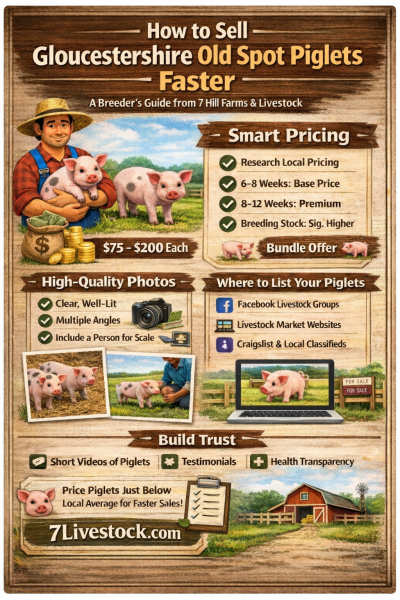
Sell Gloucestershire Old Spot PigsSelling heritage pigs like Gloucestershire Old Spots is not just about having quality animals. It is about positioning, presentation, and placing your listings where serious buyers are already looking. If you want to sell Gloucestershire Old Spot pigs faster while protecting your margins, this how-to playbook from 7 Hill Farms & Livestock walks you through exactly what works.
Sell Gloucestershire Old Spot Pigs Effectively

Start With Smart Pricing That Moves Animals

If you want to price piglets effectively, you need to balance speed and profit. Too high, and listings sit. Too low, and you leave money on the table.

How to Set Your Price:

  • Research local comps
    Look at what other Gloucestershire Old Spot breeders are charging within a 200–300-mile radius. Heritage breeds often vary widely by region.
  • Adjust for age and readiness
    • 6–8 weeks (weaned piglets): baseline pricing
    • 8–12 weeks: slight premium for stronger starts
    • Breeding-age stock: significantly higher pricing
  • Factor in genetics and registration
    Registered or traceable lineage animals can command 20–40% more.
  • Bundle for faster sales
    Offer discounts for pairs or small groups. Many buyers prefer at least two pigs for social and growth reasons.

Pro Tip:

If your goal is faster turnover, price just below the local average and highlight value instead of being the cheapest option.

Use Photos That Actually Sell (Not Just Show)

Most sellers lose buyers before they ever get a message. Why? Weak photos.

What High-Converting Listings Include:

  • Clean, well-lit images
    Natural daylight beats barn lighting every time.
  • Multiple angles
    Side profile, front view, and movement shots.
  • Scale and context
    Include a person or known object to show size.
  • Healthy environment
    Clean bedding, fresh pasture, or well-kept pens signal good care.
  • Close-up detail
    Show spotting patterns, coat condition, and facial features.

What to Avoid:

  • Mud-covered pigs with no definition
  • Dark, blurry images
  • Overcrowded pen shots

Buyers searching for how to sell piglets often underestimate how much trust is built visually. Clean, clear photos can double your response rate.

Write Listings That Answer Buyer Questions Instantly

Your listing should remove friction. The more questions you answer upfront, the faster buyers commit.

Must-Include Details:

  • Breed: Gloucestershire Old Spot
  • Age and weaning status
  • Sex (boar, gilt, barrow)
  • Vaccination or health status
  • Feeding program
  • Registration (if applicable)
  • Location and pickup details

Example Structure:

Headline:
Gloucestershire Old Spot Piglets – Healthy, Pasture-Raised, Ready Now

Body:
Raised on pasture at 7 Hill Farms & Livestock, these Gloucestershire Old Spot piglets are weaned, thriving, and ready for their next home. Known for their docile temperament and excellent meat quality, they are ideal for small farms or breeding programs.

Clear, direct writing reduces back-and-forth messaging and speeds up decisions.

Have a Pig to Sell?

  • Reach ready buyers
  • Easy listing process
  • Straightforward pricing

Create Listing

List Where Buyers Are Already Searching

Not all platforms are equal. Some generate tire-kickers. Others produce real buyers.

Best Platforms to Sell Faster:

  • Facebook Groups (Farm & Livestock Focused)
    Highly active and location driven. Great for quick local sales.
  • Craigslist (Farm & Garden Section)
    Still strong for regional buyers looking for piglets.
  • Livestock-Specific Marketplaces
    Sites dedicated to farm animals often attract more serious buyers.
  • Your Own Website or Landing Page
    This is where 7 Hill Farms & Livestock stands out. Owning your listing page builds credibility and allows you to capture inquiries directly.

Optimize Timing and Responsiveness

Speed is not just about the listing. It is about how you manage incoming interest.

Conversion Tips:

  • Post early in the week (Monday–Wednesday) for maximum visibility
  • Refresh listings every 3–5 days to stay near the top
  • Respond within hours, not days
  • Have pickup details ready immediately

Buyers often contact multiple sellers. The first professional response usually wins.

Build Trust Like a Pro Breeder

Buyers searching for Gloucestershire Old Spot breeders are often looking for more than just pigs. They want confidence in what they are buying.

Trust Builders That Convert:

  • Short videos of piglets moving and interacting
  • Testimonials or past buyer feedback
  • Clear farm branding (logo, consistent naming)
  • Simple health guarantees or transparency

Trust shortens decision time and reduces price resistance.

Final Takeaway

If you want to sell Gloucestershire Old Spot piglets faster, focus on three levers: pricing strategy, high-quality photos, and placing listings where buyers already convert. Combine that with fast communication and strong presentation, and you will consistently move animals without racing to the bottom on price.

7 Hill Farms & Livestock applies this exact playbook to turn interest into real buyers, helping ensure every litter reaches the right home quickly and efficiently.

FAQ

How do I price piglets to sell quickly without losing money?
Start slightly below the local average, then emphasize quality, health, and genetics to justify your value.

Where is the best place to sell Gloucestershire Old Spot piglets?
Facebook livestock groups, Craigslist, and dedicated livestock marketplaces tend to convert fastest for local buyers.

What makes buyers choose one breeder over another?
Clear photos, honest descriptions, fast responses, and visible proof of animal care all play a major role in buyer decisions.

Posted on April 20, 2026 in ,

How to Price Piglets and Breeding Stock by Breed, Age, and Registration

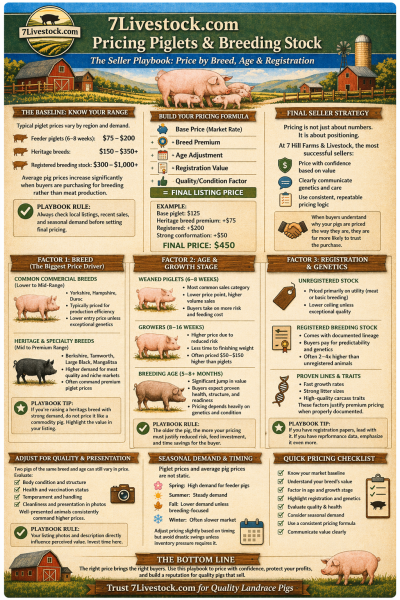
price pigletsThe ability to price piglets and breeding stock correctly is one of the most important skills for any livestock seller. Set your prices too low and you leave money on the table. Price too high and animals sit unsold. The key is to build a consistent pricing framework based on breed, age, and registration status, while staying aligned with real-world piglet prices and average pig prices in your region.
Seller Playbook: How to Price Piglets and Breeding Stock

This Seller Playbook walks you through a practical, repeatable system you can use for every listing.

Before adjusting for specifics, you need a baseline.

Typical piglet prices vary widely depending on region and demand, but most fall within a general range:

  • Feeder piglets (6–8 weeks): $75–$200
  • Heritage breeds: $150–$350+
  • Registered breeding stock: $300–$1,000+

Average pig prices increase significantly when buyers are purchasing for breeding rather than meat production. Your first step is identifying where your animals sit within that spectrum.

Playbook Rule: Always check local listings, recent sales, and seasonal demand before setting final pricing.

Factor 1: Breed (The Biggest Price Driver)

Not all pigs are priced equally. Breed reputation, rarity, and demand all influence value.

Common Commercial Breeds (Lower to Mid-Range)

  • Yorkshire, Hampshire, Duroc
  • Typically priced for production efficiency
  • Lower entry price unless exceptional genetics

Heritage & Specialty Breeds (Mid to Premium Range)

  • Berkshire, Tamworth, Large Black, Mangalitsa
  • Higher demand for meat quality and niche markets
  • Often command premium piglet prices

Playbook Tip:
If you’re raising a heritage breed with strong demand, do not price it like a commodity pig. Highlight the value in your listing.

Factor 2: Age and Growth Stage

Age directly impacts both cost and buyer expectations.

Weaned Piglets (6–8 weeks)

  • Most common sales category
  • Lower price point, higher volume sales
  • Buyers take on more risk and feeding cost

Growers (8–16 weeks)

  • Higher price due to reduced risk
  • Less time to finishing weight
  • Often priced $50–$150 higher than piglets

Breeding Age (5–8+ months)

  • Significant jump in value
  • Buyers expect proven health, structure, and readiness
  • Pricing depends heavily on genetics and condition

Playbook Rule:
The older the pig, the more your pricing must justify reduced risk, feed investment, and time savings for the buyer.

Factor 3: Registration and Genetics

This is where pricing can multiply quickly.

Unregistered Stock

  • Priced primarily on utility (meat or basic breeding)
  • Lower ceiling unless exceptional quality

Registered Breeding Stock

  • Comes with documented lineage
  • Buyers pay for predictability and genetics
  • Often 2–4x higher than unregistered animals

Proven Lines and Traits

  • Fast growth rates
  • Strong litter sizes
  • High-quality carcass traits

These factors justify premium pricing when properly documented.

Playbook Tip:
If you have registration papers, lead with it. If you have performance data, emphasize it even more.

Have a Pig to Sell?

  • Reach ready buyers
  • Easy listing process
  • Straightforward pricing

Create Listing

Adjust for Quality and Presentation

Two pigs of the same breed and age can still vary in price.

Evaluate:

  • Body condition and structure
  • Health and vaccination status
  • Temperament and handling
  • Cleanliness and presentation in photos

Well-presented animals consistently command higher prices.

Playbook Rule:
Your listing photos and description directly influence perceived value. Invest time here.

Seasonal Demand and Timing

Piglet prices and average pig prices are not static.

  • Spring: High demand for feeder pigs
  • Summer: Steady demand
  • Fall: Lower demand unless breeding-focused
  • Winter: Often slower market

Adjust pricing slightly based on timing but avoid drastic swings unless inventory pressure requires it.

Build Your Pricing Formula

Here is a simple framework you can use:

Base Price (Market Rate)

  • Breed Premium
  • Age Adjustment
  • Registration Value
  • Quality/Condition Factor = Final Listing Price

Example:

  • Base piglet: $125
  • Heritage breed premium: +$75
  • Registered: +$200
  • Strong conformation: +$50
    Final Price: $450

Final Seller Strategy

Pricing is not just about numbers. It is about positioning.

At 7 Hill Farms & Livestock, the most successful sellers:

  • Price with confidence based on value
  • Clearly communicate genetics and care
  • Use consistent, repeatable pricing logic

When buyers understand why your pigs are priced the way they are, they are far more likely to trust the purchase.

FAQ

How do I know if my piglets are priced too high?
If you are getting inquiries but no conversions, your price may be slightly above market. If there are no inquiries at all, you may be significantly overpriced or lacking visibility.

Should I price all piglets in a litter the same?
Not necessarily. Stronger, better-structured piglets or those with standout traits can justify slightly higher pricing.

Is registration always worth it for pricing?
Yes, if you are targeting breeding buyers. Registration adds credibility and significantly increases perceived value.

Posted on April 17, 2026 in ,

Pig Seller Checklist: From Photos to Pick-Up Day

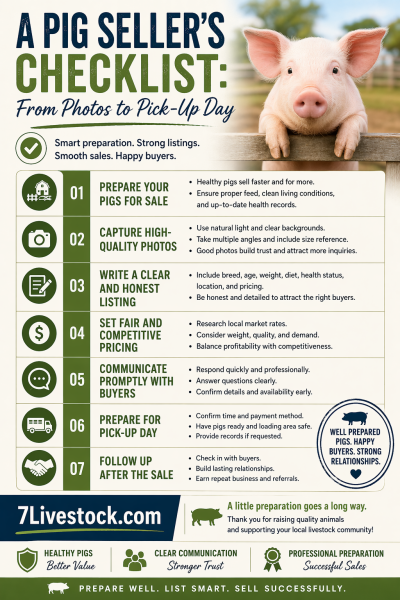
pig seller checklist Selling pigs successfully requires more than just posting an ad and waiting for buyers. Whether you’re new to livestock sales or looking to improve your results, having a structured approach ensures smoother transactions, healthier animals, and better pricing. This help guide from 7 Hill Farms & Livestock walks you through essential pig seller steps, from creating effective listings to preparing for pick-up day.
How Pig Sellers Should Prepare

Step 1: Prepare Your Pigs for Sale

Before creating your listing, focus on the condition and presentation of your pigs. Buyers are more confident when animals appear healthy, well-managed, and properly handled.

Checklist:

  • Ensure pigs are well-fed and hydrated
  • Maintain clean living conditions
  • Check for signs of illness or injury
  • Keep vaccinations and health records updated
  • Separate pigs by size or breed if selling multiple groups

Strong pig sale preparation starts with animal quality. Healthy pigs not only photograph better but also command higher prices and attract serious buyers.

Step 2: Capture High-Quality Photos

Photos are the first impression buyers will have of your pigs. Poor images can reduce interest, even if the animals are high quality.

Pig listing tips for photos:

  • Use natural lighting whenever possible
  • Capture multiple angles (side profile, front, and group shots)
  • Keep the background clean and uncluttered
  • Show size reference when relevant
  • Avoid blurry or dark images

Think of your photos as your digital handshake. A professional-looking presentation builds trust and increases inquiries.

Step 3: Write a Clear and Honest Listing

A strong listing is one of the most important pig listing tips for attracting the right buyers. Transparency reduces back-and-forth communication and filters out unqualified inquiries.

Include the following details:

  • Breed or crossbreed information
  • Age and approximate weight
  • Feeding program or diet
  • Health status and vaccinations
  • Location and pick-up details
  • Pricing (per head or group rate)

Be straightforward and avoid exaggeration. Buyers appreciate honesty, and it helps establish long-term relationships if you plan to sell regularly.

Step 4: Set Fair and Competitive Pricing

Pricing can make or break your sale. Research local market rates and consider your pig’s condition, breed, and size.

Pricing considerations:

  • Market demand in your region
  • Feed and care costs invested
  • Weight and growth potential
  • Bulk discounts for multiple purchases

As a pig seller, your goal is to balance profitability with market competitiveness. Overpricing may lead to slow sales, while underpricing can reduce perceived value.

Have a Pig to Sell?

  • Reach ready buyers
  • Easy listing process
  • Straightforward pricing

Create Listing

Step 5: Communicate Promptly with Buyers

Once your listing is live, timely communication becomes critical. Buyers often contact multiple sellers, so responsiveness can determine who gets the sale.

Best practices:

  • Respond to messages quickly and professionally
  • Answer questions clearly and accurately
  • Confirm availability before scheduling pick-up
  • Be upfront about any concerns or limitations

Good communication builds confidence and reduces the likelihood of last-minute cancellations.

Step 6: Prepare for Pick-Up Day

Proper pig sale preparation doesn’t stop once you have a buyer. Pick-up day is your opportunity to finalize the transaction smoothly and leave a positive impression.

Pick-up checklist:

  • Confirm appointment time with buyer
  • Have pigs sorted and ready for loading
  • Ensure loading area is safe and accessible
  • Provide any health or feeding records if applicable
  • Prepare change or confirm payment method in advance

A smooth pick-up process reflects professionalism and increases the chances of repeat business or referrals.

Step 7: Follow Up After the Sale

Many pig sellers overlook this step, but a simple follow-up can set you apart.

Why it matters:

  • Builds long-term relationships
  • Encourages repeat buyers
  • Generates word-of-mouth referrals
  • Provides feedback for improvement

A quick message asking how the pigs are doing shows you care about your animals beyond the sale.

Final Thoughts

Selling pigs successfully comes down to preparation, presentation, and professionalism. By following this checklist, you can improve your listings, attract better buyers, and streamline the entire sales process.

At 7 Hill Farms & Livestock, we believe that every pig seller benefits from consistent systems and clear communication. Whether you’re selling a few pigs or managing larger livestock operations, applying these pig listing tips and pig sale preparation strategies will help you stand out in a competitive market.

FAQ

What is the best age to sell pigs?
Most pig sellers list pigs between 6 to 12 weeks old for feeder pigs, depending on breed and buyer demand. Market hogs are typically sold at finished weight based on local processing timelines.

How do I attract more buyers to my pig listing?
Use clear photos, detailed descriptions, and competitive pricing. Posting in multiple marketplaces and responding quickly to inquiries will also improve visibility and conversion.

What should buyers bring on pick-up day?
Buyers should bring a suitable trailer or crate, proper ventilation for transport, and confirm payment method in advance to ensure a smooth and safe transfer.

Posted on April 14, 2026 in ,

Feeder Pigs for Sale: How to Choose, Price Ranges, and Reputable Sellers

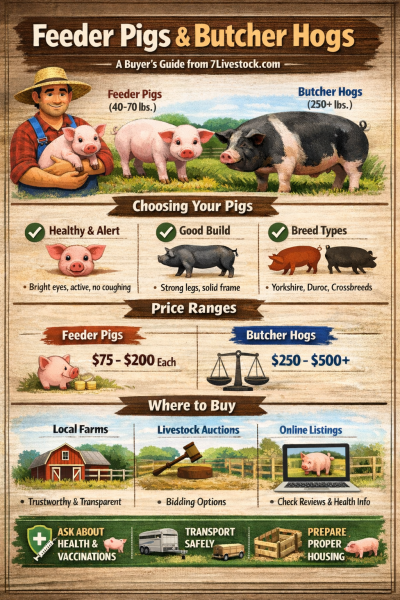
feeder pigs for saleIf you’re searching for feeder pigs for sale, whether for raising to market weight or sourcing butcher hogs, making the right buying decision upfront can significantly impact your profitability, animal health, and overall experience. This guide breaks down how to choose the right pigs, understand pricing, and identify reputable sellers so you can buy with confidence.
Understanding the Use Case: Why Are You Buying?

Before purchasing feeder pigs or butcher hogs, define your goal:

  • Raising feeder pigs to finish weight
    Ideal for homesteaders or small-scale producers aiming for home consumption or resale.
  • Buying butcher hogs or finished hogs
    Best if you want immediate processing without the time and feed investment.
  • Breeding stock vs. meat production
    Feeder pigs are typically not intended for breeding, so focus on growth efficiency rather than lineage alone.

Your intended use determines the size, breed, and price range you should expect.

How to Choose the Right Feeder Pig

Selecting healthy, high-quality feeder pigs is critical. Here’s what to look for:

Age and Weight

  • Typical feeder pigs are 6 to 10 weeks old
  • Ideal weight is 40 to 70 lbs.
  • Avoid pigs that are too small for their age since this may indicate health or growth issues

Physical Health Indicators

  • Bright, alert eyes
  • Smooth skin with minimal lesions
  • Even movement with no limping or stiffness
  • Clean breathing with no coughing or wheezing

Body Structure

  • Long-bodied pigs tend to yield more meat
  • Strong legs and a wide stance indicate good growth potential
  • Avoid overly fat pigs at a young age

Breed Considerations

Some breeds are better suited for meat production:

  • Yorkshire and Landrace for lean growth and efficient feed conversion
  • Duroc for marbling and meat quality
  • Crossbreeds for a balance of growth and flavor

Find a Feeder Pig
Near You

Browse Listings

Feeder Pig Price Ranges (2026 Guide)

Pricing varies based on region, demand, and feed costs. Here are general ranges:

Feeder Pigs

  • $75 to $200 per pig
  • Lower end pricing typically reflects smaller pigs or high supply periods
  • Higher end pricing reflects premium breeds or well-managed stock

Butcher Hogs

  • $250 to $500 or more per hog
  • Typically sold by live weight at $0.80 to $1.50 per pound
  • Some sellers offer flat rate per head pricing

What Affects Price?

  • Feed costs including corn and soy fluctuations
  • Seasonality with higher demand in spring
  • Health programs such as vaccinations and deworming
  • Genetics and breed quality

Where to Find Reputable Sellers

Finding a trustworthy seller is just as important as selecting the right pig.

Local Farms and Livestock Operations

Working directly with farms like 7 Hill Farms & Livestock offers advantages:

  • Transparency on how pigs are raised
  • Ability to inspect animals in person
  • Better communication and ongoing support

Livestock Auctions

  • Competitive pricing and wide variety
  • Less control over health history and added stress from transport

Online Livestock Listings

  • Useful for connecting buyers and sellers
  • Always verify reviews, health records, and clear communication

Questions to Ask Before Buying

To avoid costly mistakes, ask every seller:

  • What is the pig’s age and breed mix?
  • What feed program are they currently on?
  • Have they been vaccinated or dewormed?
  • Are they accustomed to human handling?
  • Have there been any recent illnesses in the herd?

Good sellers will answer clearly and transparently.

Need a Special Pig?

  • Give us your wish list
  • We’ll match you to sellers
  • No obligation to buy

Order a Pig

Transportation and Preparation Tips

Once you’ve found the right feeder pigs:

  • Use a well-ventilated trailer or crate for transport
  • Prepare housing in advance with secure fencing
  • Transition feed gradually to avoid digestive issues
  • Provide clean water immediately upon arrival

Reducing stress during transport and transition helps maintain strong growth performance.

Common Buyer Mistakes to Avoid

  • Buying the cheapest pigs without checking health
  • Mixing pigs from multiple sources too quickly which increases disease risk
  • Underestimating feed costs and time commitment
  • Skipping proper housing and fencing setup

A slightly higher upfront investment in quality pigs often leads to better results and lower long-term costs.

Final Thoughts

Whether you’re raising feeder pigs or sourcing butcher hogs, success starts with informed buying decisions. Focus on animal health, reputable sellers, and realistic pricing expectations. By doing so, you set yourself up for efficient growth, better meat quality, and a smoother overall experience.

FAQ

How many feeder pigs should a beginner start with?
Starting with 2 to 4 pigs is ideal since pigs are social animals and perform better in small groups.

How long does it take to raise feeder pigs to butcher weight?
Typically 4 to 6 months depending on starting size, feed quality, and management.

Are feeder pigs a good investment?
Yes, when managed properly. Costs are predictable and meat quality can exceed store-bought pork.

Posted on April 10, 2026 in , ,

Landrace Pigs for Sale: How to Choose, Price Ranges, and Reputable Sellers

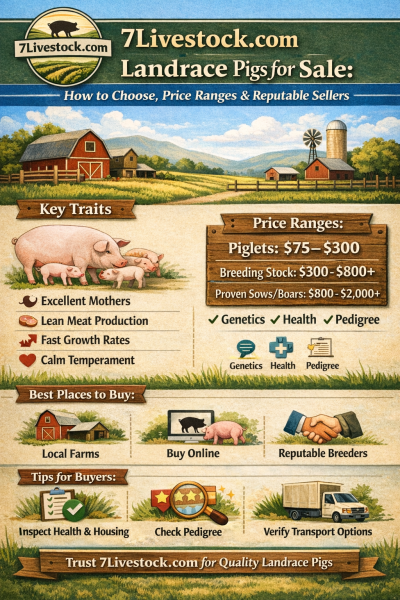
If you’re searching for Landrace pigs for sale, you’re likely looking for a breed known for productivity, maternal strength, and consistent growth performance. Whether you’re a small homesteader or a commercial producer, understanding how to evaluate Landrace piglets, typical pricing, and how to identify trustworthy Landrace breeders is essential before making a purchase.

Landrace pigs for sale Why Choose Landrace Pigs?

Landrace pigs are widely recognized for their long bodies, strong maternal instincts, and high litter sizes. Originally developed in Denmark, they are now a staple in both commercial pork production and breeding programs across the U.S.

Key advantages include:

  • Excellent mothering ability and high weaning rates
  • Lean meat production with efficient feed conversion
  • Calm temperament, making them easier to manage
  • Strong crossbreeding value for hybrid vigor

These traits make Landrace pigs especially valuable for producers focused on scalability and long-term herd performance.

How to Choose the Right Landrace Pigs for Sale

Not all Landrace piglets are created equal. Selecting the right animals early on can significantly impact your results.

Evaluate Health and Structure

Look for piglets that are active, alert, and free of visible defects. A strong Landrace should have:

  • Straight legs and solid hooves
  • A long, level back
  • Clear eyes and smooth skin
  • No signs of respiratory distress or letharg

Ask About Genetics

Reputable Landrace breeders will provide information on lineage. This matters for:

  • Growth rates
  • Litter size potential
  • Disease resistance

If you’re breeding, genetics are one of the most important factors in long-term success.

Consider Age and Weaning Status

Most Landrace piglets are sold between 6–8 weeks of age. Ensure they are fully weaned and eating independently before transport.

Match to Your Operation

Think about your goals:

  • Meat production
  • Breeding stock
  • Show pigs

Your intended use should guide your selection criteria.

Find a Landrace Pig
Near You

Browse Listings

Landrace Pig Price Ranges

Pricing for Landrace pigs can vary widely depending on several factors, including age, pedigree, and breeder reputation.

Typical price ranges:

  • Landrace piglets (6–8 weeks): $75 – $300 per piglet
  • Registered breeding stock: $300 – $800+
  • Proven sows or boars: $800 – $2,000+

What influences pricing?

  • Genetics and registration: Purebred and registered pigs command higher prices
  • Breeder reputation: Established Landrace breeders often charge more due to consistency and quality
  • Health certifications: Vaccinated and health-checked pigs add value
  • Market demand: Prices can fluctuate based on regional demand and feed costs

While it may be tempting to go with the lowest price, investing in quality animals typically pays off in better growth, reproduction, and fewer health issues.

Finding Reputable Landrace Breeders

Choosing the right breeder is just as important as choosing the right pig.

Transparency and Communication

A reputable breeder will:

  • Answer your questions clearly
  • Provide feeding and care guidance
  • Share health and vaccination records

Clean, Well-Managed Facilities
If possible, visit the farm. Look for:

  • Clean pens and proper ventilation
  • Healthy, well-fed animals
  • Organized breeding practices

Consistent Reviews or Referrals
Word of mouth is powerful. Ask for references or look for repeat buyers.

Clear Breeding Goals
Good Landrace breeders focus on improving specific traits like litter size, growth rate, or structural soundness. This level of intentional breeding often results in higher-quality animals.

Need a Special Pig?

  • Give us your wish list
  • We’ll match you to sellers
  • No obligation to buy

Order a Pig

Work with 7 Hill Farms & Livestock

When evaluating Landrace pigs for sale, working with a trusted provider like 7 Hill Farms & Livestock can simplify the process. A reliable operation will prioritize:

  • Strong, healthy Landrace piglets raised in clean conditions
  • Carefully selected genetics for performance and temperament
  • Honest communication and support before and after purchase

This level of consistency is especially valuable if you are building or expanding a herd and need dependable results.

Quality Landrace Pigs for Sale

Buying Landrace pigs is more than a simple transaction. It is an investment in your operation’s future. By focusing on health, genetics, and breeder reputation, you can confidently select animals that align with your goals.

Take the time to compare Landrace breeders, ask the right questions, and understand pricing. Whether you are purchasing a few Landrace piglets or developing a full breeding program, the right choices early on will lead to stronger outcomes down the road.

If you’re currently exploring Landrace pigs for sale, prioritize quality over shortcuts. The difference will be shown in every stage of growth, reproduction, and overall herd performance.

FAQ

How fast do Landrace pigs grow compared to other breeds?
Landrace pigs are known for efficient growth rates, especially when properly fed and managed. While not always the fastest-growing breed, they consistently deliver strong weight gain with excellent feed conversion, making them highly cost-effective for both meat production and breeding programs.

Are Landrace pigs suitable for small farms or homesteads?
Yes, Landrace pigs are a great fit for small farms due to their calm temperament and strong maternal traits. They are especially beneficial for homesteaders looking to raise piglets or maintain a sustainable breeding cycle with reliable litter sizes.

What should I prepare before bringing Landrace piglets home?
Before purchasing, ensure you have secure fencing, proper shelter, clean water access, and a balanced feed program in place. It’s also helpful to have a quarantine area ready to monitor new piglets before introducing them to an existing herd.


Posted on April 7, 2026 in

How to Sell Kunekune Pigs Faster: Pricing, Photos, and Where Listings Convert

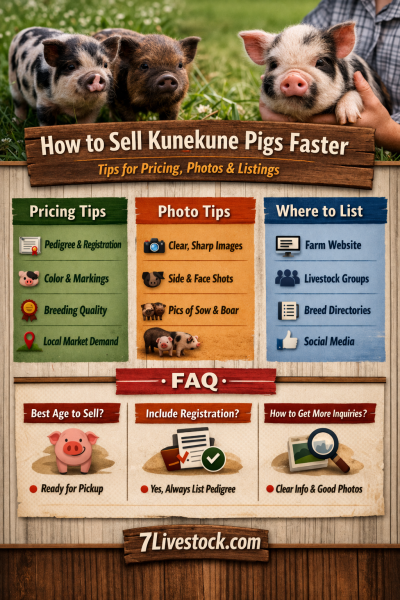
Sell Kunekune pigsIf you are raising Kunekune pigs, getting them sold quickly is not just about posting a few pictures and hoping the right buyer appears. The best results usually come from a combination of accurate pricing, clear presentation, and listing in places where serious buyers are already searching. For farms trying to sell Kunekune pigs efficiently, a better sales process can make a major difference in both response quality and speed.

At 7 Hill Farms & Livestock, we know that buyers are not only looking for cute piglets. They want confidence in the breed, the health of the animals, and the credibility of the seller. That is why farms that understand how to market properly often sell faster than those that simply post a basic ad and wait.

Better Ways to Sell Kunekune Pigs

Kunekunes appeal to a wide range of buyers. Some want them as pasture pigs, some want them for breeding, and others are looking for smaller pigs with gentle personalities for hobby farm settings. Because of that, your listing has to answer several questions at once.

Buyers often want to know:

  • Age and gender of the piglets
  • Registration status
  • Parent bloodlines
  • Current feeding program
  • Health condition and handling
  • Whether the piglets are suited for breeding, grazing, or pets

If those details are missing, people hesitate. When they hesitate, they keep scrolling. If you want to understand how to sell piglets faster, start by reducing uncertainty for the buyer.

Pricing Piglets the Right Way

One of the biggest mistakes sellers make is guessing at price or copying another listing without understanding the market. To price piglets effectively, you need to consider more than age alone.

Your asking price should reflect:

  • Registration or pedigree value
  • Color and markings
  • Breeding quality
  • Overall size and condition
  • Local demand
  • Whether the piglets are intact, gilt, or barrow
  • The reputation of the farm

Well-presented Kunekune piglets from reputable Kunekune breeders can often justify a stronger price than generic or incomplete listings. At the same time, overpriced piglets tend to sit longer, especially if the ad does not explain why they are worth the premium.

A good strategy is to set a fair price that matches the animal’s value and include enough detail to support it. Buyers are more likely to respond positively when they understand what they are paying for.

Photos That Help Listings Convert

Photos are often the first thing a buyer notices. Poor lighting, cluttered backgrounds, or distant shots can make even healthy piglets look less appealing. Strong photos increase trust and create more clicks.

For better results, include:

  • A clean side profile of each piglet
  • A close-up of the face
  • A group photo of the litter
  • A photo of the sow and boar when possible
  • Images taken in natural light
  • Clean pasture or pen backgrounds

Try to avoid blurry images, dark barns, or photos with distracting objects in the frame. Buyers want to clearly see body shape, color pattern, and overall condition. For many Kunekune breeders, improved photos alone lead to better inquiry rates.

Have a Pig to Sell?

  • Reach ready buyers
  • Easy listing process
  • Straightforward pricing

Create Listing

Write Listings That Answer Buyer Questions

A listing should do more than announce animals are available. It should help buyers feel informed and ready to take the next step. The best listings are specific, easy to scan, and written with real buyer concerns in mind.

A strong listing should mention:

  • Date of birth
  • Breed and bloodline details
  • Registration information
  • Sex of each piglet
  • Weaning status
  • Temperament
  • Feeding routine
  • Pickup location
  • Contact method

Using phrases like Kunekune piglets for sale, how to sell piglets, and Kunekune breeders naturally within the description can also help your page perform better in search results if you are posting on your own website.

Where Listings Convert Best

Not every platform produces the same quality of buyer. General classified sites may generate traffic, but they can also bring a lot of low-intent messages. More targeted channels often perform better.

Consider listing on:

  • Your farm website
  • Agricultural marketplace platforms
  • Farm and livestock sale groups
  • Breed-specific directories
  • Social media business pages
  • Email outreach to past buyers or referrals

A farm website is especially valuable because it gives you more control over your message, photos, and branding. It also helps build long-term trust. When buyers see a professional online presence, they are more likely to believe they are dealing with an established farm rather than a random seller.

Sell Kunekune Pigs Effectively

Fast sales often come down to credibility. Buyers want to know they are working with people who care about animal quality and communication. That is why reputation matters so much in livestock marketing.

At 7 Hill Farms & Livestock, building buyer trust starts with honest presentation, quality animals, and responsive follow-up. If you want to sell faster, be ready to answer questions quickly, provide additional photos, and explain what makes your piglets a good fit for the buyer’s goals.

FAQ

What is the best age to list Kunekune piglets for sale?
Many sellers begin promoting Kunekune piglets before weaning so buyers can reserve early, but listings tend to convert best when the expected pickup timeline is clearly stated. Buyers want to know when the piglets will be ready to leave, what they are eating, and how they have been handled.

Should Kunekune breeders include registration details in every listing?
Yes. Serious buyers often look for registration status, bloodlines, and breeder credibility right away. When Kunekune breeders include those details upfront, they help reduce back-and-forth questions and make the listing feel more trustworthy.

What helps a piglet listing get more serious inquiries?
Clear pricing, strong photos, and a complete description usually make the biggest difference. If you want to know how to sell piglets more effectively, focus on showing value, explaining the piglet’s background, and posting where livestock buyers are already searching.


Posted on March 27, 2026 in , ,