 The ability to price piglets and breeding stock correctly is one of the most important skills for any livestock seller. Set your prices too low and you leave money on the table. Price too high and animals sit unsold. The key is to build a consistent pricing framework based on breed, age, and registration status, while staying aligned with real-world piglet prices and average pig prices in your region.
Seller Playbook: How to Price Piglets and Breeding Stock
This Seller Playbook walks you through a practical, repeatable system you can use for every listing.
Before adjusting for specifics, you need a baseline.
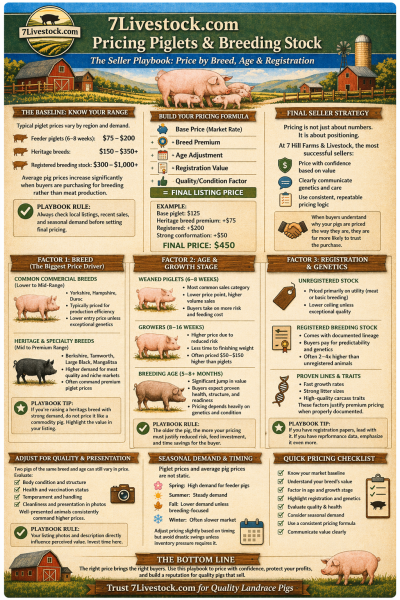
Typical piglet prices vary widely depending on region and demand, but most fall within a general range:
- Feeder piglets (6–8 weeks): $75–$200
- Heritage breeds: $150–$350+
- Registered breeding stock: $300–$1,000+
Average pig prices increase significantly when buyers are purchasing for breeding rather than meat production. Your first step is identifying where your animals sit within that spectrum.
Playbook Rule: Always check local listings, recent sales, and seasonal demand before setting final pricing.
Factor 1: Breed (The Biggest Price Driver)
Not all pigs are priced equally. Breed reputation, rarity, and demand all influence value.
Common Commercial Breeds (Lower to Mid-Range)
- Yorkshire, Hampshire, Duroc
- Typically priced for production efficiency
- Lower entry price unless exceptional genetics
Heritage & Specialty Breeds (Mid to Premium Range)
- Berkshire, Tamworth, Large Black, Mangalitsa
- Higher demand for meat quality and niche markets
- Often command premium piglet prices
Playbook Tip:
If you’re raising a heritage breed with strong demand, do not price it like a commodity pig. Highlight the value in your listing.
Factor 2: Age and Growth Stage
Age directly impacts both cost and buyer expectations.
Weaned Piglets (6–8 weeks)
- Most common sales category
- Lower price point, higher volume sales
- Buyers take on more risk and feeding cost
Growers (8–16 weeks)
- Higher price due to reduced risk
- Less time to finishing weight
- Often priced $50–$150 higher than piglets
Breeding Age (5–8+ months)
- Significant jump in value
- Buyers expect proven health, structure, and readiness
- Pricing depends heavily on genetics and condition
Playbook Rule:
The older the pig, the more your pricing must justify reduced risk, feed investment, and time savings for the buyer.
Factor 3: Registration and Genetics
This is where pricing can multiply quickly.
Unregistered Stock
- Priced primarily on utility (meat or basic breeding)
- Lower ceiling unless exceptional quality
Registered Breeding Stock
- Comes with documented lineage
- Buyers pay for predictability and genetics
- Often 2–4x higher than unregistered animals
Proven Lines and Traits
- Fast growth rates
- Strong litter sizes
- High-quality carcass traits
These factors justify premium pricing when properly documented.
Playbook Tip:
If you have registration papers, lead with it. If you have performance data, emphasize it even more.
Adjust for Quality and Presentation
Two pigs of the same breed and age can still vary in price.
Evaluate:
- Body condition and structure
- Health and vaccination status
- Temperament and handling
- Cleanliness and presentation in photos
Well-presented animals consistently command higher prices.
Playbook Rule:
Your listing photos and description directly influence perceived value. Invest time here.
Seasonal Demand and Timing
Piglet prices and average pig prices are not static.
- Spring: High demand for feeder pigs
- Summer: Steady demand
- Fall: Lower demand unless breeding-focused
- Winter: Often slower market
Adjust pricing slightly based on timing but avoid drastic swings unless inventory pressure requires it.
Build Your Pricing Formula
Here is a simple framework you can use:
Base Price (Market Rate)
- Breed Premium
- Age Adjustment
- Registration Value
- Quality/Condition Factor = Final Listing Price
Example:
- Base piglet: $125
- Heritage breed premium: +$75
- Registered: +$200
- Strong conformation: +$50
Final Price: $450
Final Seller Strategy
Pricing is not just about numbers. It is about positioning.
At 7 Hill Farms & Livestock, the most successful sellers:
- Price with confidence based on value
- Clearly communicate genetics and care
- Use consistent, repeatable pricing logic
When buyers understand why your pigs are priced the way they are, they are far more likely to trust the purchase.
FAQ
How do I know if my piglets are priced too high?
If you are getting inquiries but no conversions, your price may be slightly above market. If there are no inquiries at all, you may be significantly overpriced or lacking visibility.
Should I price all piglets in a litter the same?
Not necessarily. Stronger, better-structured piglets or those with standout traits can justify slightly higher pricing.
Is registration always worth it for pricing?
Yes, if you are targeting breeding buyers. Registration adds credibility and significantly increases perceived value.