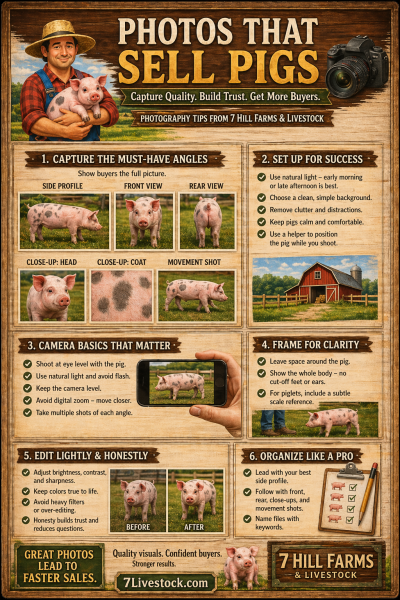
 Strong listings start with strong visuals. If you want faster inquiries and better pricing, your photos have to do the heavy lifting. This playbook walks through pig photography tips and the best way to take pig photos so your listings stand out and sell pigs effectively. Whether you are selling piglets or mature breeding stock, the right images build trust, show quality, and help buyers make quick decisions.
Sell Pigs Faster with Great Photos
Start with Clean, Simple Setups
Buyers should focus on the animal, not the background. Choose a clean pen, pasture edge, or neutral wall. Remove buckets, tools, and clutter. A simple setting helps buyers clearly see body structure, coat condition, and overall health.
Natural light is your best friend. Shoot early in the morning or late afternoon when light is softer and more even. Avoid harsh midday sun that creates deep shadows and blown highlights. Position the pig so the light falls across its body, not directly behind it.
Capture the Must Have Angles
If you want your listing to perform, include a consistent set of angles. This is the best way to take pig photos that answer buyer questions before they ask.
- Side profile is the priority. Stand at the pig’s midline and capture a full body shot from nose to tail. Keep the camera level to avoid distortion.
- Front view shows width and stance. Make sure the pig is standing square and not turning away.
- Rear view helps buyers assess structure and balance.
- Close ups matter. Include a clear shot of the face, ears, and eyes. Add a detail shot of the coat and skin condition.
- Movement shots can help too. A short burst of photos while the pig walks shows soundness and mobility.
Keep Pigs Calm and Cooperative
Good photos require a calm animal. Take a few minutes to let pigs settle before shooting. Use a small amount of feed to position them where you want, but avoid shots where the head is buried in a bucket.
If possible, work with a second person. One person handles positioning while the other focuses on the camera. This speeds up the process and increases your chances of getting clean, usable shots.
Use the Right Camera Basics
You do not need expensive equipment to get professional results. A modern smartphone works well if you use it correctly.
- Shoot at eye level with the pig. This creates a more natural and accurate perspective.
- Use gridlines to keep the horizon straight and the pig centered.
- Avoid digital zoom. Move closer instead to maintain image quality.
- Take multiple shots of each angle. Small movements can change the entire look of the photo.
Frame for Clarity and Scale
Buyers want to understand size and proportion. Leave a little space around the pig so it does not feel cramped in the frame. Avoid cutting off feet or ears.
For piglets, include one image with a familiar object or a person at a distance for scale. Keep it subtle so the focus remains on the animal.
Edit Lightly and Honestly
Editing should enhance clarity, not mislead. Adjust brightness, contrast, and sharpness so details are easy to see. Correct color if needed so the pig looks true to life.
Do not over edit. Avoid filters that change coat color or hide imperfections. Honest photos build trust and reduce back and forth with buyers.
Organize Your Listing Like a Pro
Lead with your best side profile image. This is your primary conversion driver.
Follow with front and rear views, then close ups and movement shots. Keep a consistent order across listings so repeat buyers know what to expect.
Name your image files with keywords when possible. This supports search visibility on some platforms and helps keep your media organized.
Common Mistakes That Hurt Sales
- Busy backgrounds that distract from the pig
- Blurry images caused by motion or low light
- Extreme angles that distort body shape
- Inconsistent lighting across photos
- Too few images to fully represent the animal
Avoiding these mistakes can immediately improve listing performance.
Turn Photos into Faster Sales
Great photos reduce uncertainty. When buyers can clearly see structure, condition, and temperament, they are more likely to reach out and move forward. Consistency across your listings also strengthens your brand and reputation.
At 7 Hill Farms & Livestock, we have seen how quality visuals can increase inquiries and improve buyer confidence. Treat every listing like a showcase and your results will reflect it.
FAQ
How many photos should I include in a pig listing?
Aim for at least five to eight images. Include side, front, and rear views, plus close ups and one movement shot for a complete presentation.
What time of day is best for pig photography?
Early morning or late afternoon provides soft, even light that shows detail without harsh shadows or glare.
Can I use my phone for professional looking pig photos?
Yes. Modern smartphones work well when you shoot at eye level, use natural light, and avoid digital zoom.
 Selling heritage pigs like Gloucestershire Old Spots is not just about having quality animals. It is about positioning, presentation, and placing your listings where serious buyers are already looking. If you want to sell Gloucestershire Old Spot pigs faster while protecting your margins, this how-to playbook from 7 Hill Farms & Livestock walks you through exactly what works.
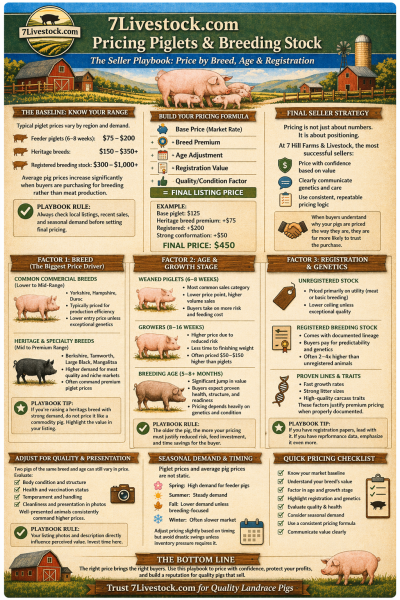 The ability to price piglets and breeding stock correctly is one of the most important skills for any livestock seller. Set your prices too low and you leave money on the table. Price too high and animals sit unsold. The key is to build a consistent pricing framework based on breed, age, and registration status, while staying aligned with real-world piglet prices and average pig prices in your region.
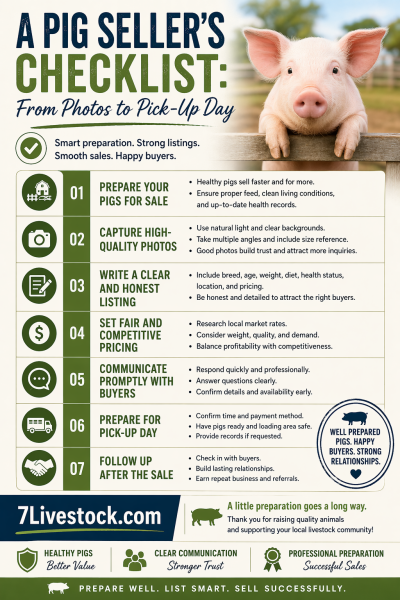 Selling pigs successfully requires more than just posting an ad and waiting for buyers. Whether you’re new to livestock sales or looking to improve your results, having a structured approach ensures smoother transactions, healthier animals, and better pricing. This help guide from 7 Hill Farms & Livestock walks you through essential pig seller steps, from creating effective listings to preparing for pick-up day.
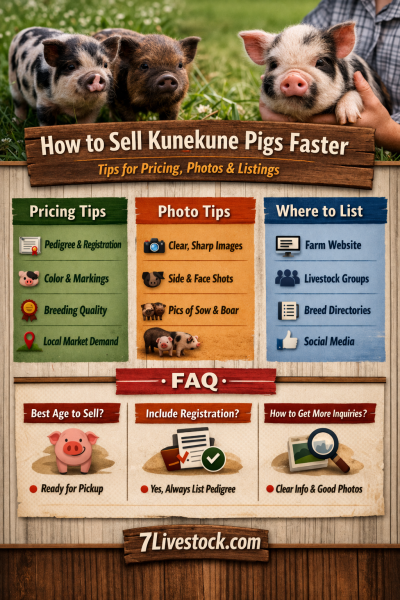 If you are raising Kunekune pigs, getting them sold quickly is not just about posting a few pictures and hoping the right buyer appears. The best results usually come from a combination of accurate pricing, clear presentation, and listing in places where serious buyers are already searching. For farms trying to sell Kunekune pigs efficiently, a better sales process can make a major difference in both response quality and speed.
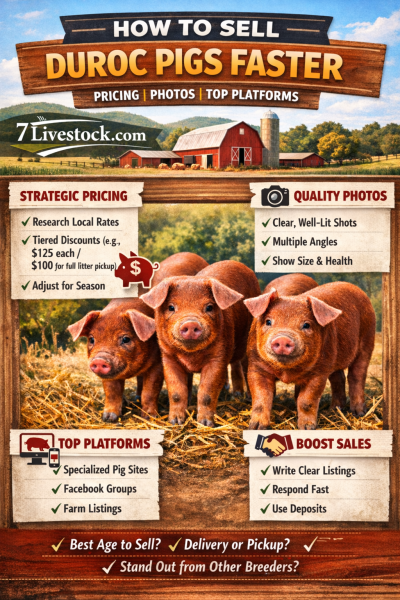 Selling Duroc pigs and piglets quickly and profitably comes down to three core factors: how you price them, how you present them, and where you list them. Whether you are an established operation or just getting started, this playbook from 7 Hill Farms & Livestock breaks down exactly how successful breeders sell Duroc pigs faster while maintaining strong margins.
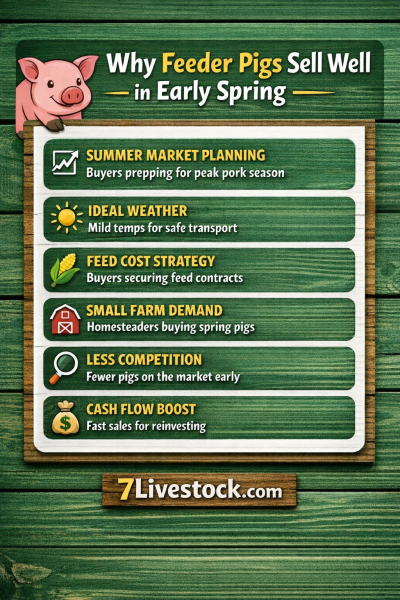 Ideal Weather Conditions for Transport and Transition