 If you’re searching for feeder pigs for sale, whether for raising to market weight or sourcing butcher hogs, making the right buying decision upfront can significantly impact your profitability, animal health, and overall experience. This guide breaks down how to choose the right pigs, understand pricing, and identify reputable sellers so you can buy with confidence.
Understanding the Use Case: Why Are You Buying?
Before purchasing feeder pigs or butcher hogs, define your goal:
- Raising feeder pigs to finish weight
Ideal for homesteaders or small-scale producers aiming for home consumption or resale. - Buying butcher hogs or finished hogs
Best if you want immediate processing without the time and feed investment. - Breeding stock vs. meat production
Feeder pigs are typically not intended for breeding, so focus on growth efficiency rather than lineage alone.
Your intended use determines the size, breed, and price range you should expect.
How to Choose the Right Feeder Pig
Selecting healthy, high-quality feeder pigs is critical. Here’s what to look for:
Age and Weight
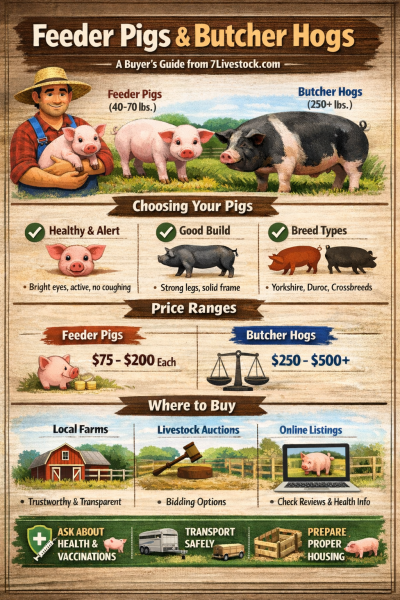
- Typical feeder pigs are 6 to 10 weeks old
- Ideal weight is 40 to 70 lbs.
- Avoid pigs that are too small for their age since this may indicate health or growth issues
Physical Health Indicators
- Bright, alert eyes
- Smooth skin with minimal lesions
- Even movement with no limping or stiffness
- Clean breathing with no coughing or wheezing
Body Structure
- Long-bodied pigs tend to yield more meat
- Strong legs and a wide stance indicate good growth potential
- Avoid overly fat pigs at a young age
Breed Considerations
Some breeds are better suited for meat production:
- Yorkshire and Landrace for lean growth and efficient feed conversion
- Duroc for marbling and meat quality
- Crossbreeds for a balance of growth and flavor
Find a Feeder Pig
Near You
Feeder Pig Price Ranges (2026 Guide)
Pricing varies based on region, demand, and feed costs. Here are general ranges:
Feeder Pigs
- $75 to $200 per pig
- Lower end pricing typically reflects smaller pigs or high supply periods
- Higher end pricing reflects premium breeds or well-managed stock
Butcher Hogs
- $250 to $500 or more per hog
- Typically sold by live weight at $0.80 to $1.50 per pound
- Some sellers offer flat rate per head pricing
What Affects Price?
- Feed costs including corn and soy fluctuations
- Seasonality with higher demand in spring
- Health programs such as vaccinations and deworming
- Genetics and breed quality
Where to Find Reputable Sellers
Finding a trustworthy seller is just as important as selecting the right pig.
Local Farms and Livestock Operations
Working directly with farms like 7 Hill Farms & Livestock offers advantages:
- Transparency on how pigs are raised
- Ability to inspect animals in person
- Better communication and ongoing support
Livestock Auctions
- Competitive pricing and wide variety
- Less control over health history and added stress from transport
Online Livestock Listings
- Useful for connecting buyers and sellers
- Always verify reviews, health records, and clear communication
Questions to Ask Before Buying
To avoid costly mistakes, ask every seller:
- What is the pig’s age and breed mix?
- What feed program are they currently on?
- Have they been vaccinated or dewormed?
- Are they accustomed to human handling?
- Have there been any recent illnesses in the herd?
Good sellers will answer clearly and transparently.
Need a Special Pig?
- Give us your wish list
- We’ll match you to sellers
- No obligation to buy
Transportation and Preparation Tips
Once you’ve found the right feeder pigs:
- Use a well-ventilated trailer or crate for transport
- Prepare housing in advance with secure fencing
- Transition feed gradually to avoid digestive issues
- Provide clean water immediately upon arrival
Reducing stress during transport and transition helps maintain strong growth performance.
Common Buyer Mistakes to Avoid
- Buying the cheapest pigs without checking health
- Mixing pigs from multiple sources too quickly which increases disease risk
- Underestimating feed costs and time commitment
- Skipping proper housing and fencing setup
A slightly higher upfront investment in quality pigs often leads to better results and lower long-term costs.
Final Thoughts
Whether you’re raising feeder pigs or sourcing butcher hogs, success starts with informed buying decisions. Focus on animal health, reputable sellers, and realistic pricing expectations. By doing so, you set yourself up for efficient growth, better meat quality, and a smoother overall experience.
FAQ
How many feeder pigs should a beginner start with?
Starting with 2 to 4 pigs is ideal since pigs are social animals and perform better in small groups.
How long does it take to raise feeder pigs to butcher weight?
Typically 4 to 6 months depending on starting size, feed quality, and management.
Are feeder pigs a good investment?
Yes, when managed properly. Costs are predictable and meat quality can exceed store-bought pork.
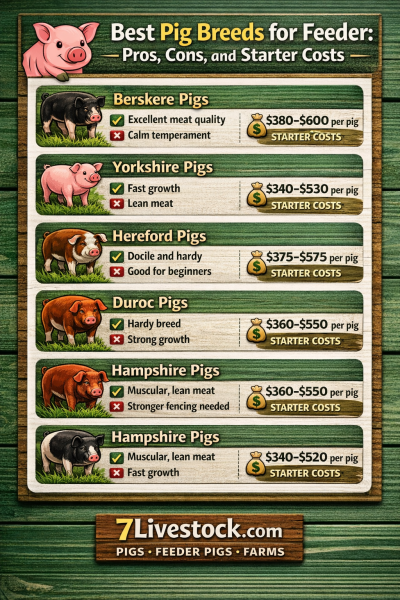 Choosing the best pig breeds for feeder pigs is one of the most important decisions for new livestock owners. Different breeds grow at different rates, convert feed differently, and vary in temperament and hardiness. For beginners, selecting the right breed can make the difference between a smooth first season and a frustrating learning curve.