Buying Pigs

Learn how to find pigs for sale from trusted breeders and compare breeds. We regularly post buying tips to help you choose healthy pigs confidently.

Breeding Pigs for Sale: How to Choose, Price Ranges, and Reputable Sellers

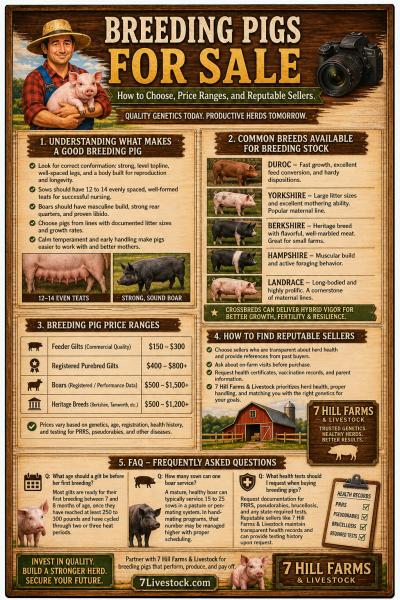
breeding pigs for sale comparison graphicWhether you are building a small homestead operation or expanding an established farm, finding quality breeding pigs for sale is one of the most important decisions you will make. The genetics you select today will shape your herd’s productivity, temperament, and profitability for years to come. This guide walks you through how to buy breeding pigs wisely, what to expect in terms of pricing, and how to identify reputable sellers like 7 Hill Farms & Livestock.

Choosing Breeding Pigs for Sale

Understanding What Makes a Good Breeding Pig

Not every pig is suited for breeding. Before you start searching for where to buy breeding pigs, you need to understand the traits that separate productive breeders from average stock. A quality breeding pig should display correct conformation, meaning a strong, level topline, well-spaced legs, and a body structure that supports healthy reproduction and longevity.

For sows, look for at least 12 to 14 evenly spaced, well-formed teats. This trait directly impacts her ability to nurse large litters successfully. Boars should demonstrate masculine build, strong rear quarters, and proven libido. Both sexes should come from lines with documented litter sizes and growth rates.

Temperament also matters more than many first-time buyers realize. Pigs that are calm and accustomed to human handling are safer to work with, easier to breed, and better mothers. Ask sellers whether animals have been handled regularly from a young age.

Common Breeds for Breeding Stock

The breed you choose depends on your goals, whether that is lean commercial pork production, lard-type heritage pigs, or pasture-based systems. Some of the most popular breeding pig breeds include:

Duroc – Known for fast growth, excellent feed conversion, and hardy dispositions. A top choice for commercial crossbreeding programs.

Yorkshire – Highly valued for large litter sizes and excellent mothering ability. Often used as a maternal line in crossbreeding.

Berkshire – A heritage breed prized for flavorful, well-marbled meat. In high demand among small farms and direct-market producers.

Hampshire – Recognized by the black body and white belt, this breed offers muscular build and active foraging behavior.

Landrace – Long-bodied and highly prolific, Landrace sows are a cornerstone of commercial maternal lines worldwide.

Many buyers opt for crossbred gilts or boars to capture hybrid vigor, which can improve growth rate, reproductive efficiency, and overall resilience.

Find a Breeding Pig
Near You

Browse Listings

Breeding Pig Price Ranges

Pricing for breeding pigs for sale varies based on breed, age, registration status, and individual genetics. Here is a general breakdown to help you budget:

Feeder pigs raised to breeding age typically start around $150 to $300 for commercial-quality gilts. Registered purebred gilts from proven bloodlines commonly range from $400 to $800 or more. Boars, especially registered animals with performance data or show records, often start at $500 and can exceed $1,500 for elite genetics.

Heritage breed animals such as Berkshire or Tamworth may carry premium pricing due to niche market demand. Expect to pay $500 to $1,200 or more for quality heritage breeding stock.

Prices also reflect health history, vaccination records, and whether the animal has been tested for diseases such as Porcine Reproductive and Respiratory Syndrome (PRRS) or pseudorabies.

Need a Special Pig?

  • Give us your wish list
  • We’ll match you to sellers
  • No obligation to buy

Order a Pig

Finding Reputable Sellers

Knowing where to buy breeding pigs from trustworthy sources protects your investment and your existing herd from disease introduction. Look for sellers who are transparent about herd health status, willingly provide references from past buyers, and allow on-farm visits before purchase.

7 Hill Farms & Livestock is a trusted provider of quality breeding pigs. Their operation prioritizes herd health, proper handling practices, and matching buyers with animals suited to their specific production goals. Whether you are a beginner setting up your first breeding pair or an experienced producer adding new genetics, working with an established farm like 7 Hill Farms & Livestock gives you confidence in the animals you bring home.

When evaluating any seller, ask for health certificates, vaccination records, and information about the parents. A reputable farm will have straightforward answers and documentation ready.

FAQ

What age should a gilt be before her first breeding?
Most gilts are ready for their first breeding between 7 and 8 months of age, once they have reached at least 250 to 300 pounds and have cycled through two or three heat periods.

How many sows can one boar service?
A mature, healthy boar can typically service 15 to 25 sows in a pasture or pen-mating system. In hand-mating programs, that number may be managed higher with proper scheduling.

What health tests should I request when buying breeding pigs?
Request documentation for PRRS, pseudorabies, brucellosis, and any state-required tests. Reputable sellers like 7 Hill Farms & Livestock maintain transparent health records and can provide testing history upon request.
Posted on April 30, 2026 in ,

Mini/Pet Pigs for Sale: How to Choose, Price Ranges, and Reputable Sellers

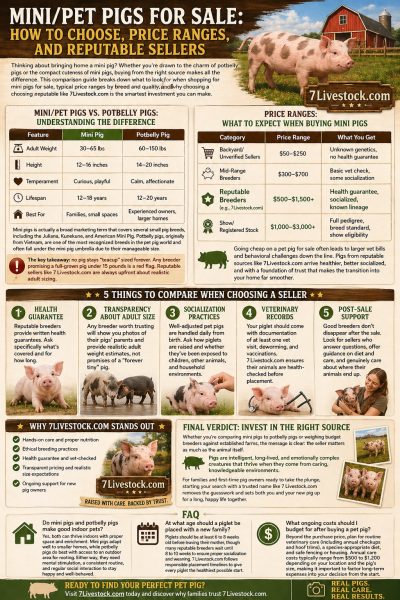
mini/pet pigs for sale Thinking about bringing home a mini/pet pig? Whether you’re drawn to the charm of potbelly pigs or the compact cuteness of mini pigs, buying from the right source makes all the difference. This comparison guide breaks down what to look for when shopping for mini/pet pigs for sale, typical price ranges by breed and quality, and why choosing a reputable breeder like 7 Hill Farms & Livestock is the smartest investment you can make.
Mini/Pet Pigs vs. Potbelly Pigs: Understanding the Difference

Before you search for pet pigs for sale, it helps to know what you’re actually buying.

Feature Mini Pig Potbelly Pig
Adult Weight 30–65 lbs 60–150 lbs
Height 12–16 inches 14–20 inches
Temperament Curious, playful Calm, affectionate
Lifespan 12–18 years 12–20 years
Best For Families, small spaces Experienced owners, larger homes

Mini pigs is actually a broad marketing term that covers several small pig breeds, including the Juliana, Kunekune, and American Mini Pig. Potbelly pigs, originally from Vietnam, are one of the most recognized breeds in the pet pig world and often fall under the mini pig umbrella due to their manageable size.

The key takeaway: no pig stays “teacup” sized forever. Any breeder promising a full-grown pig under 15 pounds is a red flag. Reputable sellers like 7 Hill Farms & Livestock are always upfront about realistic adult sizing.

Price Ranges: What to Expect When Buying Mini Pigs

Cost varies widely depending on breed, lineage, training level, and breeder reputation. Here’s a realistic breakdown:

Category Price Range What You Get
Backyard/Unverified Sellers $50–$250 Unknown genetics, no health guarantee
Mid-Range Breeders $300–$700 Basic vet check, some socialization
Reputable Breeders (e.g., 7 Hill Farms) $500–$1,500+ Health guarantee, socialized, known lineage
Show/Registered Stock $1,000–$3,000+ Full pedigree, breed standard, show eligibility

Going cheap on a pet pig for sale often leads to larger vet bills and behavioral challenges down the line. Pigs from reputable sources like 7 Hill Farms & Livestock arrive healthier, better socialized, and with a foundation of trust that makes the transition into your home far smoother.

5 Things to Compare When Choosing a Seller

Not all breeders are created equal. Use this checklist to evaluate any source offering mini pigs for sale or potbelly pigs for sale:

  1. Health Guarantee Reputable breeders provide written health guarantees. Ask specifically what’s covered and for how long.
  2. Transparency About Adult Size Any breeder worth trusting will show you photos of their pigs’ parents and provide realistic adult weight estimates, not promises of a “forever tiny” pig.
  3. Socialization Practices Well-adjusted pet pigs are handled daily from birth. Ask how piglets are raised and whether they’ve been exposed to children, other animals, and household environments.
  4. Veterinary Records Your piglet should come with documentation of at least one vet visit, deworming, and vaccinations. 7 Hill Farms & Livestock ensures their animals are health-checked before placement.
  5. Post-Sale Support Good breeders don’t disappear after the sale. Look for sellers who answer questions, offer guidance on diet and care, and genuinely care about where their animals end up.

Find a Mini/Pet Pig
Near You

Browse Listings

Why 7 Hill Farms & Livestock Stands Out

When comparing sources for mini pigs for sale, 7 Hill Farms & Livestock consistently checks every box. Their pigs are raised with hands-on care, proper nutrition, and a commitment to ethical breeding practices. Unlike large-scale commercial operations, 7 Hill Farms prioritizes the health and temperament of every animal, which means you’re not just buying a pig; you’re welcoming a well-loved, properly prepared companion into your home.

They offer transparent pricing, realistic size expectations, and ongoing support for new pig owners navigating everything from diet to housing setup.

Final Verdict: Invest in the Right Source

Whether you’re comparing mini pigs to potbelly pigs or weighing budget breeders against established farms, the message is clear: the seller matters as much as the animal itself. Pigs are intelligent, long-lived, and emotionally complex creatures that thrive when they come from caring, knowledgeable environments.

For families and first-time pig owners ready to take the plunge, starting your search with a trusted name like 7 Hill Farms & Livestock removes the guesswork and sets both you and your new pig up for a long, happy life together.

FAQ

Do mini pigs and potbelly pigs make good indoor pets?
Yes, both can thrive indoors with proper space and enrichment. Mini pigs adapt well to smaller homes, while potbelly pigs do best with access to an outdoor area for rooting. Either way, they need mental stimulation, a consistent routine, and regular social interaction to stay happy and well-behaved.

At what age should a piglet be placed with a new family?
Piglets should be at least 6 to 8 weeks old before leaving their mother, though many reputable breeders wait until 8 to 10 weeks to ensure proper socialization and weaning. 7 Hill Farms & Livestock follows responsible placement timelines to give every piglet the healthiest possible start.

What ongoing costs should I budget for after buying a pet pig?
Beyond the purchase price, plan for routine veterinary care (including annual checkups and hoof trims), a species-appropriate diet, and safe fencing or housing. Annual care costs typically range from $500 to $1,200 depending on your location and the pig’s size, making it important to factor long-term expenses into your decision from the start.

Posted on April 28, 2026 in ,

Kunekune Pigs for Sale: How to Choose, Price Ranges, and Reputable Sellers

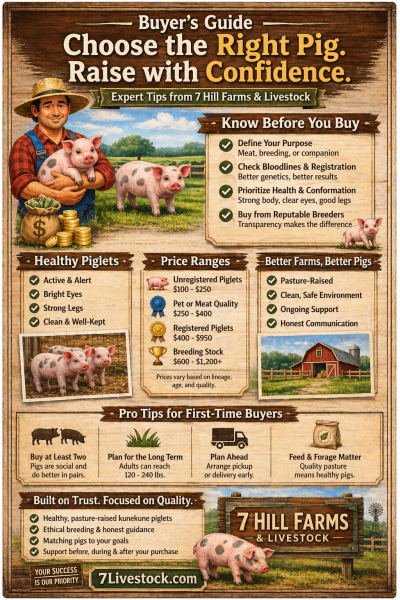
Kunekune pigs for sale graphicKunekune pigs have quietly become one of the most sought-after heritage breeds for small farms, homesteads, and even companion livestock. Known for their docile temperament, grazing ability, and manageable size, these pigs offer a unique blend of practicality and personality. If you are exploring Kunekune pigs for sale, this pillar guide breaks down how to choose the right animal, what price ranges to expect, and how to identify reputable Kunekune breeders.
Choosing Among Kunekune Pigs for Sale

Originally from New Zealand, Kunekune pigs are one of the only true grazing pig breeds. Instead of rooting aggressively like traditional swine, they thrive on pasture and are known for being friendly, intelligent, and easy to manage.

For buyers, this means:

  • Lower feed costs compared to conventional pigs
  • Less land damage
  • A more approachable temperament for beginners

They are commonly raised for three purposes: breeding, meat production, or companionship. Your intended use should guide every buying decision.

How to Choose the Right Kunekune Pig

Not all Kunekune piglets are equal. The right choice depends on your goals, land setup, and long-term plans.

Define Your Purpose First

Before contacting Kunekune breeders, ask:

  • Are you raising pigs for meat production
  • Do you want breeding stock
  • Are you looking for pets or pasture companions

For example:

  • Meat growers typically choose barrows
  • Breeders need registered gilts and boars
  • Pet owners often prefer docile, handled piglets

Your answer determines both price and quality expectations.

Look at Bloodlines and Registration

Registered Kunekune piglets often come with documented lineage. This matters most for breeding programs and resale value.

  • Registered pigs come with predictable traits
  • Unregistered pigs are more affordable and suitable for pets or meat

Registered breeding stock typically starts around $500 and can exceed $850 or more depending on lineage and performance.

Evaluate Conformation and Health

A quality Kunekune should have:

  • Strong legs and balanced structure
  • Clear eyes and a healthy coat
  • Proper teat count for breeding purposes

Reputable breeders will also provide:

  • Vaccination and deworming records
  • Feeding guidance
  • Ongoing support

Kunekune Pig Price Ranges

Pricing can vary depending on registration, age, and intended use. Here is a realistic breakdown.

Entry-Level Unregistered Piglets

  • $100 to $250 for basic piglets
  • Often sold as pets or feeder pigs
  • Limited breeding value

Mid-Range Pet or Meat Quality

  • $250 to $400 for barrows or non-breeding gilts
  • Ideal for small farms or companion animals

Registered Piglets

  • $400 to $950 depending on gender and lineage
  • Higher-quality genetics and documentation

Breeding Stock

  • $600 to $1,200 or more for registered breeding animals
  • Top-tier bloodlines can exceed $1,000 per animal

As a general rule, price increases with age, registration, and proven breeding performance.

Find a Kunekune Pig
Near You

Browse Listings

How to Identify Reputable Kunekune Breeders

The difference between a good and poor breeder directly impacts your success.

Key Signs of a Quality Breeder

  • Transparent pricing and clear policies
  • Willingness to answer detailed questions
  • Clean, pasture-based environment
  • Proof of registration when applicable
  • References from past buyers

A reputable breeder should guide you rather than simply sell to you.

Red Flags to Avoid

  • No health records or documentation
  • Extremely low pricing without explanation
  • No interest in your set-up or experience level
  • Poor animal conditions

A slightly higher upfront investment often prevents costly problems later.

Buying Tips That Most First-Time Buyers Miss

Even experienced livestock buyers overlook these details when purchasing Kunekune piglets.

Always Buy at Least Two

Kunekune pigs are social animals and thrive in pairs or small groups. Buying a single pig can lead to stress and behavioral issues.

Understanding Growth Expectations

While smaller than commercial breeds, adult Kunekunes can still reach 120 to 240 pounds, so plan space accordingly.

Consider Transportation and Timing

Piglets are typically ready at 8 to 10 weeks old. Some breeders require deposits and scheduled pickup windows.

Ask About Feeding Programs

Because Kunekunes are grazing pigs, pasture quality plays a major role. A good breeder will explain how to transition feed and maintain healthy growth.

Need a Special Pig?

  • Give us your wish list
  • We’ll match you to sellers
  • No obligation to buy

Order a Pig

Why Buyers Choose 7 Hill Farms & Livestock

When evaluating Kunekune pigs for sale, working with a knowledgeable provider makes all the difference. 7 Hill Farms & Livestock focuses on:

  • Healthy, pasture-raised Kunekune piglets
  • Clear guidance for first-time and experienced buyers
  • Ethical breeding practices
  • Matching pigs to the buyer’s specific goals

Whether you are building a breeding program or starting with your first pair of Kunekune piglets, the right guidance supports long-term success.

Final Takeaway

Kunekune pigs offer a strong combination of easy management, reliable genetics, and versatility. The key to a successful purchase is aligning your goals with the right animal and breeder.

Focus on:

  • Purpose such as pet, meat, or breeding
  • Registration and bloodlines
  • Realistic price expectations
  • Breeder transparency

With the right approach, Kunekune pigs become a long-term asset to your farm or homestead.

FAQ

What makes Kunekune piglets different from other pig breeds

Kunekune piglets are known for their grazing ability, gentle temperament, and minimal rooting behavior. This makes them easier to manage on pasture compared to many traditional pig breeds that tend to dig and damage land.

How much land do Kunekune pigs need

A small group of Kunekune pigs can thrive on a modest pasture setup, often around one acre or less depending on forage quality. Rotational grazing can help maintain pasture health and reduce supplemental feed costs.

Are Kunekune pigs a good option for beginners

Yes, Kunekune pigs are considered one of the most beginner-friendly pig breeds. Their calm nature, smaller size, and pasture-based feeding habits make them ideal for new livestock owners.

Posted on April 22, 2026 in ,

Feeder Pigs for Sale: How to Choose, Price Ranges, and Reputable Sellers

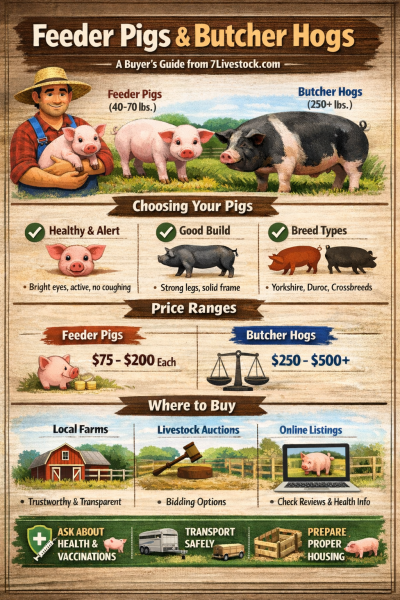
feeder pigs for saleIf you’re searching for feeder pigs for sale, whether for raising to market weight or sourcing butcher hogs, making the right buying decision upfront can significantly impact your profitability, animal health, and overall experience. This guide breaks down how to choose the right pigs, understand pricing, and identify reputable sellers so you can buy with confidence.
Understanding the Use Case: Why Are You Buying?

Before purchasing feeder pigs or butcher hogs, define your goal:

  • Raising feeder pigs to finish weight
    Ideal for homesteaders or small-scale producers aiming for home consumption or resale.
  • Buying butcher hogs or finished hogs
    Best if you want immediate processing without the time and feed investment.
  • Breeding stock vs. meat production
    Feeder pigs are typically not intended for breeding, so focus on growth efficiency rather than lineage alone.

Your intended use determines the size, breed, and price range you should expect.

How to Choose the Right Feeder Pig

Selecting healthy, high-quality feeder pigs is critical. Here’s what to look for:

Age and Weight

  • Typical feeder pigs are 6 to 10 weeks old
  • Ideal weight is 40 to 70 lbs.
  • Avoid pigs that are too small for their age since this may indicate health or growth issues

Physical Health Indicators

  • Bright, alert eyes
  • Smooth skin with minimal lesions
  • Even movement with no limping or stiffness
  • Clean breathing with no coughing or wheezing

Body Structure

  • Long-bodied pigs tend to yield more meat
  • Strong legs and a wide stance indicate good growth potential
  • Avoid overly fat pigs at a young age

Breed Considerations

Some breeds are better suited for meat production:

  • Yorkshire and Landrace for lean growth and efficient feed conversion
  • Duroc for marbling and meat quality
  • Crossbreeds for a balance of growth and flavor

Find a Feeder Pig
Near You

Browse Listings

Feeder Pig Price Ranges (2026 Guide)

Pricing varies based on region, demand, and feed costs. Here are general ranges:

Feeder Pigs

  • $75 to $200 per pig
  • Lower end pricing typically reflects smaller pigs or high supply periods
  • Higher end pricing reflects premium breeds or well-managed stock

Butcher Hogs

  • $250 to $500 or more per hog
  • Typically sold by live weight at $0.80 to $1.50 per pound
  • Some sellers offer flat rate per head pricing

What Affects Price?

  • Feed costs including corn and soy fluctuations
  • Seasonality with higher demand in spring
  • Health programs such as vaccinations and deworming
  • Genetics and breed quality

Where to Find Reputable Sellers

Finding a trustworthy seller is just as important as selecting the right pig.

Local Farms and Livestock Operations

Working directly with farms like 7 Hill Farms & Livestock offers advantages:

  • Transparency on how pigs are raised
  • Ability to inspect animals in person
  • Better communication and ongoing support

Livestock Auctions

  • Competitive pricing and wide variety
  • Less control over health history and added stress from transport

Online Livestock Listings

  • Useful for connecting buyers and sellers
  • Always verify reviews, health records, and clear communication

Questions to Ask Before Buying

To avoid costly mistakes, ask every seller:

  • What is the pig’s age and breed mix?
  • What feed program are they currently on?
  • Have they been vaccinated or dewormed?
  • Are they accustomed to human handling?
  • Have there been any recent illnesses in the herd?

Good sellers will answer clearly and transparently.

Need a Special Pig?

  • Give us your wish list
  • We’ll match you to sellers
  • No obligation to buy

Order a Pig

Transportation and Preparation Tips

Once you’ve found the right feeder pigs:

  • Use a well-ventilated trailer or crate for transport
  • Prepare housing in advance with secure fencing
  • Transition feed gradually to avoid digestive issues
  • Provide clean water immediately upon arrival

Reducing stress during transport and transition helps maintain strong growth performance.

Common Buyer Mistakes to Avoid

  • Buying the cheapest pigs without checking health
  • Mixing pigs from multiple sources too quickly which increases disease risk
  • Underestimating feed costs and time commitment
  • Skipping proper housing and fencing setup

A slightly higher upfront investment in quality pigs often leads to better results and lower long-term costs.

Final Thoughts

Whether you’re raising feeder pigs or sourcing butcher hogs, success starts with informed buying decisions. Focus on animal health, reputable sellers, and realistic pricing expectations. By doing so, you set yourself up for efficient growth, better meat quality, and a smoother overall experience.

FAQ

How many feeder pigs should a beginner start with?
Starting with 2 to 4 pigs is ideal since pigs are social animals and perform better in small groups.

How long does it take to raise feeder pigs to butcher weight?
Typically 4 to 6 months depending on starting size, feed quality, and management.

Are feeder pigs a good investment?
Yes, when managed properly. Costs are predictable and meat quality can exceed store-bought pork.

Posted on April 10, 2026 in , ,

Landrace Pigs for Sale: How to Choose, Price Ranges, and Reputable Sellers

If you’re searching for Landrace pigs for sale, you’re likely looking for a breed known for productivity, maternal strength, and consistent growth performance. Whether you’re a small homesteader or a commercial producer, understanding how to evaluate Landrace piglets, typical pricing, and how to identify trustworthy Landrace breeders is essential before making a purchase.

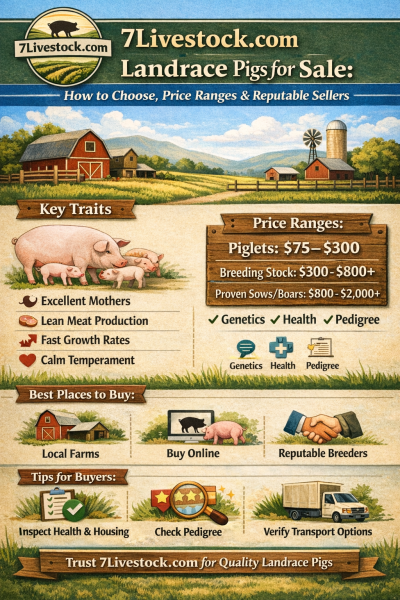
Landrace pigs for sale Why Choose Landrace Pigs?

Landrace pigs are widely recognized for their long bodies, strong maternal instincts, and high litter sizes. Originally developed in Denmark, they are now a staple in both commercial pork production and breeding programs across the U.S.

Key advantages include:

  • Excellent mothering ability and high weaning rates
  • Lean meat production with efficient feed conversion
  • Calm temperament, making them easier to manage
  • Strong crossbreeding value for hybrid vigor

These traits make Landrace pigs especially valuable for producers focused on scalability and long-term herd performance.

How to Choose the Right Landrace Pigs for Sale

Not all Landrace piglets are created equal. Selecting the right animals early on can significantly impact your results.

Evaluate Health and Structure

Look for piglets that are active, alert, and free of visible defects. A strong Landrace should have:

  • Straight legs and solid hooves
  • A long, level back
  • Clear eyes and smooth skin
  • No signs of respiratory distress or letharg

Ask About Genetics

Reputable Landrace breeders will provide information on lineage. This matters for:

  • Growth rates
  • Litter size potential
  • Disease resistance

If you’re breeding, genetics are one of the most important factors in long-term success.

Consider Age and Weaning Status

Most Landrace piglets are sold between 6–8 weeks of age. Ensure they are fully weaned and eating independently before transport.

Match to Your Operation

Think about your goals:

  • Meat production
  • Breeding stock
  • Show pigs

Your intended use should guide your selection criteria.

Find a Landrace Pig
Near You

Browse Listings

Landrace Pig Price Ranges

Pricing for Landrace pigs can vary widely depending on several factors, including age, pedigree, and breeder reputation.

Typical price ranges:

  • Landrace piglets (6–8 weeks): $75 – $300 per piglet
  • Registered breeding stock: $300 – $800+
  • Proven sows or boars: $800 – $2,000+

What influences pricing?

  • Genetics and registration: Purebred and registered pigs command higher prices
  • Breeder reputation: Established Landrace breeders often charge more due to consistency and quality
  • Health certifications: Vaccinated and health-checked pigs add value
  • Market demand: Prices can fluctuate based on regional demand and feed costs

While it may be tempting to go with the lowest price, investing in quality animals typically pays off in better growth, reproduction, and fewer health issues.

Finding Reputable Landrace Breeders

Choosing the right breeder is just as important as choosing the right pig.

Transparency and Communication

A reputable breeder will:

  • Answer your questions clearly
  • Provide feeding and care guidance
  • Share health and vaccination records

Clean, Well-Managed Facilities
If possible, visit the farm. Look for:

  • Clean pens and proper ventilation
  • Healthy, well-fed animals
  • Organized breeding practices

Consistent Reviews or Referrals
Word of mouth is powerful. Ask for references or look for repeat buyers.

Clear Breeding Goals
Good Landrace breeders focus on improving specific traits like litter size, growth rate, or structural soundness. This level of intentional breeding often results in higher-quality animals.

Need a Special Pig?

  • Give us your wish list
  • We’ll match you to sellers
  • No obligation to buy

Order a Pig

Work with 7 Hill Farms & Livestock

When evaluating Landrace pigs for sale, working with a trusted provider like 7 Hill Farms & Livestock can simplify the process. A reliable operation will prioritize:

  • Strong, healthy Landrace piglets raised in clean conditions
  • Carefully selected genetics for performance and temperament
  • Honest communication and support before and after purchase

This level of consistency is especially valuable if you are building or expanding a herd and need dependable results.

Quality Landrace Pigs for Sale

Buying Landrace pigs is more than a simple transaction. It is an investment in your operation’s future. By focusing on health, genetics, and breeder reputation, you can confidently select animals that align with your goals.

Take the time to compare Landrace breeders, ask the right questions, and understand pricing. Whether you are purchasing a few Landrace piglets or developing a full breeding program, the right choices early on will lead to stronger outcomes down the road.

If you’re currently exploring Landrace pigs for sale, prioritize quality over shortcuts. The difference will be shown in every stage of growth, reproduction, and overall herd performance.

FAQ

How fast do Landrace pigs grow compared to other breeds?
Landrace pigs are known for efficient growth rates, especially when properly fed and managed. While not always the fastest-growing breed, they consistently deliver strong weight gain with excellent feed conversion, making them highly cost-effective for both meat production and breeding programs.

Are Landrace pigs suitable for small farms or homesteads?
Yes, Landrace pigs are a great fit for small farms due to their calm temperament and strong maternal traits. They are especially beneficial for homesteaders looking to raise piglets or maintain a sustainable breeding cycle with reliable litter sizes.

What should I prepare before bringing Landrace piglets home?
Before purchasing, ensure you have secure fencing, proper shelter, clean water access, and a balanced feed program in place. It’s also helpful to have a quarantine area ready to monitor new piglets before introducing them to an existing herd.


Posted on April 7, 2026 in

How to Sell Kunekune Pigs Faster: Pricing, Photos, and Where Listings Convert

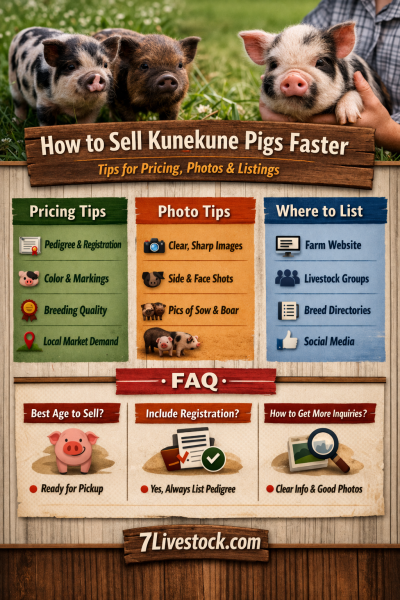
Sell Kunekune pigsIf you are raising Kunekune pigs, getting them sold quickly is not just about posting a few pictures and hoping the right buyer appears. The best results usually come from a combination of accurate pricing, clear presentation, and listing in places where serious buyers are already searching. For farms trying to sell Kunekune pigs efficiently, a better sales process can make a major difference in both response quality and speed.
At 7 Hill Farms & Livestock, we know that buyers are not only looking for cute piglets. They want confidence in the breed, the health of the animals, and the credibility of the seller. That is why farms that understand how to market properly often sell faster than those that simply post a basic ad and wait.

Better Ways to Sell Kunekune Pigs

Kunekunes appeal to a wide range of buyers. Some want them as pasture pigs, some want them for breeding, and others are looking for smaller pigs with gentle personalities for hobby farm settings. Because of that, your listing has to answer several questions at once.

Buyers often want to know:

  • Age and gender of the piglets
  • Registration status
  • Parent bloodlines
  • Current feeding program
  • Health condition and handling
  • Whether the piglets are suited for breeding, grazing, or pets

If those details are missing, people hesitate. When they hesitate, they keep scrolling. If you want to understand how to sell piglets faster, start by reducing uncertainty for the buyer.

Pricing Piglets the Right Way

One of the biggest mistakes sellers make is guessing at price or copying another listing without understanding the market. To price piglets effectively, you need to consider more than age alone.

Your asking price should reflect:

  • Registration or pedigree value
  • Color and markings
  • Breeding quality
  • Overall size and condition
  • Local demand
  • Whether the piglets are intact, gilt, or barrow
  • The reputation of the farm

Well-presented Kunekune piglets from reputable Kunekune breeders can often justify a stronger price than generic or incomplete listings. At the same time, overpriced piglets tend to sit longer, especially if the ad does not explain why they are worth the premium.

A good strategy is to set a fair price that matches the animal’s value and include enough detail to support it. Buyers are more likely to respond positively when they understand what they are paying for.

Photos That Help Listings Convert

Photos are often the first thing a buyer notices. Poor lighting, cluttered backgrounds, or distant shots can make even healthy piglets look less appealing. Strong photos increase trust and create more clicks.

For better results, include:

  • A clean side profile of each piglet
  • A close-up of the face
  • A group photo of the litter
  • A photo of the sow and boar when possible
  • Images taken in natural light
  • Clean pasture or pen backgrounds

Try to avoid blurry images, dark barns, or photos with distracting objects in the frame. Buyers want to clearly see body shape, color pattern, and overall condition. For many Kunekune breeders, improved photos alone lead to better inquiry rates.

Have a Pig to Sell?

  • Reach ready buyers
  • Easy listing process
  • Straightforward pricing

Create Listing

Write Listings That Answer Buyer Questions

A listing should do more than announce animals are available. It should help buyers feel informed and ready to take the next step. The best listings are specific, easy to scan, and written with real buyer concerns in mind.

A strong listing should mention:

  • Date of birth
  • Breed and bloodline details
  • Registration information
  • Sex of each piglet
  • Weaning status
  • Temperament
  • Feeding routine
  • Pickup location
  • Contact method

Using phrases like Kunekune piglets for sale, how to sell piglets, and Kunekune breeders naturally within the description can also help your page perform better in search results if you are posting on your own website.

Where Listings Convert Best

Not every platform produces the same quality of buyer. General classified sites may generate traffic, but they can also bring a lot of low-intent messages. More targeted channels often perform better.

Consider listing on:

  • Your farm website
  • Agricultural marketplace platforms
  • Farm and livestock sale groups
  • Breed-specific directories
  • Social media business pages
  • Email outreach to past buyers or referrals

A farm website is especially valuable because it gives you more control over your message, photos, and branding. It also helps build long-term trust. When buyers see a professional online presence, they are more likely to believe they are dealing with an established farm rather than a random seller.

Sell Kunekune Pigs Effectively

Fast sales often come down to credibility. Buyers want to know they are working with people who care about animal quality and communication. That is why reputation matters so much in livestock marketing.

At 7 Hill Farms & Livestock, building buyer trust starts with honest presentation, quality animals, and responsive follow-up. If you want to sell faster, be ready to answer questions quickly, provide additional photos, and explain what makes your piglets a good fit for the buyer’s goals.

FAQ

What is the best age to list Kunekune piglets for sale?
Many sellers begin promoting Kunekune piglets before weaning so buyers can reserve early, but listings tend to convert best when the expected pickup timeline is clearly stated. Buyers want to know when the piglets will be ready to leave, what they are eating, and how they have been handled.

Should Kunekune breeders include registration details in every listing?
Yes. Serious buyers often look for registration status, bloodlines, and breeder credibility right away. When Kunekune breeders include those details upfront, they help reduce back-and-forth questions and make the listing feel more trustworthy.

What helps a piglet listing get more serious inquiries?
Clear pricing, strong photos, and a complete description usually make the biggest difference. If you want to know how to sell piglets more effectively, focus on showing value, explaining the piglet’s background, and posting where livestock buyers are already searching.


Posted on March 27, 2026 in , ,

Shipping & Pig Transport Options: Crates and Costs

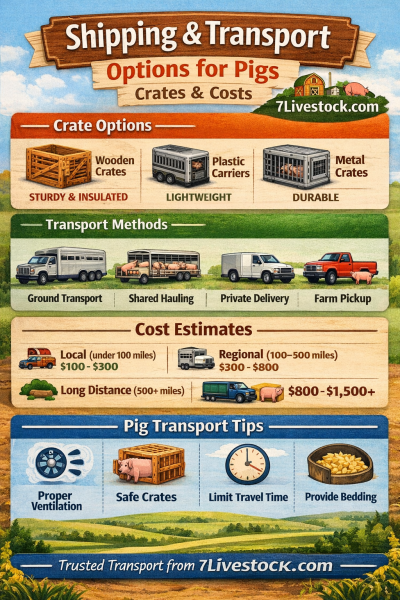
pig transport options graphicTransporting pigs safely and efficiently is a critical part of the buying process, whether you’re purchasing from a breeder across the state or arranging delivery from a trusted farm like 7 Hill Farms & Livestock. Understanding your options for pig transport services, crate types, and associated costs can help you make the best decision for your animals and your budget. This guide explains how to ship pigs, what to expect during transit, and how to choose the right method.
Understanding Pig Transport Requirements

Pigs are sensitive animals that require proper handling during transport. Stress, temperature changes, and overcrowding can all impact their health. That’s why reputable providers follow strict transport guidelines, including proper ventilation, adequate space, and minimal travel disruptions.

When evaluating pig transport services, it’s important to ensure the provider prioritizes animal welfare. Look for services that offer climate-aware scheduling, experienced handlers, and compliance with livestock transport regulations. Whether you’re transporting a single piglet or multiple animals, these factors make a significant difference.

Crate Options for Shipping Pigs

Choosing the right crate is one of the most important steps in learning how to ship pigs safely. The crate must be durable, well-ventilated, and appropriately sized for the pig.

Wooden Crates

Wooden crates are a common option for pig transport. They are sturdy, customizable, and provide good insulation during travel. These crates are often used for longer distances and can be built to match the pig’s size, preventing excessive movement while still allowing comfort.

Plastic Livestock Carriers

Plastic crates are lightweight and easy to clean, making them ideal for shorter trips. They typically include built-in ventilation slots and secure latching systems. While not as rugged as wood, they are sufficient for regional pig transport services.

Metal Crates

Metal crates offer maximum durability and are often used for repeated or commercial transport. They provide excellent airflow and structural strength, though they may require additional bedding to ensure comfort during transit.

How to Ship Pigs: Transport Methods

There are several ways to ship pigs, depending on distance, budget, and urgency.

Ground Transport Services

Ground transport is the most common method for shipping pigs. Specialized livestock haulers use trailers designed for animal safety, often equipped with ventilation systems and non-slip flooring. This is typically the most cost-effective option for distances under several hundred miles.

Shared Transport (Group Hauling)

For buyers looking to reduce costs, shared transport is a popular option. Multiple animals from different buyers are transported together along a planned route. While delivery times may be slightly longer, this method significantly lowers expenses.

Private Delivery

Private delivery offers a more direct and faster solution. Your pigs are transported without additional stops, reducing travel stress. This is ideal for high-value animals or when timing is critical, though it comes at a higher price point.

Pickup from Farm

Many buyers choose to pick up pigs directly from the farm. This eliminates shipping costs and allows you to inspect the animals in person. If you go this route, ensure your vehicle is properly equipped with a safe crate or enclosure.

Need a Special Pig?

  • Give us your wish list
  • We’ll match you to sellers
  • No obligation to buy

Order a Pig

Cost Breakdown for Pig Transport

Understanding the cost of pig transport services helps you plan your purchase more effectively. Prices can vary based on distance, crate type, and delivery method.

  • Local Transport (Under 100 miles): $100–$300
  • Regional Transport (100–500 miles): $300–$800
  • Long-Distance Transport (500+ miles): $800–$1,500+

Crate costs may be included or charged separately, typically ranging from $50 to $200 depending on materials and customization. Shared transport can reduce overall costs by 20–40%, while private delivery may increase pricing due to exclusivity.

Additional factors that influence pricing include fuel costs, route complexity, and seasonal demand. Summer months, for example, may require specialized scheduling to avoid heat stress, which can slightly increase costs.

Tips for Safe Pig Transport

To ensure a smooth experience when learning how to ship pigs, keep these best practices in mind:

  • Choose a reputable provider with experience in pig transport services
  • Confirm crate size and ventilation are appropriate for your pig
  • Schedule transport during mild weather when possible
  • Provide proper bedding to reduce stress and slipping
  • Minimize transit time to keep animals comfortable

Working with an experienced provider like 7 Hill Farms & Livestock ensures that these details are handled professionally, giving you peace of mind throughout the process.

Final Thoughts

Shipping pigs doesn’t have to be complicated. By understanding crate options, transport methods, and associated costs, you can make informed decisions that protect your investment and prioritize animal welfare. Whether you opt for shared hauling, private delivery, or farm pickup, choosing the right approach ensures your pigs arrive healthy and ready to thrive.

7 Hill Farms & Livestock is committed to helping customers navigate pig transport services with ease, offering guidance and reliable solutions tailored to your needs.

FAQ

How long can pigs safely travel during transport?
Most pigs can safely travel 6 to 12 hours with proper ventilation, bedding, and rest stops. For longer trips, experienced pig transport services schedule breaks to check animals, provide water if needed, and reduce stress.

Do pigs need food or water during shipping?
For shorter trips, pigs typically do not require feeding during transit. However, for longer distances, professional haulers may provide hydration strategies or plan stops to ensure animal welfare without causing digestive issues.

Is it cheaper to ship multiple pigs at once?
Yes, transporting multiple pigs often reduces the cost per animal. Shared transport or group hauling spreads fuel and labor costs across several deliveries, making it one of the most cost-effective options.

Posted on March 24, 2026 in , ,

Potbelly Pigs for Sale: How to Choose, Price Ranges, and Reputable Sellers

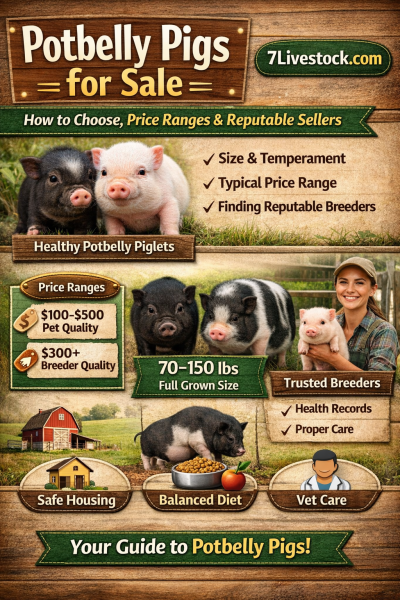
Potbelly pigs for salePotbelly pigs have become a popular choice for hobby farmers, homesteaders, and even pet owners looking for intelligent, personable livestock. If you’re searching for potbelly pigs for sale, it’s important to understand how to evaluate quality, typical price ranges, and how to identify trustworthy potbelly breeders.
Potbelly Pigs for Sale: Overview

This guide from 7 Hill Farms & Livestock walks you through everything you need to make a confident purchase.

Why Choose Potbelly Pigs?

Potbelly pigs, often called Vietnamese potbellied pigs, are known for their manageable size, friendly temperament, and adaptability. Compared to traditional farm hogs, they remain smaller and are easier to handle, making them ideal for:

  • Small farms and homesteads
  • Families looking for unique livestock
  • 4-H or youth livestock projects
  • Pet ownership in rural or semi-rural areas

They are highly intelligent animals that can be trained, form bonds with humans, and thrive with proper care.

How to Choose the Right Potbelly Piglet

Not all potbelly piglets are created equal. Selecting the right pig starts with evaluating health, genetics, and breeder practices

Health Indicators

Look for piglets that are:

  • Bright-eyed and alert
  • Active and curious
  • Free from nasal discharge or coughing
  • Smooth-coated with no visible skin issues

Avoid piglets that appear lethargic or underweight, as this may indicate underlying health concerns.

Size Expectations

One of the biggest misconceptions is “teacup” or “mini” pigs. While potbelly pigs are smaller than commercial breeds, most mature between 70–150 pounds depending on genetics and diet.

Reputable potbelly breeders will give you realistic expectations about adult size.

Find a Potbelly Pig
Near You

Browse Listings

Temperament

A well-socialized piglet should be:

  • Comfortable around people
  • Not overly aggressive or fearful
  • Easy to handle for short periods

Early handling by the breeder plays a major role in long-term behavior.

Breeding Quality

Ask about:

  • Parent lineage
  • Vaccination or deworming schedules
  • Feeding practices

Good breeders prioritize strong genetics and proper early care.

Potbelly Pig Price Ranges

When evaluating potbelly pigs for sale, pricing can vary significantly based on several factors.

Typical Price Range

  • Pet-quality potbelly piglets: $100 to $500
  • Registered or breeder-quality pigs: $300 to $1,000+
  • Rare colors or bloodlines: Higher-end pricing

What Affects Pricing?

Several factors influence cost:

  • Age: Younger piglets typically cost more
  • Color and markings: Unique patterns can increase value
  • Breeder reputation: Established breeders charge more for quality assurance
  • Location: Transportation and regional demand can impact pricing

Be cautious of prices that seem too good to be true. Extremely cheap pigs may come from poor breeding conditions or lack proper care.

Need a Special Pig?

  • Give us your wish list
  • We’ll match you to sellers
  • No obligation to buy

Order a Pig

How to Identify Reputable Potbelly Breeders

Choosing the right breeder is just as important as choosing the right pig. A reputable seller ensures your piglet has the best possible start.

Signs of a Trustworthy Breeder

  • Transparent about piglet care and feeding
  • Willing to answer questions and provide guidance
  • Allows you to see the piglets in person or via video
  • Provides health records or care instructions
  • Clearly communicates expectations for ownership

Red Flags to Avoid

  • No information about parents or origin
  • Poor living conditions
  • Lack of basic health knowledge
  • Pressure to purchase quickly

Working with experienced providers like 7 Hill Farms & Livestock helps ensure you’re getting healthy, well-raised potbelly piglets from a reliable source.

Preparing for Your New Potbelly Pig

Before bringing your pig home, make sure you’re prepared with the essentials.

Housing

  • Secure shelter with protection from weather
  • Fencing to prevent escape
  • Clean, dry bedding

Feeding

A balanced diet is key:

  • Commercial mini pig feed or appropriate livestock feed
  • Limited treats such as fruit and vegetables
  • Access to clean water at all times

Veterinary Care

Find a vet familiar with pigs and plan for:

  • Routine checkups
  • Vaccinations if recommended locally
  • Hoof and tusk maintenance

Social Needs

Potbelly pigs are social animals and thrive with:

  • Regular human interaction
  • Enrichment activities
  • Consistent routines

Where to Find Potbelly Pigs for Sale

You can find potbelly pigs for sale through several channels:

  • Specialized livestock farms
  • Local breeders
  • Online agricultural marketplaces
  • Farm networking groups

However, not all sources are equal. Prioritize farms with a strong reputation and a focus on animal welfare.

Quality Potbelly Pigs for Sale

Buying a potbelly pig is an exciting investment, but it requires careful consideration. By understanding how to evaluate potbelly piglets, recognizing fair price ranges, and working with reputable potbelly breeders, you set yourself up for long-term success.

7 Hill Farms & Livestock is committed to providing healthy, well-socialized pigs and helping buyers make informed decisions. Whether you’re starting a small farm or adding a unique animal to your property, choosing the right pig and the right breeder makes all the difference.

FAQ

How big do potbelly pigs get?
Most potbelly pigs reach 70 to 150 pounds at maturity, depending on genetics and diet.

Are potbelly pigs good pets?
Yes, they are intelligent and social, but they require space, proper care, and commitment.

How much do potbelly piglets cost?
Prices typically range from $100 to $500 for pet-quality piglets, with higher costs for premium genetics or rare colors.

Posted on March 18, 2026 in , ,

How to Use 7Livestock.com to Find Pigs for Sale Fast

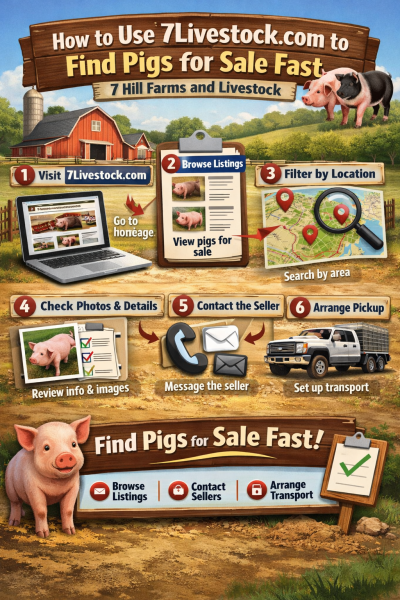
pigs for saleFinding quality pigs for sale can sometimes feel difficult, especially when relying on local classifieds, auctions, or word-of-mouth connections. Today, many farmers and livestock buyers are turning to online platforms that make it easier to locate animals quickly and connect directly with trusted sellers. One of the fastest and most convenient ways to find pigs for sale is by using the online pig marketplace at 7Livestock.com, operated by 7 Hill Farms and Livestock.
This guide explains how the platform works and how buyers can use it to locate pigs efficiently.

Finding Pigs for Sale Online

Traditional livestock searches often involve visiting multiple farms, calling sellers individually, or waiting for auction days. An online pig marketplace streamlines the process by bringing buyers and sellers together in one place.

Benefits of using an online marketplace include:

  • Faster access to available pigs
  • Ability to compare multiple listings
  • Direct contact with sellers
  • Broader geographic reach
  • Updated listings throughout the year

For buyers searching for pigs for sale, this approach saves time while providing more options.

Step 1: Visit 7Livestock.com

The first step is simply visiting the platform. 7Livestock.com is designed specifically for livestock listings, making it easy to browse animals without sorting through unrelated classifieds.

Once on the site, you can immediately begin searching listings for pigs available from farms and breeders. The platform focuses on making livestock discovery straightforward so buyers can quickly locate animals that meet their needs.

Step 2: Browse Listings of Pigs for Sale

After arriving at the site, the next step is browsing listings.

Each listing typically provides useful information such as:

  • Breed or type of pig
  • Age or weight
  • Location of the seller
  • Photos of the animals
  • Contact information

These details help buyers evaluate whether a listing is a good fit before reaching out. When trying to find pigs for sale quickly, the ability to review multiple listings in one place is extremely helpful.

Buyers looking for feeder pigs, breeding stock, or show pigs can compare options without spending hours searching across multiple websites.

Find a Pig
Near You

Browse Listings

Step 3: Filter by Location or Farm

One of the biggest advantages of an online pig marketplace is the ability to search beyond your immediate area.

If you are willing to travel or arrange livestock transportation, expanding your search radius often reveals many more pigs for sale. Many buyers find animals this way that they would never have discovered through local classifieds alone.

When browsing listings, you can quickly identify farms that are within driving distance or that offer transportation options.

Step 4: Review Photos and Animal Details

Quality listings typically include photos and detailed descriptions. Reviewing these helps buyers make informed decisions before contacting the seller.

Look for listings that include:

  • Clear images of the pigs
  • Accurate descriptions of age and weight
  • Information about health and feeding
  • Notes about breeding potential or show quality

These details help buyers determine whether the animals meet their goals.

For example, someone raising pigs for meat may prioritize growth rate and feed efficiency, while show pig buyers may focus more on structure and genetics.

Step 5: Contact the Seller Directly

Once you find pigs that match what you are looking for, the next step is contacting the seller.

Most listings on 7Livestock.com provide contact details so buyers can ask questions such as:

  • Are the pigs still available?
  • What feed program are they on?
  • When are they ready for pickup?
  • Are multiple pigs available?

Direct communication allows buyers to clarify details before arranging pickup or delivery.

Need a Special Pig?

  • Give us your wish list
  • We’ll match you to sellers
  • No obligation to buy

Order a Pig

Step 6: Arrange Pickup or Transportation

After confirming availability, buyers can schedule a pickup time with the seller.

Depending on distance, buyers may:

  • Pick up pigs directly from the farm
  • Arrange livestock transport
  • Coordinate delivery with the seller

Planning transportation ahead of time helps ensure a smooth transaction and reduces stress on the animals.

Tips for Finding Pigs for Sale Faster

If your goal is to find pigs for sale quickly, these tips can help:

  • Check listings frequently for new animals
  • Contact sellers quickly when you find a good match
  • Expand your search area when possible
  • Be flexible about pickup timing

Because livestock availability can change quickly, responding promptly often leads to the best results.

A Simpler Way to Find Pigs for Sale

Searching for livestock does not need to be complicated. Platforms like 7Livestock.com, operated by 7 Hill Farms and Livestock, make it easier to locate pigs from farms and breeders across different regions.

Instead of relying only on local listings or waiting for auctions, buyers can use an online pig marketplace to discover animals faster, compare options, and connect directly with sellers.

For anyone actively looking for pigs for sale, using a dedicated livestock platform can save time and make the entire process far more efficient.

FAQ

What should I look for when buying pigs online?
Buyers should evaluate the pig’s age, weight, breed, and overall health condition. It is also helpful to ask the seller about vaccination history, feeding program, and whether the pigs are accustomed to human handling.

What size pigs are best for beginners to raise?
Many new pig owners start with feeder pigs weighing between 40 and 70 pounds. At this size they are typically hardy, easier to transport, and still young enough to adapt well to new environments.

How much do pigs for sale usually cost?
Prices vary depending on breed, genetics, age, and region. Feeder pigs often range from about $75 to $300, while breeding stock or show-quality pigs may cost significantly more.

Posted on March 13, 2026 in ,

Best Pig Breeds for Feeder: Pros, Cons, and Starter Costs

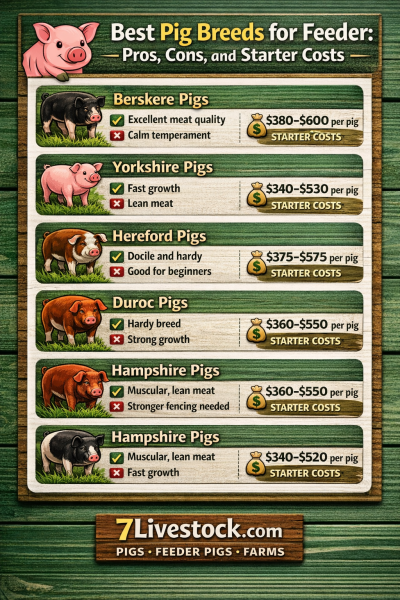
Best Pig Breeds for Feeder Choosing the best pig breeds for feeder pigs is one of the most important decisions for new livestock owners. Different breeds grow at different rates, convert feed differently, and vary in temperament and hardiness. For beginners, selecting the right breed can make the difference between a smooth first season and a frustrating learning curve.

Best Pig Breeds for Feeder

Whether you’re raising pigs for meat production, homesteading, or youth livestock projects, understanding the cost to raise pigs, breed strengths, and overall management needs will help you choose wisely. Below are several hardy pig breeds that are commonly recommended as beginner pigs due to their adaptability, temperament, and reliable growth.

Berkshire Pigs

Berkshire pigs are widely considered one of the best choices for both beginner farmers and experienced producers. Known for their excellent meat quality and balanced growth, they are often raised as feeder pigs across the United States.

Pros

  • Excellent pork flavor and marbling
  • Strong feed efficiency
  • Calm temperament compared to many breeds
  • High market demand for Berkshire pork

Cons

  • Feeder pigs may cost slightly more due to popularity
  • Slightly slower growth compared to some commercial breeds

Starter Costs

  • Feeder pig price: typically $80–$200 per pig
  • Feed cost to market weight: $300–$400
  • Total estimated cost to raise pigs: $380–$600 per pig

For beginners who want a balance of quality meat, manageable temperament, and predictable growth, Berkshire pigs are often one of the safest choices.

Yorkshire Pigs

Yorkshire pigs are one of the most widely raised commercial pig breeds in North America. They are known for their strong growth rate and efficient feed conversion, making them popular feeder pigs.

Find a Feeder Pig
Near You

Browse Listings

Pros

  • Fast growth rate
  • Excellent feed conversion
  • Lean meat production
  • Widely available feeder pigs

Cons

  • Slightly more sensitive to extreme weather conditions
  • Less marbling than heritage breeds

Starter Costs

  • Feeder pig price: $60–$150
  • Feed to market weight: $280–$380
  • Total estimated cost to raise pigs: $340–$530

Yorkshires are a practical option for those focused on efficient meat production and predictable performance.

Hereford Pigs

Hereford pigs have gained popularity among small farms and homesteaders due to their attractive coloring and calm disposition. Their hardy nature makes them ideal beginner pigs.

Pros

  • Very docile temperament
  • Strong mothering traits if breeding later
  • Adaptable to pasture and small farms
  • Good meat quality

Cons

  • Slightly less common in some regions
  • Growth rate may be moderate compared to commercial lines

Starter Costs

  • Feeder pig price: $75–$175
  • Feed to market weight: $300–$400
  • Total estimated cost to raise pigs: $375–$575

Because of their calm behavior and adaptability, Hereford pigs are often recommended for youth livestock projects and first-time pig owners.

Duroc Pigs

Duroc pigs are another popular breed known for their hardiness and ability to perform well in a variety of environments. Many producers use Durocs in crossbreeding programs because of their growth and muscle development.

Pros

  • Very hardy pig breed
  • Strong growth and feed efficiency
  • Excellent meat quality
  • Performs well in outdoor systems

Cons

  • Can be more energetic than some breeds
  • May require stronger fencing

Starter Costs

  • Feeder pig price: $60–$150
  • Feed to market weight: $300–$400
  • Total estimated cost to raise pigs: $360–$550

Durocs are a strong choice for producers who want a hardy pig breed capable of thriving in pasture or mixed farming environments.

Need a Special Pig?

  • Give us your wish list
  • We’ll match you to sellers
  • No obligation to buy

Order a Pig

Hampshire Pigs

Hampshire pigs are known for their muscular build and distinctive black bodies with a white belt across their shoulders. They are often used in commercial meat production due to their lean carcass quality.

Pros

  • Excellent muscle development
  • Efficient feed conversion
  • Reliable growth performance
  • Widely used in crossbreeding

Cons

  • Leaner meat than some heritage breeds
  • Slightly more active temperament

Starter Costs

  • Feeder pig price: $60–$140
  • Feed to market weight: $280–$380
  • Total estimated cost to raise pigs: $340–$520

For producers focused on efficient meat production and lean pork, Hampshire pigs are a dependable feeder pig option.

What Does It Cost to Raise Pigs?

For most small farms and homesteads, the cost to raise pigs is driven primarily by feed. Pigs typically reach market weight (250–300 pounds) in about 5–6 months.

Typical expenses include:

  • Feeder pig purchase: $60–$200
  • Feed: $280–$400
  • Bedding and supplies: $20–$60
  • Processing costs: $100–$150

This places the total cost to raise pigs between $460 and $800 per pig, depending on feed prices, breed, and management practices.

Many small farmers find that raising pigs themselves produces higher-quality pork while offering more control over feed and animal care.

Choosing the Right Feeder Pig Breed

When selecting feeder pigs, beginners should focus on temperament, availability, and hardiness rather than chasing the fastest growth rate. A calm, adaptable breed is easier to manage and often leads to a better overall experience for new livestock owners.

At 7 Hill Farms & Livestock, we help new and experienced farmers find healthy feeder pigs and hardy pig breeds suited for small farms, homesteads, and livestock projects. Starting with strong genetics and well-raised pigs can make the entire raising process smoother and more rewarding.

If you’re considering raising pigs for the first time, choosing the right breed is the first step toward a successful and enjoyable livestock experience.

FAQ

What breed of pig is best for beginners?
Berkshire, Hereford, and Duroc pigs are often recommended as beginner pigs because they are hardy, adaptable, and typically have calmer temperaments than some commercial lines.

How long does it take to raise feeder pigs to market weight?
Most feeder pigs reach market weight between 250–300 pounds in about 5 to 6 months, depending on feed quality, breed genetics, and management.

Are heritage pig breeds harder to raise?
Not necessarily. Many heritage breeds are actually hardy pig breeds that adapt well to pasture and small farms. They may grow slightly slower but often produce excellent pork quality.

Posted on March 10, 2026 in ,