 Selling pigs successfully requires more than just posting an ad and waiting for buyers. Whether you’re new to livestock sales or looking to improve your results, having a structured approach ensures smoother transactions, healthier animals, and better pricing. This help guide from 7 Hill Farms & Livestock walks you through essential pig seller steps, from creating effective listings to preparing for pick-up day.
How Pig Sellers Should Prepare
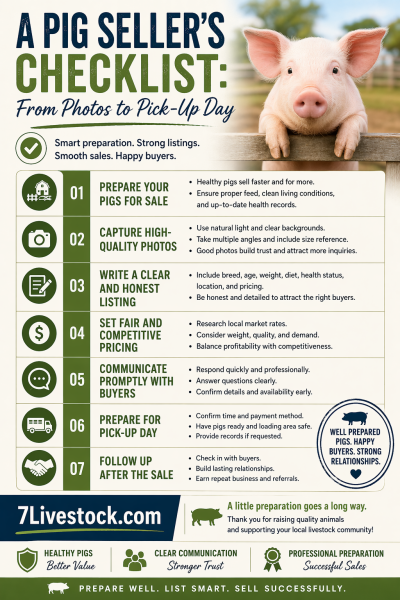
Step 1: Prepare Your Pigs for Sale
Before creating your listing, focus on the condition and presentation of your pigs. Buyers are more confident when animals appear healthy, well-managed, and properly handled.
Checklist:
- Ensure pigs are well-fed and hydrated
- Maintain clean living conditions
- Check for signs of illness or injury
- Keep vaccinations and health records updated
- Separate pigs by size or breed if selling multiple groups
Strong pig sale preparation starts with animal quality. Healthy pigs not only photograph better but also command higher prices and attract serious buyers.
Step 2: Capture High-Quality Photos
Photos are the first impression buyers will have of your pigs. Poor images can reduce interest, even if the animals are high quality.
Pig listing tips for photos:
- Use natural lighting whenever possible
- Capture multiple angles (side profile, front, and group shots)
- Keep the background clean and uncluttered
- Show size reference when relevant
- Avoid blurry or dark images
Think of your photos as your digital handshake. A professional-looking presentation builds trust and increases inquiries.
Step 3: Write a Clear and Honest Listing
A strong listing is one of the most important pig listing tips for attracting the right buyers. Transparency reduces back-and-forth communication and filters out unqualified inquiries.
Include the following details:
- Breed or crossbreed information
- Age and approximate weight
- Feeding program or diet
- Health status and vaccinations
- Location and pick-up details
- Pricing (per head or group rate)
Be straightforward and avoid exaggeration. Buyers appreciate honesty, and it helps establish long-term relationships if you plan to sell regularly.
Step 4: Set Fair and Competitive Pricing
Pricing can make or break your sale. Research local market rates and consider your pig’s condition, breed, and size.
Pricing considerations:
- Market demand in your region
- Feed and care costs invested
- Weight and growth potential
- Bulk discounts for multiple purchases
As a pig seller, your goal is to balance profitability with market competitiveness. Overpricing may lead to slow sales, while underpricing can reduce perceived value.
Step 5: Communicate Promptly with Buyers
Once your listing is live, timely communication becomes critical. Buyers often contact multiple sellers, so responsiveness can determine who gets the sale.
Best practices:
- Respond to messages quickly and professionally
- Answer questions clearly and accurately
- Confirm availability before scheduling pick-up
- Be upfront about any concerns or limitations
Good communication builds confidence and reduces the likelihood of last-minute cancellations.
Step 6: Prepare for Pick-Up Day
Proper pig sale preparation doesn’t stop once you have a buyer. Pick-up day is your opportunity to finalize the transaction smoothly and leave a positive impression.
Pick-up checklist:
- Confirm appointment time with buyer
- Have pigs sorted and ready for loading
- Ensure loading area is safe and accessible
- Provide any health or feeding records if applicable
- Prepare change or confirm payment method in advance
A smooth pick-up process reflects professionalism and increases the chances of repeat business or referrals.
Step 7: Follow Up After the Sale
Many pig sellers overlook this step, but a simple follow-up can set you apart.
Why it matters:
- Builds long-term relationships
- Encourages repeat buyers
- Generates word-of-mouth referrals
- Provides feedback for improvement
A quick message asking how the pigs are doing shows you care about your animals beyond the sale.
Final Thoughts
Selling pigs successfully comes down to preparation, presentation, and professionalism. By following this checklist, you can improve your listings, attract better buyers, and streamline the entire sales process.
At 7 Hill Farms & Livestock, we believe that every pig seller benefits from consistent systems and clear communication. Whether you’re selling a few pigs or managing larger livestock operations, applying these pig listing tips and pig sale preparation strategies will help you stand out in a competitive market.
FAQ
What is the best age to sell pigs?
Most pig sellers list pigs between 6 to 12 weeks old for feeder pigs, depending on breed and buyer demand. Market hogs are typically sold at finished weight based on local processing timelines.
How do I attract more buyers to my pig listing?
Use clear photos, detailed descriptions, and competitive pricing. Posting in multiple marketplaces and responding quickly to inquiries will also improve visibility and conversion.
What should buyers bring on pick-up day?
Buyers should bring a suitable trailer or crate, proper ventilation for transport, and confirm payment method in advance to ensure a smooth and safe transfer.