Blog

How to Sell Kunekune Pigs Faster: Pricing, Photos, and Where Listings Convert

Sell Kunekune pigsIf you are raising Kunekune pigs, getting them sold quickly is not just about posting a few pictures and hoping the right buyer appears. The best results usually come from a combination of accurate pricing, clear presentation, and listing in places where serious buyers are already searching. For farms trying to sell Kunekune pigs efficiently, a better sales process can make a major difference in both response quality and speed.

At 7 Hill Farms & Livestock, we know that buyers are not only looking for cute piglets. They want confidence in the breed, the health of the animals, and the credibility of the seller. That is why farms that understand how to market properly often sell faster than those that simply post a basic ad and wait.

Better Ways to Sell Kunekune Pigs

Kunekunes appeal to a wide range of buyers. Some want them as pasture pigs, some want them for breeding, and others are looking for smaller pigs with gentle personalities for hobby farm settings. Because of that, your listing has to answer several questions at once.

Buyers often want to know:

  • Age and gender of the piglets
  • Registration status
  • Parent bloodlines
  • Current feeding program
  • Health condition and handling
  • Whether the piglets are suited for breeding, grazing, or pets

If those details are missing, people hesitate. When they hesitate, they keep scrolling. If you want to understand how to sell piglets faster, start by reducing uncertainty for the buyer.

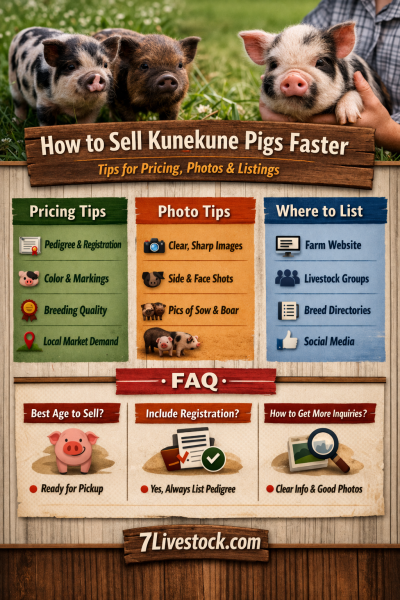
Pricing Piglets the Right Way

One of the biggest mistakes sellers make is guessing at price or copying another listing without understanding the market. To price piglets effectively, you need to consider more than age alone.

Your asking price should reflect:

  • Registration or pedigree value
  • Color and markings
  • Breeding quality
  • Overall size and condition
  • Local demand
  • Whether the piglets are intact, gilt, or barrow
  • The reputation of the farm

Well-presented Kunekune piglets from reputable Kunekune breeders can often justify a stronger price than generic or incomplete listings. At the same time, overpriced piglets tend to sit longer, especially if the ad does not explain why they are worth the premium.

A good strategy is to set a fair price that matches the animal’s value and include enough detail to support it. Buyers are more likely to respond positively when they understand what they are paying for.

Photos That Help Listings Convert

Photos are often the first thing a buyer notices. Poor lighting, cluttered backgrounds, or distant shots can make even healthy piglets look less appealing. Strong photos increase trust and create more clicks.

For better results, include:

  • A clean side profile of each piglet
  • A close-up of the face
  • A group photo of the litter
  • A photo of the sow and boar when possible
  • Images taken in natural light
  • Clean pasture or pen backgrounds

Try to avoid blurry images, dark barns, or photos with distracting objects in the frame. Buyers want to clearly see body shape, color pattern, and overall condition. For many Kunekune breeders, improved photos alone lead to better inquiry rates.

Have a Pig to Sell?

  • Reach ready buyers
  • Easy listing process
  • Straightforward pricing

Create Listing

Write Listings That Answer Buyer Questions

A listing should do more than announce animals are available. It should help buyers feel informed and ready to take the next step. The best listings are specific, easy to scan, and written with real buyer concerns in mind.

A strong listing should mention:

  • Date of birth
  • Breed and bloodline details
  • Registration information
  • Sex of each piglet
  • Weaning status
  • Temperament
  • Feeding routine
  • Pickup location
  • Contact method

Using phrases like Kunekune piglets for sale, how to sell piglets, and Kunekune breeders naturally within the description can also help your page perform better in search results if you are posting on your own website.

Where Listings Convert Best

Not every platform produces the same quality of buyer. General classified sites may generate traffic, but they can also bring a lot of low-intent messages. More targeted channels often perform better.

Consider listing on:

  • Your farm website
  • Agricultural marketplace platforms
  • Farm and livestock sale groups
  • Breed-specific directories
  • Social media business pages
  • Email outreach to past buyers or referrals

A farm website is especially valuable because it gives you more control over your message, photos, and branding. It also helps build long-term trust. When buyers see a professional online presence, they are more likely to believe they are dealing with an established farm rather than a random seller.

Sell Kunekune Pigs Effectively

Fast sales often come down to credibility. Buyers want to know they are working with people who care about animal quality and communication. That is why reputation matters so much in livestock marketing.

At 7 Hill Farms & Livestock, building buyer trust starts with honest presentation, quality animals, and responsive follow-up. If you want to sell faster, be ready to answer questions quickly, provide additional photos, and explain what makes your piglets a good fit for the buyer’s goals.

FAQ

What is the best age to list Kunekune piglets for sale?
Many sellers begin promoting Kunekune piglets before weaning so buyers can reserve early, but listings tend to convert best when the expected pickup timeline is clearly stated. Buyers want to know when the piglets will be ready to leave, what they are eating, and how they have been handled.

Should Kunekune breeders include registration details in every listing?
Yes. Serious buyers often look for registration status, bloodlines, and breeder credibility right away. When Kunekune breeders include those details upfront, they help reduce back-and-forth questions and make the listing feel more trustworthy.

What helps a piglet listing get more serious inquiries?
Clear pricing, strong photos, and a complete description usually make the biggest difference. If you want to know how to sell piglets more effectively, focus on showing value, explaining the piglet’s background, and posting where livestock buyers are already searching.
 

Posted on March 27, 2026 in , ,

Shipping & Pig Transport Options: Crates and Costs

pig transport options graphicTransporting pigs safely and efficiently is a critical part of the buying process, whether you’re purchasing from a breeder across the state or arranging delivery from a trusted farm like 7 Hill Farms & Livestock. Understanding your options for pig transport services, crate types, and associated costs can help you make the best decision for your animals and your budget. This guide explains how to ship pigs, what to expect during transit, and how to choose the right method.
Understanding Pig Transport Requirements

Pigs are sensitive animals that require proper handling during transport. Stress, temperature changes, and overcrowding can all impact their health. That’s why reputable providers follow strict transport guidelines, including proper ventilation, adequate space, and minimal travel disruptions.

When evaluating pig transport services, it’s important to ensure the provider prioritizes animal welfare. Look for services that offer climate-aware scheduling, experienced handlers, and compliance with livestock transport regulations. Whether you’re transporting a single piglet or multiple animals, these factors make a significant difference.

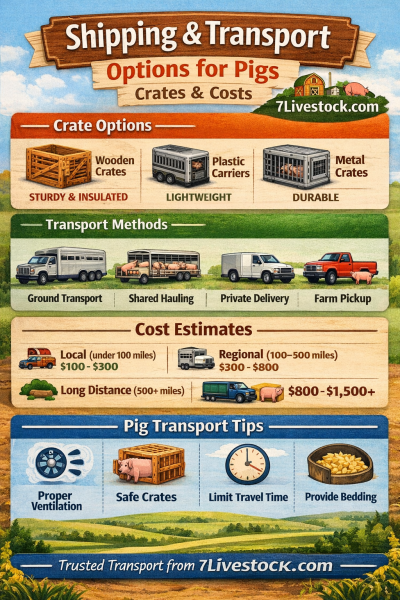
Crate Options for Shipping Pigs

Choosing the right crate is one of the most important steps in learning how to ship pigs safely. The crate must be durable, well-ventilated, and appropriately sized for the pig.

Wooden Crates

Wooden crates are a common option for pig transport. They are sturdy, customizable, and provide good insulation during travel. These crates are often used for longer distances and can be built to match the pig’s size, preventing excessive movement while still allowing comfort.

Plastic Livestock Carriers

Plastic crates are lightweight and easy to clean, making them ideal for shorter trips. They typically include built-in ventilation slots and secure latching systems. While not as rugged as wood, they are sufficient for regional pig transport services.

Metal Crates

Metal crates offer maximum durability and are often used for repeated or commercial transport. They provide excellent airflow and structural strength, though they may require additional bedding to ensure comfort during transit.

How to Ship Pigs: Transport Methods

There are several ways to ship pigs, depending on distance, budget, and urgency.

Ground Transport Services

Ground transport is the most common method for shipping pigs. Specialized livestock haulers use trailers designed for animal safety, often equipped with ventilation systems and non-slip flooring. This is typically the most cost-effective option for distances under several hundred miles.

Shared Transport (Group Hauling)

For buyers looking to reduce costs, shared transport is a popular option. Multiple animals from different buyers are transported together along a planned route. While delivery times may be slightly longer, this method significantly lowers expenses.

Private Delivery

Private delivery offers a more direct and faster solution. Your pigs are transported without additional stops, reducing travel stress. This is ideal for high-value animals or when timing is critical, though it comes at a higher price point.

Pickup from Farm

Many buyers choose to pick up pigs directly from the farm. This eliminates shipping costs and allows you to inspect the animals in person. If you go this route, ensure your vehicle is properly equipped with a safe crate or enclosure.

Need a Special Pig?

  • Give us your wish list
  • We’ll match you to sellers
  • No obligation to buy

Order a Pig

Cost Breakdown for Pig Transport

Understanding the cost of pig transport services helps you plan your purchase more effectively. Prices can vary based on distance, crate type, and delivery method.

  • Local Transport (Under 100 miles): $100–$300
  • Regional Transport (100–500 miles): $300–$800
  • Long-Distance Transport (500+ miles): $800–$1,500+

Crate costs may be included or charged separately, typically ranging from $50 to $200 depending on materials and customization. Shared transport can reduce overall costs by 20–40%, while private delivery may increase pricing due to exclusivity.

Additional factors that influence pricing include fuel costs, route complexity, and seasonal demand. Summer months, for example, may require specialized scheduling to avoid heat stress, which can slightly increase costs.

Tips for Safe Pig Transport

To ensure a smooth experience when learning how to ship pigs, keep these best practices in mind:

  • Choose a reputable provider with experience in pig transport services
  • Confirm crate size and ventilation are appropriate for your pig
  • Schedule transport during mild weather when possible
  • Provide proper bedding to reduce stress and slipping
  • Minimize transit time to keep animals comfortable

Working with an experienced provider like 7 Hill Farms & Livestock ensures that these details are handled professionally, giving you peace of mind throughout the process.

Final Thoughts

Shipping pigs doesn’t have to be complicated. By understanding crate options, transport methods, and associated costs, you can make informed decisions that protect your investment and prioritize animal welfare. Whether you opt for shared hauling, private delivery, or farm pickup, choosing the right approach ensures your pigs arrive healthy and ready to thrive.

7 Hill Farms & Livestock is committed to helping customers navigate pig transport services with ease, offering guidance and reliable solutions tailored to your needs.

FAQ

How long can pigs safely travel during transport?
Most pigs can safely travel 6 to 12 hours with proper ventilation, bedding, and rest stops. For longer trips, experienced pig transport services schedule breaks to check animals, provide water if needed, and reduce stress.

Do pigs need food or water during shipping?
For shorter trips, pigs typically do not require feeding during transit. However, for longer distances, professional haulers may provide hydration strategies or plan stops to ensure animal welfare without causing digestive issues.

Is it cheaper to ship multiple pigs at once?
Yes, transporting multiple pigs often reduces the cost per animal. Shared transport or group hauling spreads fuel and labor costs across several deliveries, making it one of the most cost-effective options.

Posted on March 24, 2026 in , ,

Potbelly Pigs for Sale: How to Choose, Price Ranges, and Reputable Sellers

Potbelly pigs for salePotbelly pigs have become a popular choice for hobby farmers, homesteaders, and even pet owners looking for intelligent, personable livestock. If you’re searching for potbelly pigs for sale, it’s important to understand how to evaluate quality, typical price ranges, and how to identify trustworthy potbelly breeders.
Potbelly Pigs for Sale: Overview

This guide from 7 Hill Farms & Livestock walks you through everything you need to make a confident purchase.

Why Choose Potbelly Pigs?

Potbelly pigs, often called Vietnamese potbellied pigs, are known for their manageable size, friendly temperament, and adaptability. Compared to traditional farm hogs, they remain smaller and are easier to handle, making them ideal for:

  • Small farms and homesteads
  • Families looking for unique livestock
  • 4-H or youth livestock projects
  • Pet ownership in rural or semi-rural areas

They are highly intelligent animals that can be trained, form bonds with humans, and thrive with proper care.

How to Choose the Right Potbelly Piglet

Not all potbelly piglets are created equal. Selecting the right pig starts with evaluating health, genetics, and breeder practices

Health Indicators

Look for piglets that are:

  • Bright-eyed and alert
  • Active and curious
  • Free from nasal discharge or coughing
  • Smooth-coated with no visible skin issues

Avoid piglets that appear lethargic or underweight, as this may indicate underlying health concerns.

Size Expectations

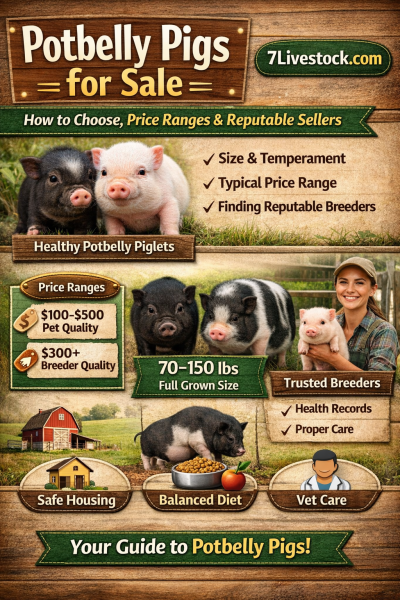
One of the biggest misconceptions is “teacup” or “mini” pigs. While potbelly pigs are smaller than commercial breeds, most mature between 70–150 pounds depending on genetics and diet.

Reputable potbelly breeders will give you realistic expectations about adult size.

Find a Potbelly Pig
Near You

Browse Listings

Temperament

A well-socialized piglet should be:

  • Comfortable around people
  • Not overly aggressive or fearful
  • Easy to handle for short periods

Early handling by the breeder plays a major role in long-term behavior.

Breeding Quality

Ask about:

  • Parent lineage
  • Vaccination or deworming schedules
  • Feeding practices

Good breeders prioritize strong genetics and proper early care.

Potbelly Pig Price Ranges

When evaluating potbelly pigs for sale, pricing can vary significantly based on several factors.

Typical Price Range

  • Pet-quality potbelly piglets: $100 to $500
  • Registered or breeder-quality pigs: $300 to $1,000+
  • Rare colors or bloodlines: Higher-end pricing

What Affects Pricing?

Several factors influence cost:

  • Age: Younger piglets typically cost more
  • Color and markings: Unique patterns can increase value
  • Breeder reputation: Established breeders charge more for quality assurance
  • Location: Transportation and regional demand can impact pricing

Be cautious of prices that seem too good to be true. Extremely cheap pigs may come from poor breeding conditions or lack proper care.

Need a Special Pig?

  • Give us your wish list
  • We’ll match you to sellers
  • No obligation to buy

Order a Pig

How to Identify Reputable Potbelly Breeders

Choosing the right breeder is just as important as choosing the right pig. A reputable seller ensures your piglet has the best possible start.

Signs of a Trustworthy Breeder

  • Transparent about piglet care and feeding
  • Willing to answer questions and provide guidance
  • Allows you to see the piglets in person or via video
  • Provides health records or care instructions
  • Clearly communicates expectations for ownership

Red Flags to Avoid

  • No information about parents or origin
  • Poor living conditions
  • Lack of basic health knowledge
  • Pressure to purchase quickly

Working with experienced providers like 7 Hill Farms & Livestock helps ensure you’re getting healthy, well-raised potbelly piglets from a reliable source.

Preparing for Your New Potbelly Pig

Before bringing your pig home, make sure you’re prepared with the essentials.

Housing

  • Secure shelter with protection from weather
  • Fencing to prevent escape
  • Clean, dry bedding

Feeding

A balanced diet is key:

  • Commercial mini pig feed or appropriate livestock feed
  • Limited treats such as fruit and vegetables
  • Access to clean water at all times

Veterinary Care

Find a vet familiar with pigs and plan for:

  • Routine checkups
  • Vaccinations if recommended locally
  • Hoof and tusk maintenance

Social Needs

Potbelly pigs are social animals and thrive with:

  • Regular human interaction
  • Enrichment activities
  • Consistent routines

Where to Find Potbelly Pigs for Sale

You can find potbelly pigs for sale through several channels:

  • Specialized livestock farms
  • Local breeders
  • Online agricultural marketplaces
  • Farm networking groups

However, not all sources are equal. Prioritize farms with a strong reputation and a focus on animal welfare.

Quality Potbelly Pigs for Sale

Buying a potbelly pig is an exciting investment, but it requires careful consideration. By understanding how to evaluate potbelly piglets, recognizing fair price ranges, and working with reputable potbelly breeders, you set yourself up for long-term success.

7 Hill Farms & Livestock is committed to providing healthy, well-socialized pigs and helping buyers make informed decisions. Whether you’re starting a small farm or adding a unique animal to your property, choosing the right pig and the right breeder makes all the difference.

FAQ

How big do potbelly pigs get?
Most potbelly pigs reach 70 to 150 pounds at maturity, depending on genetics and diet.

Are potbelly pigs good pets?
Yes, they are intelligent and social, but they require space, proper care, and commitment.

How much do potbelly piglets cost?
Prices typically range from $100 to $500 for pet-quality piglets, with higher costs for premium genetics or rare colors.

Posted on March 18, 2026 in , ,

How to Sell Duroc Pigs Faster: Pricing, Photos, and Where Listings Convert

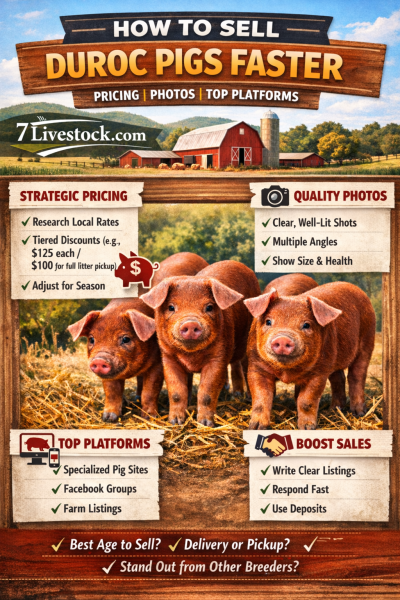
Selling Duroc pigs and piglets quickly and profitably comes down to three core factors: how you price them, how you present them, and where you list them. Whether you are an established operation or just getting started, this playbook from 7 Hill Farms & Livestock breaks down exactly how successful breeders sell Duroc pigs faster while maintaining strong margins.
Sell Duroc Pigs Faster

As with any item, strategy and planning is step 1 to a strong marketing plan and long-term success.

Start With Strategic Pricing

If you want to sell piglets fast, pricing is your first lever. Many sellers either overprice and sit on inventory or underprice and leave money on the table.

Here is how to dial it in:

Know your local market range
Research comparable listings within a 150-to-300-mile radius. Duroc piglets typically vary based on genetics, age, and demand cycles.

Price based on purpose

  • Show-quality or registered lines: premium pricing
  • Feeder pigs: competitive, volume-driven pricing
  • Breeding stock: value tied to lineage and performance

Use tiered pricing to create urgency
Offer small discounts for multiple purchases or early reservations. Example:

  • $125 each
  • $115 each for 4+
  • $100 each for full litter pickup

This approach helps you price piglets competitively while encouraging larger transactions.

Adjust seasonally
Spring and early summer demand is typically strongest. If listings slow down in fall or winter, slight price adjustments can dramatically improve conversion.

Photos That Sell Before You Ever Get a Message

Photos are often the difference between getting ignored and getting immediate inquiries. Most buyers scroll quickly, so your visuals must stand out instantly.

Have a Pig to Sell?

  • Reach ready buyers
  • Easy listing process
  • Straightforward pricing

Create Listing

Use clean, well-lit environments
Avoid muddy pens or cluttered backgrounds. A simple, dry area with natural light builds trust immediately.

Capture multiple angles
Include:

  • Side profile
  • Head and ear structure
  • Group shots of littermates
  • Close-up of markings and muscle tone

Show scale and health
Include a human or object for size reference. Buyers want to understand growth stage and condition.

Highlight consistency across the litter
Consistency is a major selling point for serious buyers and other Duroc breeders. If your pigs look uniform, emphasize that visually.

Avoid overediting
Natural, accurate photos convert better than overly filtered images. Buyers want authenticity.

Write Listings That Answer Buyer Questions Instantly

A strong listing reduces back-and-forth and speeds up the sale process.

Include the essentials:

  • Breed: Duroc piglets
  • Age and weight range
  • Vaccination or health status
  • Feeding program
  • Availability date
  • Location and pickup details

Then add a short value-driven statement:

“Healthy, fast-growing Duroc piglets raised on consistent feed program. Strong genetics with uniform litter quality. Ideal for feeder or breeding programs.”

This positioning helps buyers quickly understand why your pigs stand out.

Where Listings Convert the Fastest

Not all platforms perform equally. If your goal is to sell piglets quickly, focus on high-visibility, agriculture-driven platforms.

Specialized Pig Platforms
Websites dedicated specifically to pigs and livestock attract more serious, ready-to-buy audiences. These platforms often generate higher-quality inquiries and faster conversions because buyers are actively searching for animals like Duroc piglets.

Facebook Groups and Marketplace
Still one of the fastest-moving channels. Look for:

  • Local farm and livestock groups
  • State-specific swine groups
  • Show pig communities

Consistency matters. Refresh listings regularly to stay visible.

Text and referral networks
Many of the fastest sales happen through word-of-mouth. Build a list of past buyers and notify them when new litters are available.

Timing and Follow-Up Close More Deals

Speed matters. The fastest sellers are also the most responsive.

Reply quickly
Buyers often message multiple sellers at once. First response often wins the sale.

Create simple next steps
Instead of long conversations, guide buyers clearly:
“Pickup available this weekend. Message to reserve.”

Use deposits to secure sales
Even small deposits reduce no-shows and help you manage inventory.

Build a Repeatable System

The goal is not just to sell one litter quickly. It is to create a repeatable system that works every time.

To recap:

  • Price piglets based on market demand and volume incentives
  • Use clean, clear photos that highlight quality and consistency
  • Write listings that answer key buyer questions upfront
  • Focus on platforms where livestock buyers are already active
  • Respond quickly and simplify the buying process

When these elements work together, you will consistently sell Duroc pigs faster, reduce holding time, and build a reputation that keeps buyers coming back.

For Duroc breeders looking to scale, this is the difference between occasional sales and a predictable, high-converting pipeline.

For more information on how to sell your pigs quickly and professionally, reach out to 7 Hill Farms & Livestock today.

FAQ

What age is best to sell Duroc pigs?
Most sellers find the highest demand between 6 to 10 weeks of age. At this stage, piglets are weaned, eating consistently, and ready for transition, making them more attractive to buyers.

Should I offer delivery or pickup only?
Offering local delivery or meeting within a reasonable radius can significantly increase conversions. However, always factor delivery time, fuel, and logistics into your pricing to maintain margins.

How do I stand out from other Duroc breeders?
Consistency, communication, and transparency set you apart. Clean photos, clear listings, and quick responses build trust and often win buyers over competitors with similar pricing.

Posted on March 16, 2026 in ,

How to Use 7Livestock.com to Find Pigs for Sale Fast

pigs for saleFinding quality pigs for sale can sometimes feel difficult, especially when relying on local classifieds, auctions, or word-of-mouth connections. Today, many farmers and livestock buyers are turning to online platforms that make it easier to locate animals quickly and connect directly with trusted sellers. One of the fastest and most convenient ways to find pigs for sale is by using the online pig marketplace at 7Livestock.com, operated by 7 Hill Farms and Livestock.
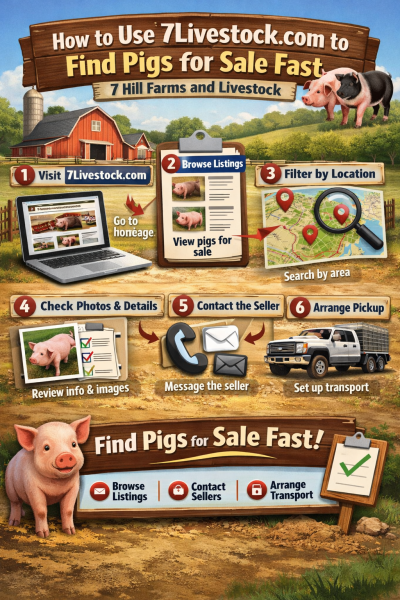
This guide explains how the platform works and how buyers can use it to locate pigs efficiently.

Finding Pigs for Sale Online

Traditional livestock searches often involve visiting multiple farms, calling sellers individually, or waiting for auction days. An online pig marketplace streamlines the process by bringing buyers and sellers together in one place.

Benefits of using an online marketplace include:

  • Faster access to available pigs
  • Ability to compare multiple listings
  • Direct contact with sellers
  • Broader geographic reach
  • Updated listings throughout the year

For buyers searching for pigs for sale, this approach saves time while providing more options.

Step 1: Visit 7Livestock.com

The first step is simply visiting the platform. 7Livestock.com is designed specifically for livestock listings, making it easy to browse animals without sorting through unrelated classifieds.

Once on the site, you can immediately begin searching listings for pigs available from farms and breeders. The platform focuses on making livestock discovery straightforward so buyers can quickly locate animals that meet their needs.

Step 2: Browse Listings of Pigs for Sale

After arriving at the site, the next step is browsing listings.

Each listing typically provides useful information such as:

  • Breed or type of pig
  • Age or weight
  • Location of the seller
  • Photos of the animals
  • Contact information

These details help buyers evaluate whether a listing is a good fit before reaching out. When trying to find pigs for sale quickly, the ability to review multiple listings in one place is extremely helpful.

Buyers looking for feeder pigs, breeding stock, or show pigs can compare options without spending hours searching across multiple websites.

Find a Pig
Near You

Browse Listings

Step 3: Filter by Location or Farm

One of the biggest advantages of an online pig marketplace is the ability to search beyond your immediate area.

If you are willing to travel or arrange livestock transportation, expanding your search radius often reveals many more pigs for sale. Many buyers find animals this way that they would never have discovered through local classifieds alone.

When browsing listings, you can quickly identify farms that are within driving distance or that offer transportation options.

Step 4: Review Photos and Animal Details

Quality listings typically include photos and detailed descriptions. Reviewing these helps buyers make informed decisions before contacting the seller.

Look for listings that include:

  • Clear images of the pigs
  • Accurate descriptions of age and weight
  • Information about health and feeding
  • Notes about breeding potential or show quality

These details help buyers determine whether the animals meet their goals.

For example, someone raising pigs for meat may prioritize growth rate and feed efficiency, while show pig buyers may focus more on structure and genetics.

Step 5: Contact the Seller Directly

Once you find pigs that match what you are looking for, the next step is contacting the seller.

Most listings on 7Livestock.com provide contact details so buyers can ask questions such as:

  • Are the pigs still available?
  • What feed program are they on?
  • When are they ready for pickup?
  • Are multiple pigs available?

Direct communication allows buyers to clarify details before arranging pickup or delivery.

Need a Special Pig?

  • Give us your wish list
  • We’ll match you to sellers
  • No obligation to buy

Order a Pig

Step 6: Arrange Pickup or Transportation

After confirming availability, buyers can schedule a pickup time with the seller.

Depending on distance, buyers may:

  • Pick up pigs directly from the farm
  • Arrange livestock transport
  • Coordinate delivery with the seller

Planning transportation ahead of time helps ensure a smooth transaction and reduces stress on the animals.

Tips for Finding Pigs for Sale Faster

If your goal is to find pigs for sale quickly, these tips can help:

  • Check listings frequently for new animals
  • Contact sellers quickly when you find a good match
  • Expand your search area when possible
  • Be flexible about pickup timing

Because livestock availability can change quickly, responding promptly often leads to the best results.

A Simpler Way to Find Pigs for Sale

Searching for livestock does not need to be complicated. Platforms like 7Livestock.com, operated by 7 Hill Farms and Livestock, make it easier to locate pigs from farms and breeders across different regions.

Instead of relying only on local listings or waiting for auctions, buyers can use an online pig marketplace to discover animals faster, compare options, and connect directly with sellers.

For anyone actively looking for pigs for sale, using a dedicated livestock platform can save time and make the entire process far more efficient.

FAQ

What should I look for when buying pigs online?
Buyers should evaluate the pig’s age, weight, breed, and overall health condition. It is also helpful to ask the seller about vaccination history, feeding program, and whether the pigs are accustomed to human handling.

What size pigs are best for beginners to raise?
Many new pig owners start with feeder pigs weighing between 40 and 70 pounds. At this size they are typically hardy, easier to transport, and still young enough to adapt well to new environments.

How much do pigs for sale usually cost?
Prices vary depending on breed, genetics, age, and region. Feeder pigs often range from about $75 to $300, while breeding stock or show-quality pigs may cost significantly more.

Posted on March 13, 2026 in ,

Best Pig Breeds for Feeder: Pros, Cons, and Starter Costs

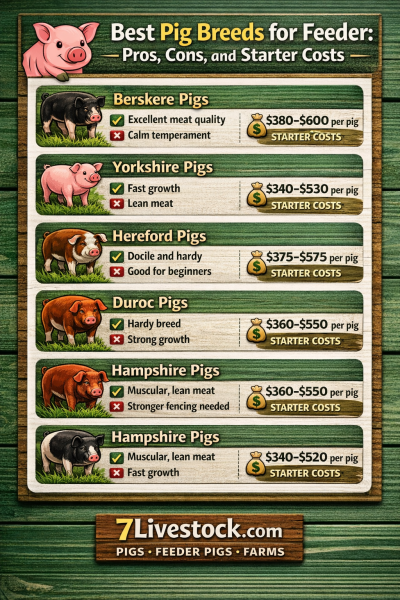
Best Pig Breeds for Feeder Choosing the best pig breeds for feeder pigs is one of the most important decisions for new livestock owners. Different breeds grow at different rates, convert feed differently, and vary in temperament and hardiness. For beginners, selecting the right breed can make the difference between a smooth first season and a frustrating learning curve.
Best Pig Breeds for Feeder

Whether you’re raising pigs for meat production, homesteading, or youth livestock projects, understanding the cost to raise pigs, breed strengths, and overall management needs will help you choose wisely. Below are several hardy pig breeds that are commonly recommended as beginner pigs due to their adaptability, temperament, and reliable growth.

Berkshire Pigs

Berkshire pigs are widely considered one of the best choices for both beginner farmers and experienced producers. Known for their excellent meat quality and balanced growth, they are often raised as feeder pigs across the United States.

Pros

  • Excellent pork flavor and marbling
  • Strong feed efficiency
  • Calm temperament compared to many breeds
  • High market demand for Berkshire pork

Cons

  • Feeder pigs may cost slightly more due to popularity
  • Slightly slower growth compared to some commercial breeds

Starter Costs

  • Feeder pig price: typically $80–$200 per pig
  • Feed cost to market weight: $300–$400
  • Total estimated cost to raise pigs: $380–$600 per pig

For beginners who want a balance of quality meat, manageable temperament, and predictable growth, Berkshire pigs are often one of the safest choices.

Yorkshire Pigs

Yorkshire pigs are one of the most widely raised commercial pig breeds in North America. They are known for their strong growth rate and efficient feed conversion, making them popular feeder pigs.

Find a Feeder Pig
Near You

Browse Listings

Pros

  • Fast growth rate
  • Excellent feed conversion
  • Lean meat production
  • Widely available feeder pigs

Cons

  • Slightly more sensitive to extreme weather conditions
  • Less marbling than heritage breeds

Starter Costs

  • Feeder pig price: $60–$150
  • Feed to market weight: $280–$380
  • Total estimated cost to raise pigs: $340–$530

Yorkshires are a practical option for those focused on efficient meat production and predictable performance.

Hereford Pigs

Hereford pigs have gained popularity among small farms and homesteaders due to their attractive coloring and calm disposition. Their hardy nature makes them ideal beginner pigs.

Pros

  • Very docile temperament
  • Strong mothering traits if breeding later
  • Adaptable to pasture and small farms
  • Good meat quality

Cons

  • Slightly less common in some regions
  • Growth rate may be moderate compared to commercial lines

Starter Costs

  • Feeder pig price: $75–$175
  • Feed to market weight: $300–$400
  • Total estimated cost to raise pigs: $375–$575

Because of their calm behavior and adaptability, Hereford pigs are often recommended for youth livestock projects and first-time pig owners.

Duroc Pigs

Duroc pigs are another popular breed known for their hardiness and ability to perform well in a variety of environments. Many producers use Durocs in crossbreeding programs because of their growth and muscle development.

Pros

  • Very hardy pig breed
  • Strong growth and feed efficiency
  • Excellent meat quality
  • Performs well in outdoor systems

Cons

  • Can be more energetic than some breeds
  • May require stronger fencing

Starter Costs

  • Feeder pig price: $60–$150
  • Feed to market weight: $300–$400
  • Total estimated cost to raise pigs: $360–$550

Durocs are a strong choice for producers who want a hardy pig breed capable of thriving in pasture or mixed farming environments.

Need a Special Pig?

  • Give us your wish list
  • We’ll match you to sellers
  • No obligation to buy

Order a Pig

Hampshire Pigs

Hampshire pigs are known for their muscular build and distinctive black bodies with a white belt across their shoulders. They are often used in commercial meat production due to their lean carcass quality.

Pros

  • Excellent muscle development
  • Efficient feed conversion
  • Reliable growth performance
  • Widely used in crossbreeding

Cons

  • Leaner meat than some heritage breeds
  • Slightly more active temperament

Starter Costs

  • Feeder pig price: $60–$140
  • Feed to market weight: $280–$380
  • Total estimated cost to raise pigs: $340–$520

For producers focused on efficient meat production and lean pork, Hampshire pigs are a dependable feeder pig option.

What Does It Cost to Raise Pigs?

For most small farms and homesteads, the cost to raise pigs is driven primarily by feed. Pigs typically reach market weight (250–300 pounds) in about 5–6 months.

Typical expenses include:

  • Feeder pig purchase: $60–$200
  • Feed: $280–$400
  • Bedding and supplies: $20–$60
  • Processing costs: $100–$150

This places the total cost to raise pigs between $460 and $800 per pig, depending on feed prices, breed, and management practices.

Many small farmers find that raising pigs themselves produces higher-quality pork while offering more control over feed and animal care.

Choosing the Right Feeder Pig Breed

When selecting feeder pigs, beginners should focus on temperament, availability, and hardiness rather than chasing the fastest growth rate. A calm, adaptable breed is easier to manage and often leads to a better overall experience for new livestock owners.

At 7 Hill Farms & Livestock, we help new and experienced farmers find healthy feeder pigs and hardy pig breeds suited for small farms, homesteads, and livestock projects. Starting with strong genetics and well-raised pigs can make the entire raising process smoother and more rewarding.

If you’re considering raising pigs for the first time, choosing the right breed is the first step toward a successful and enjoyable livestock experience.

FAQ

What breed of pig is best for beginners?
Berkshire, Hereford, and Duroc pigs are often recommended as beginner pigs because they are hardy, adaptable, and typically have calmer temperaments than some commercial lines.

How long does it take to raise feeder pigs to market weight?
Most feeder pigs reach market weight between 250–300 pounds in about 5 to 6 months, depending on feed quality, breed genetics, and management.

Are heritage pig breeds harder to raise?
Not necessarily. Many heritage breeds are actually hardy pig breeds that adapt well to pasture and small farms. They may grow slightly slower but often produce excellent pork quality.

Posted on March 10, 2026 in ,

Show Pigs for Sale: How to Choose, Price Ranges, and Reputable Sellers

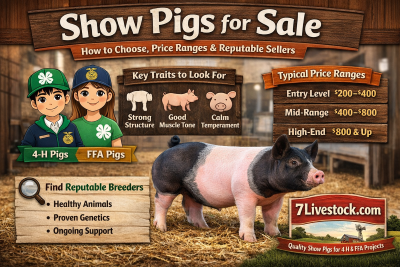
show pigs for saleFor families involved in youth livestock programs, finding the right show pigs for sale can make a major difference in a successful project. Whether you are participating in 4H pigs programs or raising FFA pigs for competition, the quality of the pig, its genetics, and the breeder you purchase from all play important roles.
Show Pigs for Sale: Making your Decision

A well-chosen show pig provides an opportunity to learn animal care, responsibility, and livestock management while also competing at local, county, and state fairs. Understanding how to evaluate pigs, typical pricing ranges, and how to identify trustworthy breeders will help buyers make confident decisions.

What Makes a Good Show Pig

When searching for show pigs for sale, the goal is not simply to buy a piglet, but to find one with the genetic potential to grow into a competitive market hog.

Several characteristics should be evaluated before purchasing.

Find a Show Pig
Near You

Browse Listings

Structure and soundness
A good show pig should walk comfortably with a natural stride. Structural soundness in the legs and joints allows the animal to grow efficiently and remain healthy throughout the feeding period.

Muscle shape and body composition
Judges look for pigs that have a balanced combination of muscle and leanness. A wide top, strong loin area, and a square build are typically desirable traits.

Growth potential
Show pigs need the ability to reach the proper market weight in time for competition. Quality genetics often lead to consistent growth and improved feed efficiency.

Temperament
A calm pig that adapts well to handling will be easier for youth exhibitors to train and manage during the show season.

Experienced breeders carefully select breeding lines that consistently produce pigs with these characteristics.

Choosing the Right Pig for 4H and FFA Projects

Youth livestock programs such as 4H pigs and FFA pigs emphasize both learning and competition. Selecting the right pig helps students gain the most from the experience.

Consider these factors when choosing a project pig:

Age and weight
Most show pig buyers look for piglets between 6 and 10 weeks old. At this stage, they are young enough to adapt to new environments while still showing early structural traits.

Fair weight targets
Every fair has specific weight requirements. Buyers should choose pigs that have the genetic potential to reach the target weight within the feeding period.

Breed or cross genetics
Many successful show pigs are crossbred to combine desirable traits such as muscle expression, growth rate, and structural balance.

Support from the breeder
A breeder who offers guidance on feeding, care, and show preparation can be extremely valuable for first-time exhibitors.

Programs like 4-H and FFA are about much more than ribbons. They teach responsibility, livestock management, and confidence, making the project pig selection an important starting point.

Need a Special Pig?

  • Give us your wish list
  • We’ll match you to sellers
  • No obligation to buy

Order a Pig

Typical Price Ranges for Show Pigs

Prices for show pigs for sale can vary significantly depending on genetics, breeder reputation, and competition level.

Here are general price ranges buyers often encounter:

Entry-level project pigs
$200 – $400
These pigs are typically solid choices for local fairs and beginner exhibitors.

Mid-range show pigs
$400 – $800
These pigs often come from proven breeding lines and may have stronger show potential.

High-end competition pigs
$800 – $2,500+
Elite genetics and champion bloodlines can command higher prices, particularly from well-known breeders.

While price can reflect quality genetics, success still depends heavily on feeding programs, daily care, and training throughout the project.

Timing Matters When Buying Show Pigs

Show pig availability often follows seasonal cycles tied to county fair schedules.

Buying early in the season provides several advantages:

Better selection
The strongest pigs from each litter typically sell first.

More time for feeding programs
Proper nutrition and conditioning take time to produce a well-finished market hog.

Training opportunities
Early purchase gives exhibitors time to work with their pig, so it becomes comfortable being handled and shown.

For youth exhibitors, having additional time to learn feeding routines and care practices can greatly improve their show experience.

Quality Show Pigs for Sale

At 7 Hill Farms & Livestock, we provide carefully raised show pigs for sale for youth livestock programs. Our pigs are selected for structural soundness, strong growth potential, and the kind of balanced build that performs well in the show ring.

We regularly work with families involved in 4H pigs and FFA pigs, helping match exhibitors with pigs that fit their goals and fair timelines. Our focus is on producing healthy pigs with reliable genetics while supporting young exhibitors throughout their projects.

Choosing the right show pig is the first step toward a rewarding livestock experience. With the right genetics, proper care, and dedication, youth exhibitors can gain valuable skills while competing successfully in the show ring.

FAQ

How early should I buy a show pig for a county fair?
Most exhibitors purchase pigs 3 to 4 months before their fair to allow time for feeding, growth, and training.

What weight should a show pig reach at the fair?
Most fairs target a finished weight between 260 and 300 pounds, though requirements vary by event.

Are crossbred pigs better for shows?
Many show pigs are crossbred because combining genetic lines can improve muscle development, structure, and overall balance.

Posted on March 6, 2026 in ,

Hereford Pigs for Sale: How to Choose, Price Ranges, and Reputable Sellers

Hereford Pigs for SaleIf you’re searching for Hereford pigs for sale, you’re likely looking for a breed that combines eye-catching color with strong performance and excellent temperament. Whether you’re a first-time homesteader, a 4-H family, or an experienced livestock producer, Herefords are a versatile option known for growth efficiency, meat quality, and docile behavior.
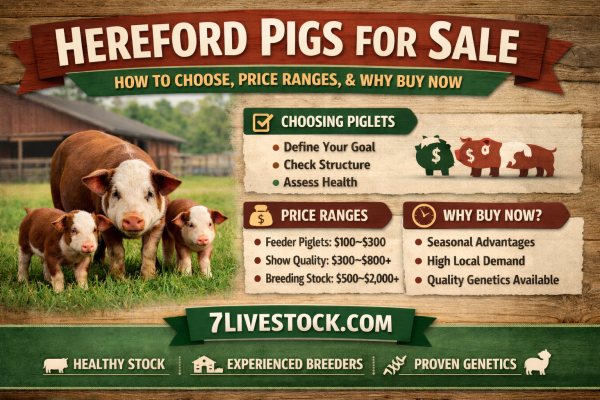
In this guide, we’ll walk through how to choose the right Hereford piglets, what price ranges to expect, and why now is a smart time to invest in quality Hereford genetics from trusted programs like 7 Hill Farms & Livestock.

Considering Hereford Pigs for Sale

Hereford pigs are easily recognized by their red bodies and white faces, similar in pattern to Hereford cattle. Beyond appearance, they are valued for their balanced traits and adaptability.

They are known for docile temperament, making them easier to handle for youth exhibitors and small farms. They demonstrate efficient growth rates with strong feed conversion. Sows are respected for solid litter size and dependable mothering ability. In addition, Herefords produce high-quality pork with balanced muscling and desirable carcass characteristics.

Because of these qualities, Hereford piglets are a practical choice for show projects, freezer pork, and breeding programs alike.

Find a Hereford Pig
Near You

Browse Listings

How to Choose the Right Hereford Piglets

Not all Hereford pigs for sale are equal. Matching the pig to your intended purpose is essential.

Define Your Goal

Before purchasing, determine whether you are buying for a youth livestock show, breeding stock, pasture-based pork production, or homestead freezer pork. Your goal will influence the genetics, structure, and age you should prioritize.

Evaluate Structure and Soundness

Look for piglets that stand square on all four legs and move freely without stiffness. A level topline, width through the chest, and strength through the hip indicate durability and growth potential. Structural soundness is critical for long-term success, especially in breeding animals.

Assess Body Composition

For show or breeding prospects, seek balance. Piglets should have adequate muscle expression without appearing overly coarse or extreme. Strong bone structure and proportional build are key indicators of long-term performance.

For freezer pork, focus on overall health, growth rate, and feed efficiency rather than extreme muscle shape.

Check Health Indicators

Healthy Hereford piglets should appear alert and active with bright eyes and clean skin. Ask about vaccination schedules, deworming protocols, and current feeding programs. A responsible seller should be transparent about herd management and health practices.

Need a Special Pig?

  • Give us your wish list
  • We’ll match you to sellers
  • No obligation to buy

Order a Pig

Hereford Pig Price Ranges

Pricing for Hereford pigs for sale depends on age, quality, registration status, and intended use.

Feeder Hereford piglets, typically 8 to 12 weeks old, often range from $100 to $300. These are commonly purchased for freezer pork or entry-level projects.

Show-quality Hereford piglets generally range from $300 to $800 or more, depending on structure, pedigree, and overall potential.

Registered breeding stock, including gilts and boars with strong lineage, may range from $500 to $2,000 or more. Higher prices reflect genetic consistency, performance history, and breeding value.

When comparing pricing, consider long-term value rather than just initial cost. Well-raised Hereford piglets from experienced Hereford breeders often deliver better growth, performance, and fewer health challenges over time.

Now Is a Good Time to Buy Hereford Pigs

Timing plays an important role when purchasing livestock.

Buying early in the season allows you to maximize growth prior to show dates and take advantage of ideal pasture conditions. Processing schedules for freezer pork can fill quickly, so planning ahead provides flexibility.

Demand for locally raised pork continues to grow, making quality genetics a strong long-term investment. Purchasing Hereford piglets now positions small farms and homesteads to meet seasonal demand.

Selection is another important factor. Reputable programs often sell their best stock quickly. Acting sooner provides more options in structure, temperament, and bloodline.

Ultimately, investing in strong genetics today can positively impact feed efficiency, litter performance, and overall herd quality for years to come.

Questions to Ask Before Buying

Before committing to Hereford pigs for sale, consider asking:

  • Are the piglets registered or eligible for registration?
  • What feed are they currently on, and how should transitions be handled?
  • What vaccinations and health protocols have been completed?
  • Is delivery or transportation coordination available?

Clear communication ensures a smooth transition and sets realistic expectations.

Choose 7 Hill Farms & Livestock

At 7 Hill Farms & Livestock, the focus is on helping buyers select Hereford piglets that align with their specific goals. Emphasis is placed on practical genetics, sound structure, and responsible herd management.

FAQ

What makes Hereford piglets a good choice for beginners?
Hereford piglets are known for their calm temperament and manageable size, making them easier for new livestock owners or youth exhibitors to handle and care for.

How much space do Hereford pigs need?
Space requirements vary based on age and production style, but pasture-based systems typically allow several hundred square feet per pig, along with shelter and dry bedding areas.

Can Hereford pigs be raised on pasture?
Yes. Herefords adapt well to pasture-based systems when provided proper fencing, rotational grazing, balanced nutrition, and protection from extreme weather.

Posted on March 2, 2026 in , ,

Now Is the Best Time to List Feeder Pigs

If you raise feeder pigs, timing is not just important. It directly impacts how quickly you sell and how strong your pricing holds. Across the United States, late winter through early spring consistently represents the most strategic window to list feeder pigs. Buyers are actively planning their finishing schedules, pasture rotations, and processing timelines. When you align your listings with that demand cycle, you position yourself for faster movement and stronger margins.

At 7 Hill Farms & Livestock, we closely watch seasonal buying patterns. Each year, this period proves to be one of the most active times for feeder pig inquiries and sales.

Why List Feeder Pigs in Early Spring?

Strong Seasonal Demand from Finishers

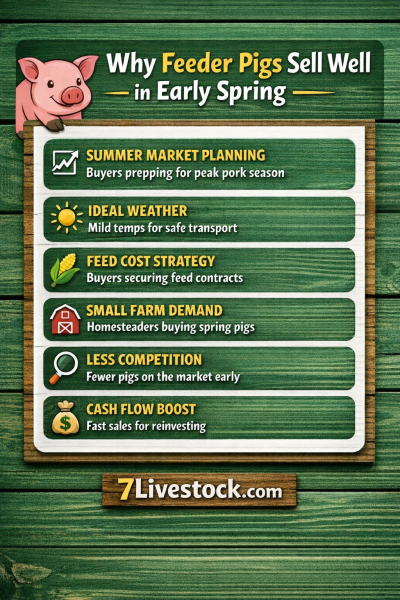
Feeder pigs, typically sold at 40 to 70 pounds, are purchased by producers who want to raise them to market weight. Many finishers intentionally buy pigs in late winter and early spring so animals will reach finishing weight in summer.

Summer pork demand traditionally increases due to grilling season, retail promotions, and consistent processing schedules. Buyers want pigs that will be ready when market conditions are favorable. That means they are actively searching for quality feeder pigs right now.

When you list feeder pigs during this planning window, you are meeting buyers exactly when they are making purchasing decisions, not after they have already filled their barns.

Ideal Weather Conditions for Transport and Transition

Another reason this is the best time to list feeder pigs is environmental stability. Moderate temperatures reduce stress during transport. Extreme summer heat can cause health challenges, and deep winter cold can complicate hauling and acclimation.

Spring offers:

  • Safer hauling conditions
  • Lower stress during transition
  • Improved feed conversion once pigs settle in
  • Stronger overall health outcomes

Buyers understand these advantages, which is why purchasing activity increases during this window.

Feed Cost Planning Is in Motion

Feed is the largest expense in raising pigs. Producers monitor grain markets closely and plan purchases when margins make sense. As winter ends, many buyers finalize feed contracts and prepare barn space for new groups.

When buyers have feed secured and facilities ready, they are motivated to purchase feeder pigs quickly. Listing now allows you to capture that readiness.

Waiting too long can mean competing with more listings later in the season when supply increases and buyer urgency decreases.

Growing Interest from Small Farms and Homesteads

Small-scale farming and homesteading continue to grow across the country. Many first-time or seasonal growers purchase pigs in early spring so they can raise them through summer and process in fall.

These buyers search online for feeder pigs for sale and often make decisions quickly once they find available inventory that fits their timeline. Clear listings with current weights and pickup details help secure those sales.

Reduced Competition Early in the Season

A key advantage of listing feeder pigs now is reduced competition. As farrowing ramps up deeper into spring, more pigs enter the marketplace.

Early-season listings often benefit from:

  • Greater visibility
  • Less pricing pressure
  • More buyer inquiries per post
  • Faster sale turnaround

Being early positions your operation as a primary source rather than one of many options.

Operational Benefits for Producers

Listing feeder pigs during this window also strengthens farm efficiency. Early sales:

  • Free up space for upcoming litters
  • Reduce feed costs on growing pigs
  • Improve herd flow and barn management
  • Generate timely cash flow

Strategic timing supports both profitability and operational rhythm.

Have a Pig to Sell?

  • Reach ready buyers
  • Easy listing process
  • Straightforward pricing

Create Listing

The Market Timing Advantage

Livestock markets operate in cycles. Producers who align listings with buyer planning cycles consistently see stronger results.

Late winter through early spring remains the strongest window to list feeder pigs because:

  • Finishers are preparing for summer markets
  • Transport conditions are more stable
  • Feed planning decisions are underway
  • Small-scale growers are actively purchasing
  • Competition is still manageable

If you have feeder pigs ready, this is the season buyers are searching.

List Feeder Pigs Now!

At 7 Hill Farms & Livestock, we encourage producers to take advantage of this demand window. If you are ready to move quality feeder pigs, now is the time to list them. Contact 7 Hill Farms & Livestock to feature your feeder pigs, increase buyer visibility, and connect with serious purchasers looking to secure inventory for the season ahead.

FAQ

How should feeder pigs be presented in a listing to attract serious buyers?
Include current weight range, breed or cross information, health status, clear photos, and firm pickup timelines. Transparency builds trust and speeds up decision making.

How far in advance do buyers typically plan feeder pig purchases?
Many producers plan several months ahead to align finishing weight with processing dates or seasonal pork demand. Early listings capture that forward planning behavior.

What factors influence how quickly feeder pigs sell?
Availability during peak demand, clear communication, competitive but realistic pricing, and prompt responses to inquiries all contribute to faster sales.

Posted on February 27, 2026 in ,

Early Pig Listings Give Sellers More Control

Many sellers hesitate to list pigs early because they fear losing control. They worry that early pig listings will lead to inquiries that come too soon, decisions will feel rushed, or expectations will be set before everything is finalized. In online pig sales, this belief is understandable, but it is backwards.

At 7 Hill Farms & Livestock, we see that sellers who list early consistently retain more control throughout the season than those who wait. Early listings do not create pressure. Waiting does.

Value of Early Pig Listings

Control Comes from Options, Not Delay

Control in online pig sales comes from having choices. Early listings create those choices by putting your pigs in front of buyers while timelines are still flexible.

When sellers wait, they often assume they are preserving freedom. In reality, they are postponing visibility. Once the season advances, options narrow quickly. Fewer buyers are browsing casually. More buyers are making quick decisions.

Early listings expand the field of possibilities. Late listings shrink it.

Early Listings Let Sellers Set the Pace

When pigs are listed early, sellers dictate the rhythm of the conversation. Inquiries arrive gradually. Buyers ask questions. Sellers have time to respond thoughtfully.

This pace allows sellers to:

  • Decline offers without consequence
  • Wait for better fits
  • Adjust pricing or terms slowly
  • Schedule pickup timelines that make sense

Sellers are not reacting. They are choosing.

Late in the season, the pace changes. Inquiries tend to arrive with urgency. Buyers want fast answers and quicker commitments. Sellers feel pressure to respond immediately, even when terms are not ideal.

Control shifts when time becomes limited.

Visibility Creates Negotiating Strength

In online pig sales, negotiation strength comes from alternatives. Sellers who list early often speak with multiple buyers over time. This creates confidence and clarity.

When sellers know interest exists, they are less likely to compromise unnecessarily. They can hold firm on price, timing, or conditions because they are not relying on a single inquiry.

Late listings often lack this cushion. When interest arrives late, it feels more critical. Sellers may concede terms simply to secure a sale before the season closes.

Early Listings Reduce Emotional Pressure

One overlooked benefit of early listing is reduced stress. Sellers who list early rarely feel rushed. They have time to think, evaluate, and respond.

Waiting compresses decision making. As the season advances, sellers often feel a growing sense of urgency. Questions like “Will this sell” or “Should I adjust price” become louder.

That pressure influences decisions. Early listing avoids it.

Have a Pig to Sell?

  • Reach ready buyers
  • Easy listing process
  • Straightforward pricing

Create Listing

Control Does Not Mean Commitment

Listing early does not mean accepting early offers. Sellers remain in control of whether and when a sale happens.

Online pig sales platforms allow sellers to:

  • Update details as pigs grow
  • Clarify availability timelines
  • Adjust pricing based on interest

Visibility does not lock sellers into outcomes. It simply opens the door to opportunity.

What limits control is being invisible during the most important buyer discovery phase.

Waiting Creates Deadlines Sellers Do Not Choose

Late in the season, deadlines begin to appear. Buyers need pigs secured. Transport windows narrow. Show schedules approach. Freezer buyers make final decisions.

These deadlines are not set by sellers. They are imposed by the market.

Early listings avoid this squeeze. Sellers who list early often complete sales on their own timeline rather than reacting to external pressure.

Control Is Strongest When Buyers Are Patient

Early in the season, buyers are patient. They are evaluating options and planning ahead. This patience benefits sellers.

Later in the season, buyers are decisive. They want resolution. This decisiveness benefits buyers.

Control follows patience. Early listings align sellers with the most favorable buyer mindset.

Why Early Listings Feel Risky but Are Not

Early listing can feel uncomfortable because it starts the process. It creates exposure. But exposure is not risk in online pig sales. It is leverage.

The real risk is waiting until options are limited and decisions feel forced.

Control Comes with Early Pig Listings

Season after season, the sellers who feel the most confident, flexible, and satisfied with their outcomes are rarely the ones who waited the longest. They are the ones who entered the market early and stayed visible.

Early listings do not remove control. They protect it.

FAQ

Does listing early mean I have to accept the first offer I receive?
No. Sellers can decline offers and wait for better opportunities.

What if buyers contact me before I am ready to sell?
You can communicate timelines clearly and control when a sale happens.

How does early listing increase control in online pig sales?
It creates options, reduces urgency, and allows sellers to make decisions on their own terms.

Posted on February 21, 2026 in ,