
 Transporting pigs safely and efficiently is a critical part of the buying process, whether you’re purchasing from a breeder across the state or arranging delivery from a trusted farm like 7 Hill Farms & Livestock. Understanding your options for pig transport services, crate types, and associated costs can help you make the best decision for your animals and your budget. This guide explains how to ship pigs, what to expect during transit, and how to choose the right method.
Understanding Pig Transport Requirements
Pigs are sensitive animals that require proper handling during transport. Stress, temperature changes, and overcrowding can all impact their health. That’s why reputable providers follow strict transport guidelines, including proper ventilation, adequate space, and minimal travel disruptions.
When evaluating pig transport services, it’s important to ensure the provider prioritizes animal welfare. Look for services that offer climate-aware scheduling, experienced handlers, and compliance with livestock transport regulations. Whether you’re transporting a single piglet or multiple animals, these factors make a significant difference.
Crate Options for Shipping Pigs
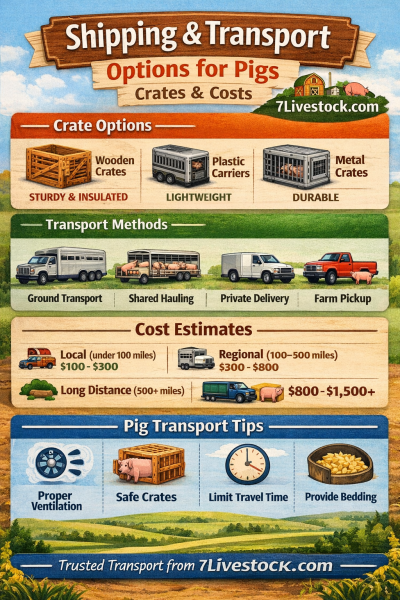
Choosing the right crate is one of the most important steps in learning how to ship pigs safely. The crate must be durable, well-ventilated, and appropriately sized for the pig.
Wooden Crates
Wooden crates are a common option for pig transport. They are sturdy, customizable, and provide good insulation during travel. These crates are often used for longer distances and can be built to match the pig’s size, preventing excessive movement while still allowing comfort.
Plastic Livestock Carriers
Plastic crates are lightweight and easy to clean, making them ideal for shorter trips. They typically include built-in ventilation slots and secure latching systems. While not as rugged as wood, they are sufficient for regional pig transport services.
Metal Crates
Metal crates offer maximum durability and are often used for repeated or commercial transport. They provide excellent airflow and structural strength, though they may require additional bedding to ensure comfort during transit.
How to Ship Pigs: Transport Methods
There are several ways to ship pigs, depending on distance, budget, and urgency.
Ground Transport Services
Ground transport is the most common method for shipping pigs. Specialized livestock haulers use trailers designed for animal safety, often equipped with ventilation systems and non-slip flooring. This is typically the most cost-effective option for distances under several hundred miles.
Shared Transport (Group Hauling)
For buyers looking to reduce costs, shared transport is a popular option. Multiple animals from different buyers are transported together along a planned route. While delivery times may be slightly longer, this method significantly lowers expenses.
Private Delivery
Private delivery offers a more direct and faster solution. Your pigs are transported without additional stops, reducing travel stress. This is ideal for high-value animals or when timing is critical, though it comes at a higher price point.
Pickup from Farm
Many buyers choose to pick up pigs directly from the farm. This eliminates shipping costs and allows you to inspect the animals in person. If you go this route, ensure your vehicle is properly equipped with a safe crate or enclosure.
Need a Special Pig?
- Give us your wish list
- We’ll match you to sellers
- No obligation to buy
Cost Breakdown for Pig Transport
Understanding the cost of pig transport services helps you plan your purchase more effectively. Prices can vary based on distance, crate type, and delivery method.
- Local Transport (Under 100 miles): $100–$300
- Regional Transport (100–500 miles): $300–$800
- Long-Distance Transport (500+ miles): $800–$1,500+
Crate costs may be included or charged separately, typically ranging from $50 to $200 depending on materials and customization. Shared transport can reduce overall costs by 20–40%, while private delivery may increase pricing due to exclusivity.
Additional factors that influence pricing include fuel costs, route complexity, and seasonal demand. Summer months, for example, may require specialized scheduling to avoid heat stress, which can slightly increase costs.
Tips for Safe Pig Transport
To ensure a smooth experience when learning how to ship pigs, keep these best practices in mind:
- Choose a reputable provider with experience in pig transport services
- Confirm crate size and ventilation are appropriate for your pig
- Schedule transport during mild weather when possible
- Provide proper bedding to reduce stress and slipping
- Minimize transit time to keep animals comfortable
Working with an experienced provider like 7 Hill Farms & Livestock ensures that these details are handled professionally, giving you peace of mind throughout the process.
Final Thoughts
Shipping pigs doesn’t have to be complicated. By understanding crate options, transport methods, and associated costs, you can make informed decisions that protect your investment and prioritize animal welfare. Whether you opt for shared hauling, private delivery, or farm pickup, choosing the right approach ensures your pigs arrive healthy and ready to thrive.
7 Hill Farms & Livestock is committed to helping customers navigate pig transport services with ease, offering guidance and reliable solutions tailored to your needs.
FAQ
How long can pigs safely travel during transport?
Most pigs can safely travel 6 to 12 hours with proper ventilation, bedding, and rest stops. For longer trips, experienced pig transport services schedule breaks to check animals, provide water if needed, and reduce stress.
Do pigs need food or water during shipping?
For shorter trips, pigs typically do not require feeding during transit. However, for longer distances, professional haulers may provide hydration strategies or plan stops to ensure animal welfare without causing digestive issues.
Is it cheaper to ship multiple pigs at once?
Yes, transporting multiple pigs often reduces the cost per animal. Shared transport or group hauling spreads fuel and labor costs across several deliveries, making it one of the most cost-effective options.