Showing pigs

Explore the best pig breeds for showing, with pros, cons, starter costs, and beginner tips for raising healthy pigs ready for showtime.

Show Pigs for Sale: How to Choose, Price Ranges, and Reputable Sellers

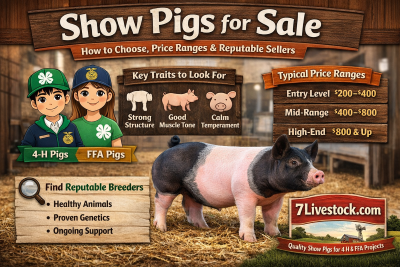
show pigs for saleFor families involved in youth livestock programs, finding the right show pigs for sale can make a major difference in a successful project. Whether you are participating in 4H pigs programs or raising FFA pigs for competition, the quality of the pig, its genetics, and the breeder you purchase from all play important roles.

Show Pigs for Sale: Making your Decision

A well-chosen show pig provides an opportunity to learn animal care, responsibility, and livestock management while also competing at local, county, and state fairs. Understanding how to evaluate pigs, typical pricing ranges, and how to identify trustworthy breeders will help buyers make confident decisions.

What Makes a Good Show Pig

When searching for show pigs for sale, the goal is not simply to buy a piglet, but to find one with the genetic potential to grow into a competitive market hog.

Several characteristics should be evaluated before purchasing.

Find a Show Pig
Near You

Browse Listings

Structure and soundness
A good show pig should walk comfortably with a natural stride. Structural soundness in the legs and joints allows the animal to grow efficiently and remain healthy throughout the feeding period.

Muscle shape and body composition
Judges look for pigs that have a balanced combination of muscle and leanness. A wide top, strong loin area, and a square build are typically desirable traits.

Growth potential
Show pigs need the ability to reach the proper market weight in time for competition. Quality genetics often lead to consistent growth and improved feed efficiency.

Temperament
A calm pig that adapts well to handling will be easier for youth exhibitors to train and manage during the show season.

Experienced breeders carefully select breeding lines that consistently produce pigs with these characteristics.

Choosing the Right Pig for 4H and FFA Projects

Youth livestock programs such as 4H pigs and FFA pigs emphasize both learning and competition. Selecting the right pig helps students gain the most from the experience.

Consider these factors when choosing a project pig:

Age and weight
Most show pig buyers look for piglets between 6 and 10 weeks old. At this stage, they are young enough to adapt to new environments while still showing early structural traits.

Fair weight targets
Every fair has specific weight requirements. Buyers should choose pigs that have the genetic potential to reach the target weight within the feeding period.

Breed or cross genetics
Many successful show pigs are crossbred to combine desirable traits such as muscle expression, growth rate, and structural balance.

Support from the breeder
A breeder who offers guidance on feeding, care, and show preparation can be extremely valuable for first-time exhibitors.

Programs like 4-H and FFA are about much more than ribbons. They teach responsibility, livestock management, and confidence, making the project pig selection an important starting point.

Need a Special Pig?

  • Give us your wish list
  • We’ll match you to sellers
  • No obligation to buy

Order a Pig

Typical Price Ranges for Show Pigs

Prices for show pigs for sale can vary significantly depending on genetics, breeder reputation, and competition level.

Here are general price ranges buyers often encounter:

Entry-level project pigs
$200 – $400
These pigs are typically solid choices for local fairs and beginner exhibitors.

Mid-range show pigs
$400 – $800
These pigs often come from proven breeding lines and may have stronger show potential.

High-end competition pigs
$800 – $2,500+
Elite genetics and champion bloodlines can command higher prices, particularly from well-known breeders.

While price can reflect quality genetics, success still depends heavily on feeding programs, daily care, and training throughout the project.

Timing Matters When Buying Show Pigs

Show pig availability often follows seasonal cycles tied to county fair schedules.

Buying early in the season provides several advantages:

Better selection
The strongest pigs from each litter typically sell first.

More time for feeding programs
Proper nutrition and conditioning take time to produce a well-finished market hog.

Training opportunities
Early purchase gives exhibitors time to work with their pig, so it becomes comfortable being handled and shown.

For youth exhibitors, having additional time to learn feeding routines and care practices can greatly improve their show experience.

Quality Show Pigs for Sale

At 7 Hill Farms & Livestock, we provide carefully raised show pigs for sale for youth livestock programs. Our pigs are selected for structural soundness, strong growth potential, and the kind of balanced build that performs well in the show ring.

We regularly work with families involved in 4H pigs and FFA pigs, helping match exhibitors with pigs that fit their goals and fair timelines. Our focus is on producing healthy pigs with reliable genetics while supporting young exhibitors throughout their projects.

Choosing the right show pig is the first step toward a rewarding livestock experience. With the right genetics, proper care, and dedication, youth exhibitors can gain valuable skills while competing successfully in the show ring.

FAQ

How early should I buy a show pig for a county fair?
Most exhibitors purchase pigs 3 to 4 months before their fair to allow time for feeding, growth, and training.

What weight should a show pig reach at the fair?
Most fairs target a finished weight between 260 and 300 pounds, though requirements vary by event.

Are crossbred pigs better for shows?
Many show pigs are crossbred because combining genetic lines can improve muscle development, structure, and overall balance.
Posted on March 6, 2026 in ,

Hereford Pigs for Sale: How to Choose, Price Ranges, and Reputable Sellers

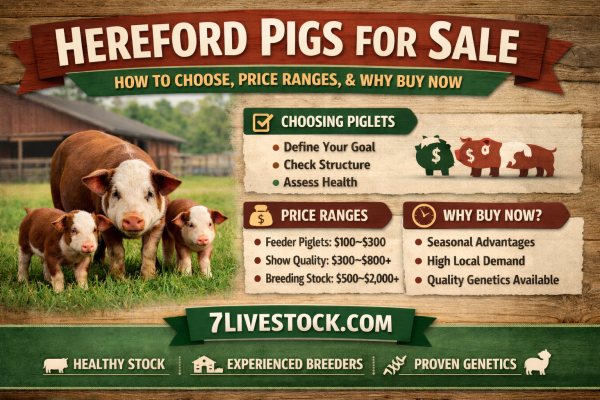
Hereford Pigs for SaleIf you’re searching for Hereford pigs for sale, you’re likely looking for a breed that combines eye-catching color with strong performance and excellent temperament. Whether you’re a first-time homesteader, a 4-H family, or an experienced livestock producer, Herefords are a versatile option known for growth efficiency, meat quality, and docile behavior.

In this guide, we’ll walk through how to choose the right Hereford piglets, what price ranges to expect, and why now is a smart time to invest in quality Hereford genetics from trusted programs like 7 Hill Farms & Livestock.

Considering Hereford Pigs for Sale

Hereford pigs are easily recognized by their red bodies and white faces, similar in pattern to Hereford cattle. Beyond appearance, they are valued for their balanced traits and adaptability.

They are known for docile temperament, making them easier to handle for youth exhibitors and small farms. They demonstrate efficient growth rates with strong feed conversion. Sows are respected for solid litter size and dependable mothering ability. In addition, Herefords produce high-quality pork with balanced muscling and desirable carcass characteristics.

Because of these qualities, Hereford piglets are a practical choice for show projects, freezer pork, and breeding programs alike.

Find a Hereford Pig
Near You

Browse Listings

How to Choose the Right Hereford Piglets

Not all Hereford pigs for sale are equal. Matching the pig to your intended purpose is essential.

Define Your Goal

Before purchasing, determine whether you are buying for a youth livestock show, breeding stock, pasture-based pork production, or homestead freezer pork. Your goal will influence the genetics, structure, and age you should prioritize.

Evaluate Structure and Soundness

Look for piglets that stand square on all four legs and move freely without stiffness. A level topline, width through the chest, and strength through the hip indicate durability and growth potential. Structural soundness is critical for long-term success, especially in breeding animals.

Assess Body Composition

For show or breeding prospects, seek balance. Piglets should have adequate muscle expression without appearing overly coarse or extreme. Strong bone structure and proportional build are key indicators of long-term performance.

For freezer pork, focus on overall health, growth rate, and feed efficiency rather than extreme muscle shape.

Check Health Indicators

Healthy Hereford piglets should appear alert and active with bright eyes and clean skin. Ask about vaccination schedules, deworming protocols, and current feeding programs. A responsible seller should be transparent about herd management and health practices.

Need a Special Pig?

  • Give us your wish list
  • We’ll match you to sellers
  • No obligation to buy

Order a Pig

Hereford Pig Price Ranges

Pricing for Hereford pigs for sale depends on age, quality, registration status, and intended use.

Feeder Hereford piglets, typically 8 to 12 weeks old, often range from $100 to $300. These are commonly purchased for freezer pork or entry-level projects.

Show-quality Hereford piglets generally range from $300 to $800 or more, depending on structure, pedigree, and overall potential.

Registered breeding stock, including gilts and boars with strong lineage, may range from $500 to $2,000 or more. Higher prices reflect genetic consistency, performance history, and breeding value.

When comparing pricing, consider long-term value rather than just initial cost. Well-raised Hereford piglets from experienced Hereford breeders often deliver better growth, performance, and fewer health challenges over time.

Now Is a Good Time to Buy Hereford Pigs

Timing plays an important role when purchasing livestock.

Buying early in the season allows you to maximize growth prior to show dates and take advantage of ideal pasture conditions. Processing schedules for freezer pork can fill quickly, so planning ahead provides flexibility.

Demand for locally raised pork continues to grow, making quality genetics a strong long-term investment. Purchasing Hereford piglets now positions small farms and homesteads to meet seasonal demand.

Selection is another important factor. Reputable programs often sell their best stock quickly. Acting sooner provides more options in structure, temperament, and bloodline.

Ultimately, investing in strong genetics today can positively impact feed efficiency, litter performance, and overall herd quality for years to come.

Questions to Ask Before Buying

Before committing to Hereford pigs for sale, consider asking:

  • Are the piglets registered or eligible for registration?
  • What feed are they currently on, and how should transitions be handled?
  • What vaccinations and health protocols have been completed?
  • Is delivery or transportation coordination available?

Clear communication ensures a smooth transition and sets realistic expectations.

Choose 7 Hill Farms & Livestock

At 7 Hill Farms & Livestock, the focus is on helping buyers select Hereford piglets that align with their specific goals. Emphasis is placed on practical genetics, sound structure, and responsible herd management.

FAQ

What makes Hereford piglets a good choice for beginners?
Hereford piglets are known for their calm temperament and manageable size, making them easier for new livestock owners or youth exhibitors to handle and care for.

How much space do Hereford pigs need?
Space requirements vary based on age and production style, but pasture-based systems typically allow several hundred square feet per pig, along with shelter and dry bedding areas.

Can Hereford pigs be raised on pasture?
Yes. Herefords adapt well to pasture-based systems when provided proper fencing, rotational grazing, balanced nutrition, and protection from extreme weather.

Posted on March 2, 2026 in , ,

Best Pig Breeds for Show: Pros, Cons, and Starter Costs

Raising show pigs is both rewarding and educational, offering lessons in responsibility, animal care, and agricultural excellence. Whether you’re preparing for your first fair or looking to expand your herd, choosing the right breed makes all the difference. Below, we explore some of the best pig breeds for show, including their pros, cons, hardiness, and approximate starter costs.

Pig Breeds and Considerations

Yorkshire

Pros:

  • Excellent growth rate and feed efficiency
  • Naturally lean meat with good muscling
  • Highly adaptable to most climates

Cons:

  • Light-colored skin can be prone to sunburn
  • Requires clean housing to prevent skin irritation

Starter Cost: $150–$300 for quality show piglets

Ideal For: Beginners looking for a hardy, high-performing breed with consistent show potential.

Hampshire

Pros:

  • Distinctive black body with white belt; always stands out in the show ring
  • Excellent muscle definition and fast growth
  • Calm and easy to handle

Cons:

  • May not yield as much marbling as other breeds
  • Requires balanced feed to maintain body condition

Starter Cost: $200–$400

Ideal For: Youth exhibitors or 4-H participants who value temperament and striking appearance.

Duroc

Pros:

  • Known for rapid weight gain and strong frame
  • Hardy and heat-tolerant
  • High-quality, flavorful meat, popular among breeders and consumers alike

Cons:

  • Can be aggressive if not handled early
  • Sensitive to cold climates

Starter Cost: $250–$500 for premium show stock

Ideal For: Intermediate exhibitors ready to manage a strong, muscular pig with solid genetics.

Berkshire

Pros:

  • Famous for marbled meat and glossy black coat
  • Strong show presence with balanced frame
  • Adaptable and gentle temperament

Cons:

  • Slightly slower growth compared to Duroc or Hampshire
  • May require more protein-rich feed to reach competition weight

Starter Cost: $250–$600

Ideal For: Show participants seeking a breed with top-tier carcass quality and steady behavior.

Chester White

Pros:

  • Excellent maternal instincts, ideal if you plan to breed
  • Hardy in various environments
  • Consistent muscling and structure in the show ring

Cons:

  • Sensitive to sunlight, requires shade or shelter
  • May have slower finishing times

Starter Cost: $150–$350

Ideal For: Families or small farms looking to combine show projects with small-scale breeding operations.

Poland China

Pros:

Find a Show Pig
Near You

Browse Listings

  • Calm and docile, great for first-time handlers
  • Excellent feed conversion
  • Strong, long bodies that perform well in shows

Cons:

  • Slightly lower reproductive rates
  • Not as flashy in color as some breeds

Starter Cost: $175–$400

Ideal For: Beginners or those focused on steady performance and low maintenance.

Hereford

Pros:

  • Distinctive red and white color pattern
  • Excellent feed efficiency and adaptability
  • Hardy breed that thrives in outdoor or pen settings

Cons:

  • May require selective breeding for top show quality
  • Moderate muscle tone compared to Hampshire or Duroc

Starter Cost: $200–$450

Ideal For: Exhibitors seeking a resilient and visually unique pig that’s easy to raise.

Cost to Raise Pigs for Show

Beyond purchase price, plan for:

  • Feed: $250–$400 per pig for a typical 5–6 month show prep period
  • Bedding and Housing: $100–$200 annually
  • Veterinary Care and Deworming: $50–$150
  • Show Entry & Transport: $100–$300 depending on distance and competition level

Many small-scale exhibitors spend $600–$1,200 per season, depending on quality of feed, show gear, and travel.

Beginner Tips and Hardy Breed Recommendations

If you’re new to showing pigs, Yorkshire, Hampshire, and Doroc are among the best beginner-friendly breeds thanks to their docile nature and strong adaptability. For harsher climates or minimal shelter setups, Hereford and Duroc pigs are particularly hardy.

Consistency in feeding, proper hygiene, and early handling are key to raising a pig that’s both show-ready and healthy.

Final Thoughts

Need a Special Pig?

  • Give us your wish list
  • We’ll match you to sellers
  • No obligation to buy

Order a Pig

Raising show pigs isn’t just about ribbons, it’s about building experience, discipline, and appreciation for quality livestock. Whether you choose the muscle of a Duroc or the elegance of a Berkshire, your success starts with the right foundation.

For more insights into livestock care, pig sales, and show preparation, call 330-550-3487 or visit our blog.

FAQ

What age should a pig be when you start training for shows?
Most exhibitors begin working with their pigs around eight to ten weeks of age. Early training helps develop trust, responsiveness, and good behavior before they reach full size.

How often should a show pig be fed?
Feed your pig two to three times per day with consistent timing. Adjust portions based on activity level, growth stage, and desired body condition as show day approaches.

What’s the best environment for raising show pigs?
A clean, dry pen with good airflow is ideal. Provide shade in summer, fresh bedding in winter, and ample space for movement to keep your pigs healthy and calm during training.

Posted on November 9, 2025 in ,