Breeding pigs

Potbelly Pigs for Sale: How to Choose, Price Ranges, and Reputable Sellers

Potbelly pigs for salePotbelly pigs have become a popular choice for hobby farmers, homesteaders, and even pet owners looking for intelligent, personable livestock. If you’re searching for potbelly pigs for sale, it’s important to understand how to evaluate quality, typical price ranges, and how to identify trustworthy potbelly breeders.

Potbelly Pigs for Sale: Overview

This guide from 7 Hill Farms & Livestock walks you through everything you need to make a confident purchase.

Why Choose Potbelly Pigs?

Potbelly pigs, often called Vietnamese potbellied pigs, are known for their manageable size, friendly temperament, and adaptability. Compared to traditional farm hogs, they remain smaller and are easier to handle, making them ideal for:

  • Small farms and homesteads
  • Families looking for unique livestock
  • 4-H or youth livestock projects
  • Pet ownership in rural or semi-rural areas

They are highly intelligent animals that can be trained, form bonds with humans, and thrive with proper care.

How to Choose the Right Potbelly Piglet

Not all potbelly piglets are created equal. Selecting the right pig starts with evaluating health, genetics, and breeder practices

Health Indicators

Look for piglets that are:

  • Bright-eyed and alert
  • Active and curious
  • Free from nasal discharge or coughing
  • Smooth-coated with no visible skin issues

Avoid piglets that appear lethargic or underweight, as this may indicate underlying health concerns.

Size Expectations

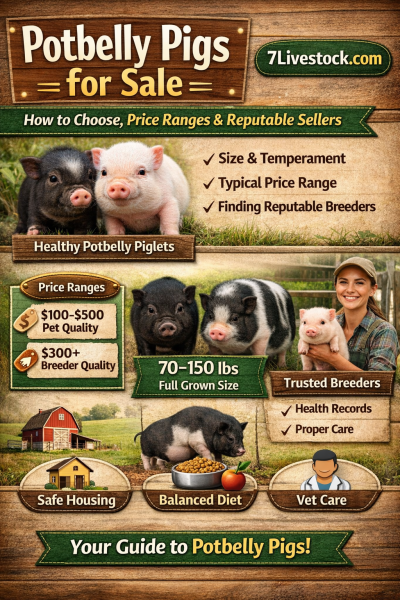
One of the biggest misconceptions is “teacup” or “mini” pigs. While potbelly pigs are smaller than commercial breeds, most mature between 70–150 pounds depending on genetics and diet.

Reputable potbelly breeders will give you realistic expectations about adult size.

Find a Potbelly Pig
Near You

Browse Listings

Temperament

A well-socialized piglet should be:

  • Comfortable around people
  • Not overly aggressive or fearful
  • Easy to handle for short periods

Early handling by the breeder plays a major role in long-term behavior.

Breeding Quality

Ask about:

  • Parent lineage
  • Vaccination or deworming schedules
  • Feeding practices

Good breeders prioritize strong genetics and proper early care.

Potbelly Pig Price Ranges

When evaluating potbelly pigs for sale, pricing can vary significantly based on several factors.

Typical Price Range

  • Pet-quality potbelly piglets: $100 to $500
  • Registered or breeder-quality pigs: $300 to $1,000+
  • Rare colors or bloodlines: Higher-end pricing

What Affects Pricing?

Several factors influence cost:

  • Age: Younger piglets typically cost more
  • Color and markings: Unique patterns can increase value
  • Breeder reputation: Established breeders charge more for quality assurance
  • Location: Transportation and regional demand can impact pricing

Be cautious of prices that seem too good to be true. Extremely cheap pigs may come from poor breeding conditions or lack proper care.

Need a Special Pig?

  • Give us your wish list
  • We’ll match you to sellers
  • No obligation to buy

Order a Pig

How to Identify Reputable Potbelly Breeders

Choosing the right breeder is just as important as choosing the right pig. A reputable seller ensures your piglet has the best possible start.

Signs of a Trustworthy Breeder

  • Transparent about piglet care and feeding
  • Willing to answer questions and provide guidance
  • Allows you to see the piglets in person or via video
  • Provides health records or care instructions
  • Clearly communicates expectations for ownership

Red Flags to Avoid

  • No information about parents or origin
  • Poor living conditions
  • Lack of basic health knowledge
  • Pressure to purchase quickly

Working with experienced providers like 7 Hill Farms & Livestock helps ensure you’re getting healthy, well-raised potbelly piglets from a reliable source.

Preparing for Your New Potbelly Pig

Before bringing your pig home, make sure you’re prepared with the essentials.

Housing

  • Secure shelter with protection from weather
  • Fencing to prevent escape
  • Clean, dry bedding

Feeding

A balanced diet is key:

  • Commercial mini pig feed or appropriate livestock feed
  • Limited treats such as fruit and vegetables
  • Access to clean water at all times

Veterinary Care

Find a vet familiar with pigs and plan for:

  • Routine checkups
  • Vaccinations if recommended locally
  • Hoof and tusk maintenance

Social Needs

Potbelly pigs are social animals and thrive with:

  • Regular human interaction
  • Enrichment activities
  • Consistent routines

Where to Find Potbelly Pigs for Sale

You can find potbelly pigs for sale through several channels:

  • Specialized livestock farms
  • Local breeders
  • Online agricultural marketplaces
  • Farm networking groups

However, not all sources are equal. Prioritize farms with a strong reputation and a focus on animal welfare.

Quality Potbelly Pigs for Sale

Buying a potbelly pig is an exciting investment, but it requires careful consideration. By understanding how to evaluate potbelly piglets, recognizing fair price ranges, and working with reputable potbelly breeders, you set yourself up for long-term success.

7 Hill Farms & Livestock is committed to providing healthy, well-socialized pigs and helping buyers make informed decisions. Whether you’re starting a small farm or adding a unique animal to your property, choosing the right pig and the right breeder makes all the difference.

FAQ

How big do potbelly pigs get?
Most potbelly pigs reach 70 to 150 pounds at maturity, depending on genetics and diet.

Are potbelly pigs good pets?
Yes, they are intelligent and social, but they require space, proper care, and commitment.

How much do potbelly piglets cost?
Prices typically range from $100 to $500 for pet-quality piglets, with higher costs for premium genetics or rare colors.
Posted on March 18, 2026 in , ,

Hereford Pigs for Sale: How to Choose, Price Ranges, and Reputable Sellers

Hereford Pigs for SaleIf you’re searching for Hereford pigs for sale, you’re likely looking for a breed that combines eye-catching color with strong performance and excellent temperament. Whether you’re a first-time homesteader, a 4-H family, or an experienced livestock producer, Herefords are a versatile option known for growth efficiency, meat quality, and docile behavior.

In this guide, we’ll walk through how to choose the right Hereford piglets, what price ranges to expect, and why now is a smart time to invest in quality Hereford genetics from trusted programs like 7 Hill Farms & Livestock.

Considering Hereford Pigs for Sale

Hereford pigs are easily recognized by their red bodies and white faces, similar in pattern to Hereford cattle. Beyond appearance, they are valued for their balanced traits and adaptability.

They are known for docile temperament, making them easier to handle for youth exhibitors and small farms. They demonstrate efficient growth rates with strong feed conversion. Sows are respected for solid litter size and dependable mothering ability. In addition, Herefords produce high-quality pork with balanced muscling and desirable carcass characteristics.

Because of these qualities, Hereford piglets are a practical choice for show projects, freezer pork, and breeding programs alike.

Find a Hereford Pig
Near You

Browse Listings

How to Choose the Right Hereford Piglets

Not all Hereford pigs for sale are equal. Matching the pig to your intended purpose is essential.

Define Your Goal

Before purchasing, determine whether you are buying for a youth livestock show, breeding stock, pasture-based pork production, or homestead freezer pork. Your goal will influence the genetics, structure, and age you should prioritize.

Evaluate Structure and Soundness

Look for piglets that stand square on all four legs and move freely without stiffness. A level topline, width through the chest, and strength through the hip indicate durability and growth potential. Structural soundness is critical for long-term success, especially in breeding animals.

Assess Body Composition

For show or breeding prospects, seek balance. Piglets should have adequate muscle expression without appearing overly coarse or extreme. Strong bone structure and proportional build are key indicators of long-term performance.

For freezer pork, focus on overall health, growth rate, and feed efficiency rather than extreme muscle shape.

Check Health Indicators

Healthy Hereford piglets should appear alert and active with bright eyes and clean skin. Ask about vaccination schedules, deworming protocols, and current feeding programs. A responsible seller should be transparent about herd management and health practices.

Need a Special Pig?

  • Give us your wish list
  • We’ll match you to sellers
  • No obligation to buy

Order a Pig

Hereford Pig Price Ranges

Pricing for Hereford pigs for sale depends on age, quality, registration status, and intended use.

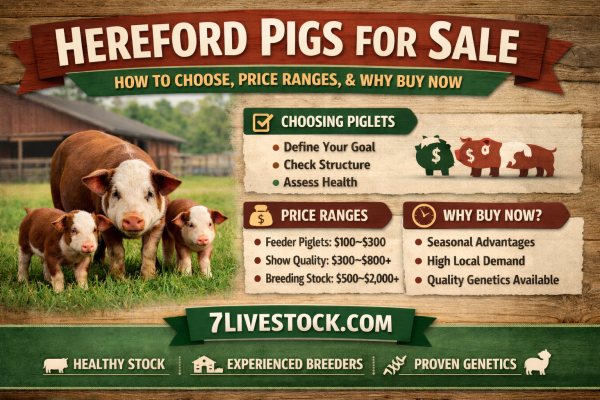
Feeder Hereford piglets, typically 8 to 12 weeks old, often range from $100 to $300. These are commonly purchased for freezer pork or entry-level projects.

Show-quality Hereford piglets generally range from $300 to $800 or more, depending on structure, pedigree, and overall potential.

Registered breeding stock, including gilts and boars with strong lineage, may range from $500 to $2,000 or more. Higher prices reflect genetic consistency, performance history, and breeding value.

When comparing pricing, consider long-term value rather than just initial cost. Well-raised Hereford piglets from experienced Hereford breeders often deliver better growth, performance, and fewer health challenges over time.

Now Is a Good Time to Buy Hereford Pigs

Timing plays an important role when purchasing livestock.

Buying early in the season allows you to maximize growth prior to show dates and take advantage of ideal pasture conditions. Processing schedules for freezer pork can fill quickly, so planning ahead provides flexibility.

Demand for locally raised pork continues to grow, making quality genetics a strong long-term investment. Purchasing Hereford piglets now positions small farms and homesteads to meet seasonal demand.

Selection is another important factor. Reputable programs often sell their best stock quickly. Acting sooner provides more options in structure, temperament, and bloodline.

Ultimately, investing in strong genetics today can positively impact feed efficiency, litter performance, and overall herd quality for years to come.

Questions to Ask Before Buying

Before committing to Hereford pigs for sale, consider asking:

  • Are the piglets registered or eligible for registration?
  • What feed are they currently on, and how should transitions be handled?
  • What vaccinations and health protocols have been completed?
  • Is delivery or transportation coordination available?

Clear communication ensures a smooth transition and sets realistic expectations.

Choose 7 Hill Farms & Livestock

At 7 Hill Farms & Livestock, the focus is on helping buyers select Hereford piglets that align with their specific goals. Emphasis is placed on practical genetics, sound structure, and responsible herd management.

FAQ

What makes Hereford piglets a good choice for beginners?
Hereford piglets are known for their calm temperament and manageable size, making them easier for new livestock owners or youth exhibitors to handle and care for.

How much space do Hereford pigs need?
Space requirements vary based on age and production style, but pasture-based systems typically allow several hundred square feet per pig, along with shelter and dry bedding areas.

Can Hereford pigs be raised on pasture?
Yes. Herefords adapt well to pasture-based systems when provided proper fencing, rotational grazing, balanced nutrition, and protection from extreme weather.

Posted on March 2, 2026 in , ,

Best Pig Breeds for Breeding: Pros, Cons, and Starter Costs

Choosing the right pig breed for breeding programs is one of the most important decisions for any farmer. Each breed offers different strengths, from growth rate and litter size to feed efficiency and meat quality. Below is a simple breakdown of the best pig breeds for breeding, along with their pros, cons, and approximate starter costs to help you make the right choice for your farm.

Best Pig Breeds for Breeding

Yorkshire

Pros:

  • Excellent maternal instincts
  • Large litters
  • Strong feed to gain ratio
  • Great crossbreeding potential

Cons:

  • More sensitive to heat
  • Requires quality nutrition to maintain body condition

Starter Costs:

  • Gilts: typically mid range
  • Boars: moderate

Landrace

Pros:

  • Known for long bodies and high milk production
  • Produces large, healthy litters
  • Strong maternal traits
  • Great for maternal line breeding programs

Cons:

  • Can be prone to soundness issues if not managed carefully
  • Requires attentive housing and care

Starter Costs:

  • Gilts: moderate
  • Boars: slightly higher due to demand for breed improvement

Find a Breeder Pig
Near You

Browse Listings

Duroc

Pros:

  • Fast growth and excellent meat quality
  • Hardy in outdoor environments
  • Good temperament
  • Ideal terminal sire breed

Cons:

  • Not as strong maternally as white breeds
  • Slightly higher feed consumption

Starter Costs:

  • Boars: often higher due to market demand
  • Gilts: moderate

Berkshire

Pros:

  • Premium meat quality with exceptional marbling
  • Hardy and adaptable
  • Good temperament
  • Strong niche market value

Cons:

  • Smaller litter sizes
  • Slower growth compared to commercial lines

Starter Costs:

  • Often higher, especially for registered stock

Chester White

Pros:

  • Very good mothers
  • Large litters with strong piglet survivability
  • Adaptable and easy to manage
  • Good crossbreeding potential

Cons:

  • Sensitive skin in full sun
  • Slightly slower growth than Yorkshire or Duroc

Starter Costs:

  • Gilts: moderate
  • Boars: moderate

Hampshire

Pros:

  • Great carcass yield and muscling
  • Efficient feeders
  • Produces uniform offspring
  • Popular sire line breed

Cons:

  • Not known for maternal strengths
  • Can be more aggressive than other breeds

Starter Costs:

  • Boars: moderate to high
  • Gilts: moderate

Tamworth

Pros:

  • Excellent for outdoor or pasture based systems
  • Strong rooting instinct
  • Hardy and disease resistant
  • Good bacon style carcass results

Cons:

  • Leaner meat with less marbling
  • Can be more active and require stronger fencing

Starter Costs:

  • Generally moderate but can vary based on availability

Need a Special Pig?

  • Give us your wish list
  • We’ll match you to sellers
  • No obligation to buy

Order a Pig

Gloucestershire Old Spot (GOS)

Pros:

  • Outstanding maternal instincts
  • Calm and docile temperament
  • Good on pasture
  • High quality pork for specialty markets

Cons:

  • Slower growers
  • Harder to source in some regions

Starter Costs:

  • Often on the higher end due to rarity

Which Breed Is Best for You

Your ideal breeding stock depends on your goals. For large scale production, Yorkshire, Landrace, and Hampshire are common choices. For fast growth and exceptional meat quality, Duroc and Berkshire stand out. Farms with pasture setups often prefer Tamworth or GOS. For breeders looking for balanced traits and strong mothering, Chester White and Yorkshire remain top options. Many farms benefit from crossbreeding maternal lines with strong sire lines for improved growth, hybrid vigor, and survivability.

Start Your Breeding Program With Confidence

7 Hills Farm & Livestock provides healthy, well raised breeding stock that meets the needs of both small farms and large scale operations. Whether you are building a maternal herd, improving carcass quality, or starting a pasture based breeding program, we can help you select the right pigs for long term success.

FAQ

What is the easiest pig breed for beginners to start breeding?
Yorkshire and Chester White are popular beginner friendly options because they are calm, reliable, and strong mothers that produce consistent litters.

How many pigs should I start with for a small breeding program?
Many new breeders begin with one boar and two gilts. This setup provides manageable herd growth and steady production without overwhelming space or feed resources.

How important is crossbreeding for improving litter performance?
Crossbreeding is one of the most effective ways to increase growth rates, uniformity, hybrid vigor, and overall piglet survivability, especially when combining maternal and sire line strengths.

Posted on November 20, 2025 in ,